Review
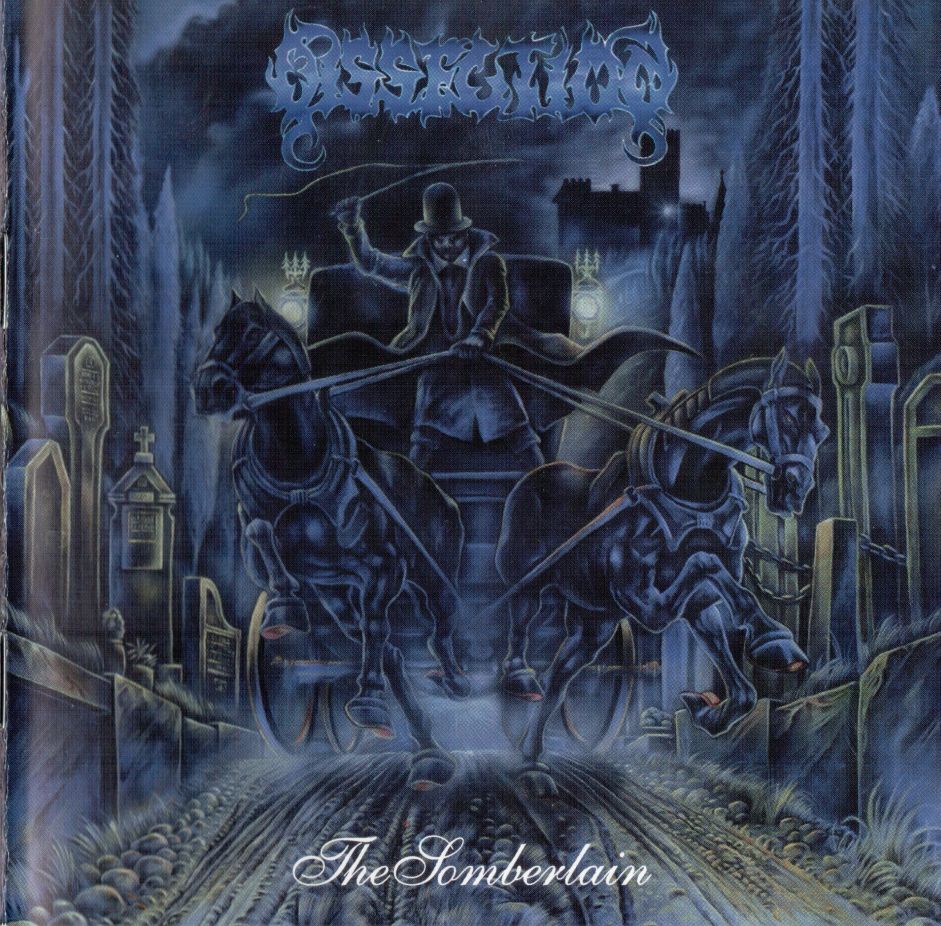
Dissection – The Somberlain
No Fashion Records
The legendary seeds of Swedish black metal were planted in 1993 with The Somberlain, spreading from the streets of Stockholm into the underground. The album is more than a simple youthful outburst—it is a meticulously crafted manifesto of darkness, shaped by a precise creative will and an instinctive sense of melody. Jon Nödtveidt’s leadership on both guitar and vocals reveals, beyond his technical prowess at a young age, an intuitive musical wisdom; every note, every transition seems to open doors to another time and place for the listener.
The Somberlain is a bridge between worlds. It fuses the raw, aggressive energy of Stockholm death metal, the radical tones of Norway’s second-wave black metal, and the melodic elegance of traditional heavy metal. The album never confines itself to clichés—motifs, abrupt tempo shifts, and melodic transitions interweave like a tightly constructed narrative. The opener, Black Horizons, in its eight-minute span, delivers thrash brutality and melodic grace simultaneously, setting the album’s tone with striking clarity. The mid-album acoustic passages, followed by razor-sharp riffs, showcase Nödtveidt’s aesthetic intelligence.
The title track, The Somberlain, unfolds as a black metal elegy, balancing melancholy with exhilaration. Its central section carries a dramatic intensity that leaves the listener metaphorically kneeling. Tracks like Crimson Towers and Feathers Fell deepen the album’s melodic texture with baroque-inspired guitar passages, striking a delicate balance between the elegance of classical music and the harshness of black metal. These passages are far more than technical ornamentation—they complete the album’s spirit, evoking both subconscious unease and aesthetic admiration.
Other compositions reinforce the album’s intricate architecture. A Land Forlorn and Heaven’s Damnation mesmerize with expansive epic riffs and layered melodies. Lesser-highlighted tracks such as Frozen and Mistress of the Bleeding Sorrow merge the harshness of Swedish death metal with black metal’s dark atmosphere, preserving the album’s cohesion while offering dynamic variety.
From a production standpoint, The Somberlain surpasses the standards of its era. The guitars’ cold, cutting tone, the punch of the drums, and the dramatic vocal delivery transform the record from a mere recording into a black metal manifesto. The album transcends simple entertainment—it is an aesthetic experience, thematically and musically invested in death, dark desires, and nihilistic fantasies.
Ultimately, The Somberlain stands as the product of a young prodigy and his creative cohort, presenting both the melodic and radical sides of black metal with remarkable early maturity. The album offers a naive yet potent counterpoint to the Norwegian-dominated black metal scene of its time. Tragic as Jon Nödtveidt’s life and ideological deviations may be, the music itself remains powerful, timeless, and an unreplicable black metal masterpiece.
The Somberlain is not merely an extreme metal album; it is a time capsule, a spiritual journey, and a defiant beacon in the dawn of melodic black metal.