Album Review
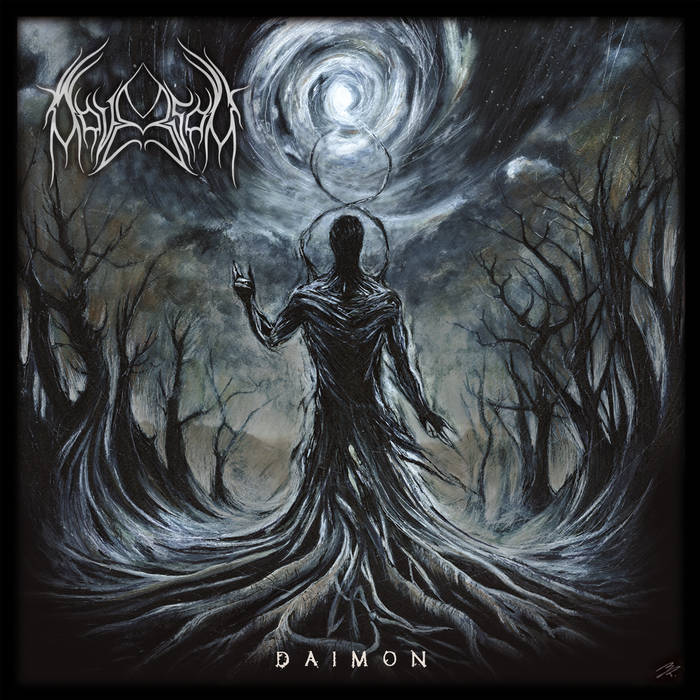
ADVERSAM - Daimon
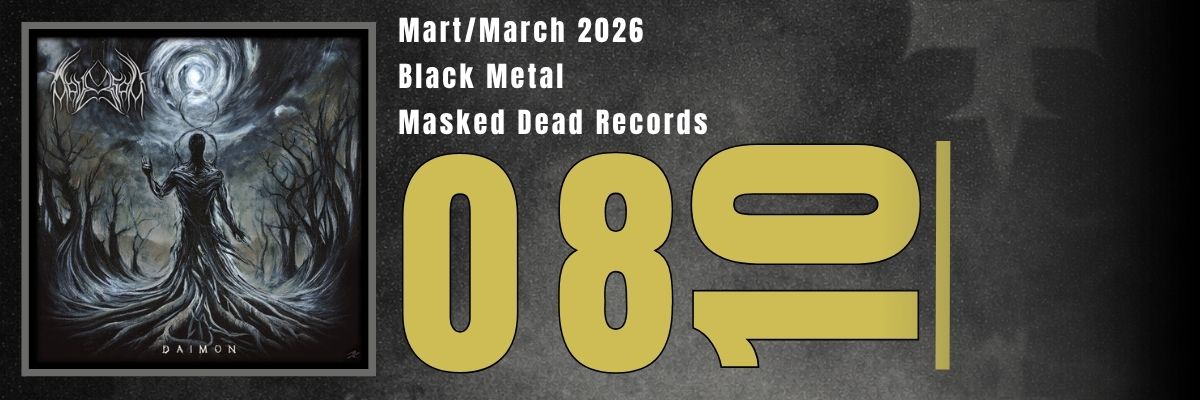
Although the Italian black metal scene has long been positioned in the shadow of the genre’s Northern European narrative, ADVERSAM stands out as one of the acts consistently breaking that geographical expectation with a steady and disciplined output. With roots stretching back to the mid-1990s, the band does not so much reproduce the classical black metal language on “Daimon” as it reorganizes it through a tightened rhythmic and production-driven aesthetic. Arriving after a long hiatus, the record reopens both the group’s historical positioning and its current place within contemporary black metal aesthetics.
From its very first measures, the album opens with riff-centered aggression; a structure built on tremolo lines pushed into constant high-speed cycles, while the drums lock this motion into place through a linear blast-driven mechanism. In the opening track “Fall of Illusions,” the guitars function not only as melodic carriers but also as rhythmic engines: the tremolo patterns rarely orbit a single harmonic center, instead moving through subtle interval shifts that generate continuous tension. Rather than directly replicating 90s black metal references, this approach compresses them into a tighter rhythmic framework.
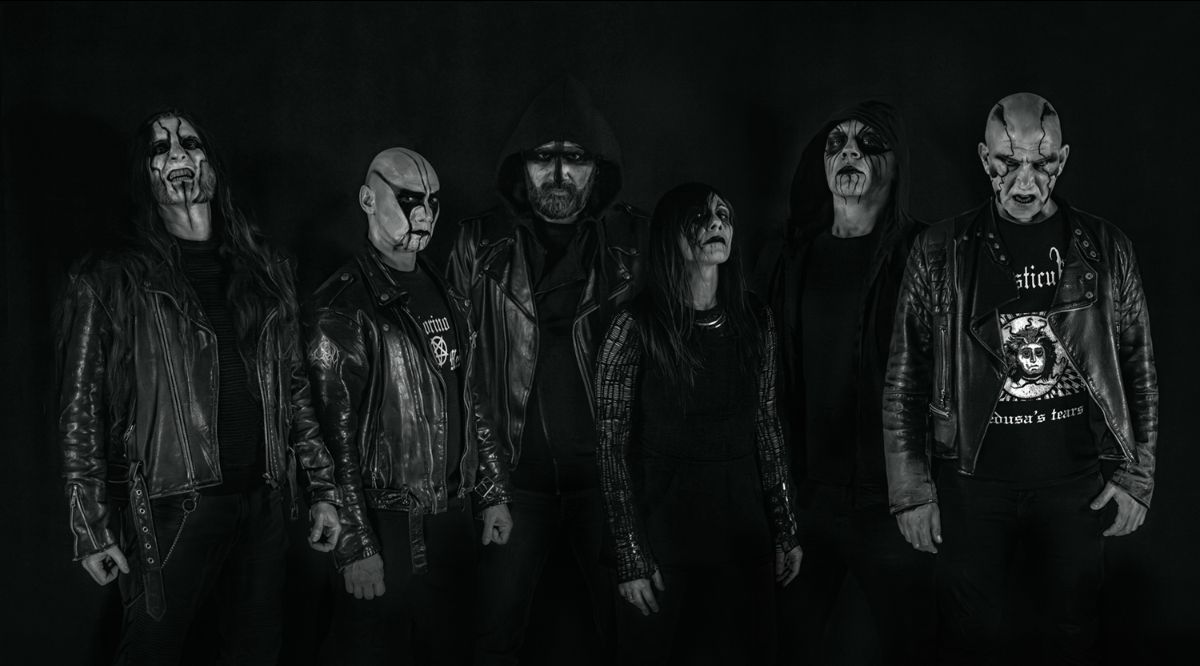
The drum performance emerges as the album’s most defining parameter. Summum Algor’s blast approach is less a pure velocity-driven overflow and more a sense of mechanical continuity. Yet a critical tension arises here: at certain points, this density pushes the guitars’ midrange detail into the background, partially obscuring riff articulation. This becomes particularly evident in high-intensity tracks such as “The Silent Alignment,” where the guitars remain structurally present, but perceptual priority shifts toward the drum surface.
The album’s guitar language operates on two layers. On one side, there are fast, sharply defined tremolo-driven lines; on the other, more controlled melodic leads and harmonic transitions enter the frame. This second layer appears primarily in transitional passages, preventing the compositions from being locked into a single velocity regime. In tracks such as “Echoes of Pain” and “Dead Inside, Alive For a Lie,” brief but pronounced lead guitar entries introduce small tonal deviations without interrupting the tremolo flow. These do not create large-scale melodic expansion; instead, they function as micro-tensions that fracture the existing riff architecture.
The bass is deliberately pulled back in the mix. It does not disappear entirely, but rather operates as low-frequency support, thickening the foundation rather than layering the guitar-drum relationship. While this aligns with a 90s-influenced production logic, within a modern mix context it results in a “shadow instrument” presence.
The synth work forms the album’s atmospheric backbone, though the defining factor here is not intensity but placement strategy. The keyboard layers do not dominate the riffs; instead, they construct a filling atmospheric frame. Especially in introductory and transitional moments, these layers stabilize the background with a sense of “cold emptiness” rather than expanding guitar harmonics. As a result, the synths neither create a fully symphonic expansion nor remain purely decorative; they occupy a functional yet restrained atmospheric role.
The vocal approach is more articulated than typical high-pitched black metal screaming. Katharos’ vocals are not positioned as a dominant front layer in the mix, but rather integrated as a texture interwoven with the instrumentation. This allows the voice to function as a rhythmic accent, particularly in faster sections. However, this controlled placement shifts the vocal character away from dramatic theatricality toward a more neutral, observant expression.
The structural logic of the album is broadly built on a cycle of speed–tension–emptiness. Tracks typically open at high tempo, breathe through short atmospheric breaks, and return to blast-driven sections. This cyclical design makes the 40-minute runtime feel less like a continuous flow and more like repeating blocks of intensity. While compositionally solid, the reliance on micro-level variation in transitions limits long-term dramatic expansion in certain passages.
Tracks such as “Abstract Salvation” and “Essence of Existence” introduce structural deviations that attempt to break this intensity regime. In particular, the slowdown in “Essence of Existence” is not achieved through rhythmic deceleration, but through the vocals being shifted into a lower, more resonant frequency range. This creates a perceived slowing effect based on timbre rather than tempo—structure remains unchanged, perception shifts.
The closing track “The Collapse Within” consolidates the album’s entire aesthetic coordinate system into a final concentrated form. Here, synth layers open a more defined space, while guitars move into wider-spaced tremolo patterns. Even this expansion, however, does not radically disrupt the form; instead, it functions as a closing intensification of the established language.
Overall, the production approach does not simply reproduce a 90s reference point, but rather places it within a tightened technical framework. However, this tightening—combined with moments where drum dominance suppresses guitar micro-detail and synths remain deliberately restrained—creates a limited inter-layer depth in the overall perception field.
For this reason, “Daimon” is neither a nostalgic repetition nor a radical redefinition. It positions itself instead as a rebalanced version of classical black metal language, recalibrated through rhythmic precision and production clarity. While this balance ensures technical consistency, it also deliberately narrows the space for compositional risk.
OZAN
https://maskeddeadrecords.com/
https://maskedeadrecords.bandcamp.com/
https://www.facebook.com/maskedeadrecords/
https://www.instagram.com/maskedeadrecords/