DEMO REVIEW
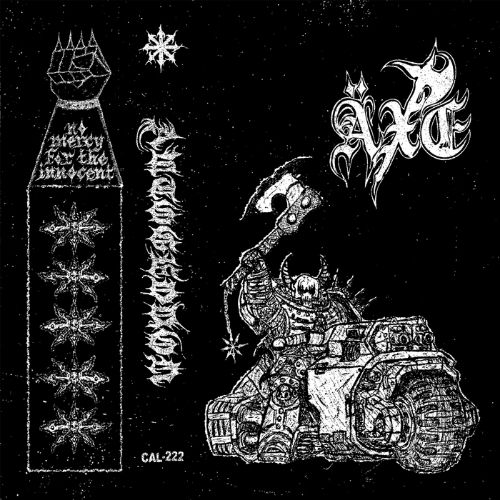
Äxe – Autogeddon
Raw Speed & Black Metal Chaos Revisited
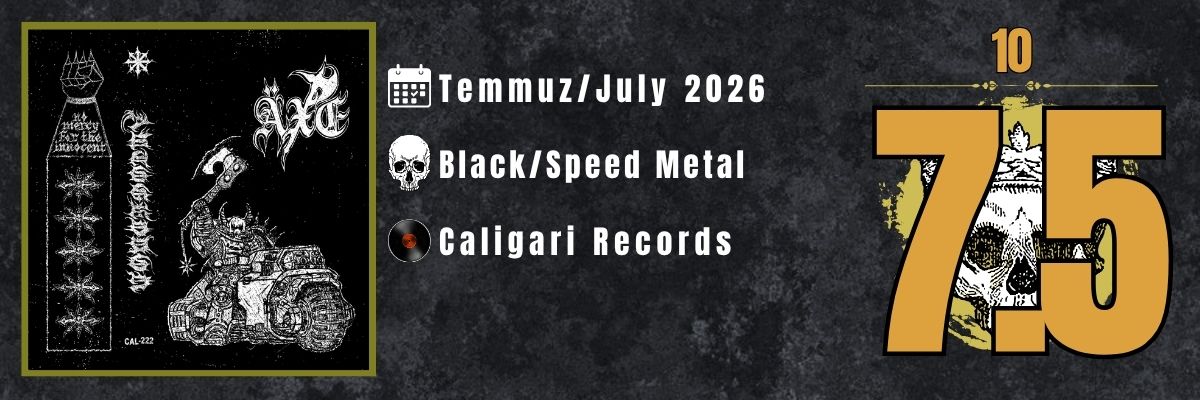
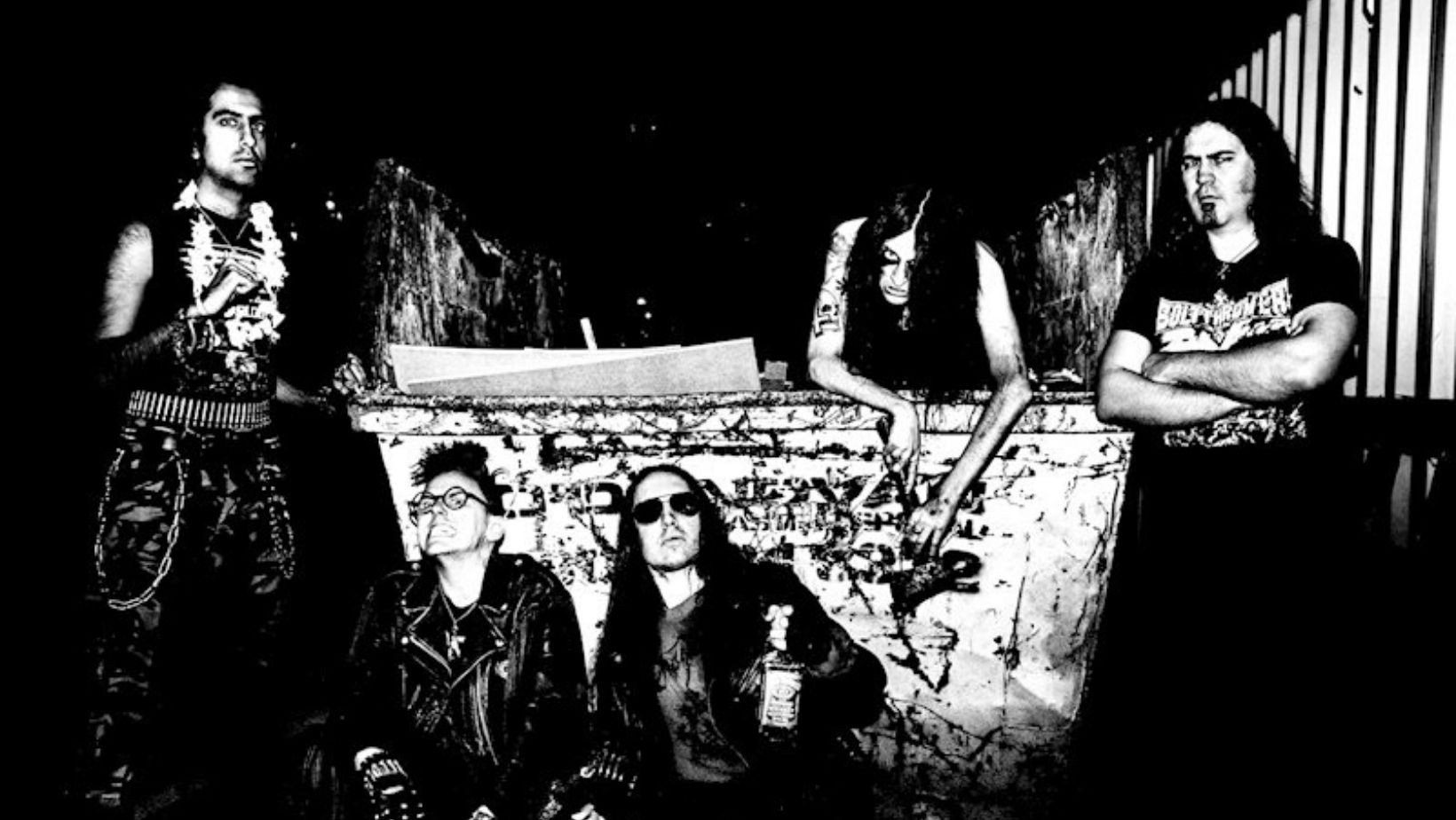
London-based Äxe stand out with a raw, unfiltered extreme metal approach that fuses the speed, thrash, and early black metal currents of the 1980s with a punk-rooted aggression. Their demo-driven output is shaped by a live-performance aesthetic, defined by an uncontrolled grit and immediacy that resists refinement. “Autogeddon,” as the second chapter in this trajectory, expands both the band’s stage-honed experience and their tense positioning across genre boundaries.
The demo attempts to reframe riff design inherited from the 1980s speed/thrash/black metal intersection within a contemporary “underground demo aesthetic.” From the opening moments, the guitar tone is pushed toward high mid frequencies, placed prominently in the mix with a sharp, slightly dirty distortion character. Rather than enhancing harmonic clarity, this choice foregrounds aggression and surface-level rawness; especially in mid-tempo passages, chord resolutions refuse to settle into any clear tonal release, remaining in a constant state of suspension. This pushes the material structurally toward continuously expanding, uninterrupted riff blocks rather than fully articulated musical “sentences.”
The drum performance functions as a central balancing mechanism within this framework. Snare hits are dry and forward, while the kick drum operates less as low-end reinforcement and more as a rhythmic trigger driving momentum. In the speed metal-oriented sections, constant double bass patterns generate propulsion without breaking the linear flow of the riffs; however, in certain transitions, the choice of fills overlaps with rather than separates from the dense harmonic layer created by the guitars, producing a micro-level rhythmic blur. While this blur serves the aesthetic sense of “chaos,” it simultaneously pushes structural clarity into the background.
The bass guitar is primarily positioned to thicken the guitar wall. Rather than independent melodic movement, it follows the same harmonic path as the guitars within a tightly unified mix approach. This strengthens the low end, particularly in groove-oriented mid-tempo sections, but also limits compositional depth, as the lack of bass separation reduces the perceived internal layering of the riffs.
Vocally, the performance is situated closer to black metal aesthetics. Possessed-like, hissing and occasionally strangled scream techniques contrast with the more “street-level” aggression of the speed/thrash riffing. What stands out, however, is that the vocals function less as a guiding narrative force within the riff structure and more as an autonomous texture layered on top, generating a constant field of tension. This choice adds a persistent tension layer rather than supporting the linear architecture of the tracks.
Compositionally, the demo clearly aims to merge different strands of 1980s extreme metal. The speed/thrash drive in the vein of Razor and Iron Angel is placed alongside heavier riffing approaches reminiscent of Morbid Angel and early death metal. However, these elements are often assembled through sequential block placement rather than harmonically justified transitions. This results in a structure that is linear yet fragmented: ideas shift rapidly, but without a consistent developmental logic that transforms one into the next.
One of the most distinctive aspects of the record is its production aesthetic. The mix, handled by Am (Grave Miasma circle), rejects modern sterilization in favor of a natural, unpolished presentation: drums sound organic, guitars remain raw, and the overall dynamic range is unconstrained. This aligns with the demo format and reinforces a “live performance” impression. Yet while this rawness works in its favor at times, it also narrows instrumental separation in more complex riff transitions, reducing detail resolution.
The references highlighted in the label text—G.I.S.M., Aura Noir, and Sacrilege—partially align with the record’s aesthetic framework, particularly in moments where punk energy merges with a speed metal foundation. However, this influence is mostly felt at the level of speed and attitude; instances where these references actively reshape rhythmic or harmonic construction remain limited. As a result, the “black speed metal punk chaos” framing operates more as a performative stance than a fully integrated compositional reality.
Overall, Autogeddon constructs a high-density idea set that is not always bound to a consistently transformative compositional logic. From the listener’s perspective, the record demands an engagement style centered on following linear riff flow and interpreting abrupt shifts in tempo and texture as inter-block transitions. Rather than reworking the 1980s extreme metal vocabulary, the album repackages it as an energy language; however, the extent to which this energy translates into compositional depth remains uneven across its duration.
OZAN
unholyaxekution.bandcamp.com
caligarirecords.com
caligarirecords.bandcamp.com
facebook.com/caligarirecords