
EP REVIEW
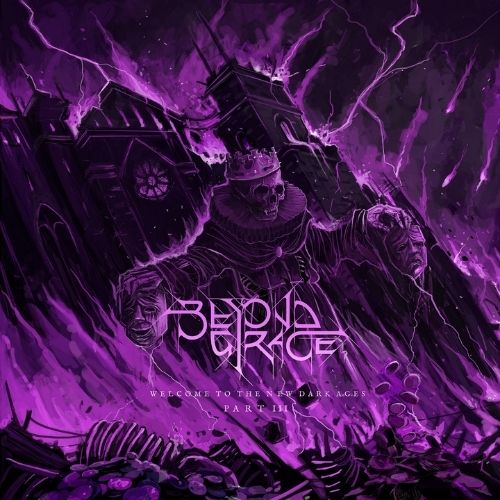
BEYOND GRACE - Welcome to the New Dark Ages, Part 3
Controlled Technical Devastation
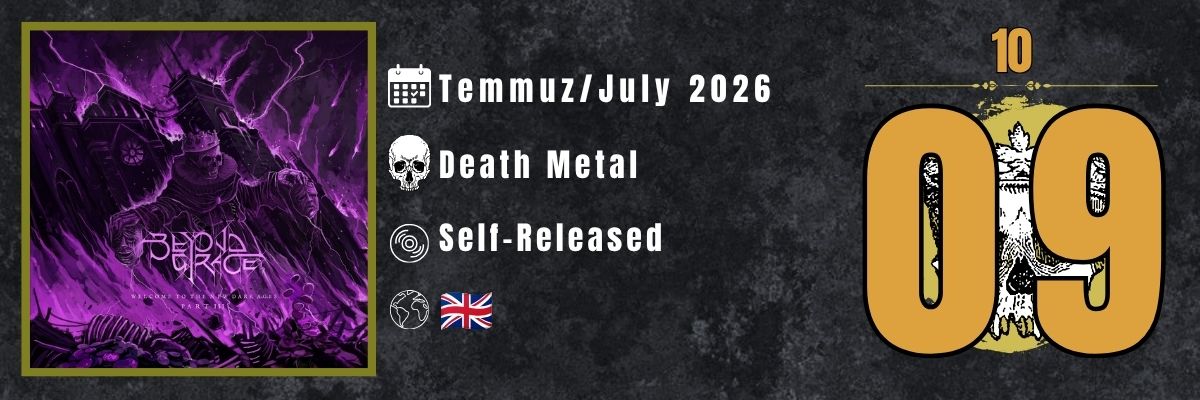
Nottingham, UK-based BEYOND GRACE have carved out a distinct identity among bands fusing modern death metal with progressive structures, hardcore intensity, and technically accomplished riffing. Throughout their career, the band have treated even their shorter releases as opportunities for ambitious songwriting, with the "Welcome to the New Dark Ages" trilogy gradually refining both their musical identity and their political voice. As the concluding chapter, "Welcome to the New Dark Ages, Part 3" aims to push that approach toward a heavier, more focused, and more refined culmination.
Continuing the band's three-song EP format, "Welcome to the New Dark Ages, Part 3" is built around a groove-driven sense of momentum rather than technical showmanship. Its intricate rhythmic shifts aren't there to temper death metal's brute force, but to make it even less predictable. As a result, the EP unites the precision of modern technical death metal with the physical energy of hardcore and deathcore within a coherent compositional framework. Across its roughly fourteen-minute runtime, the release wastes no space, tightening the aesthetic established by its predecessors into something leaner and considerably more aggressive.
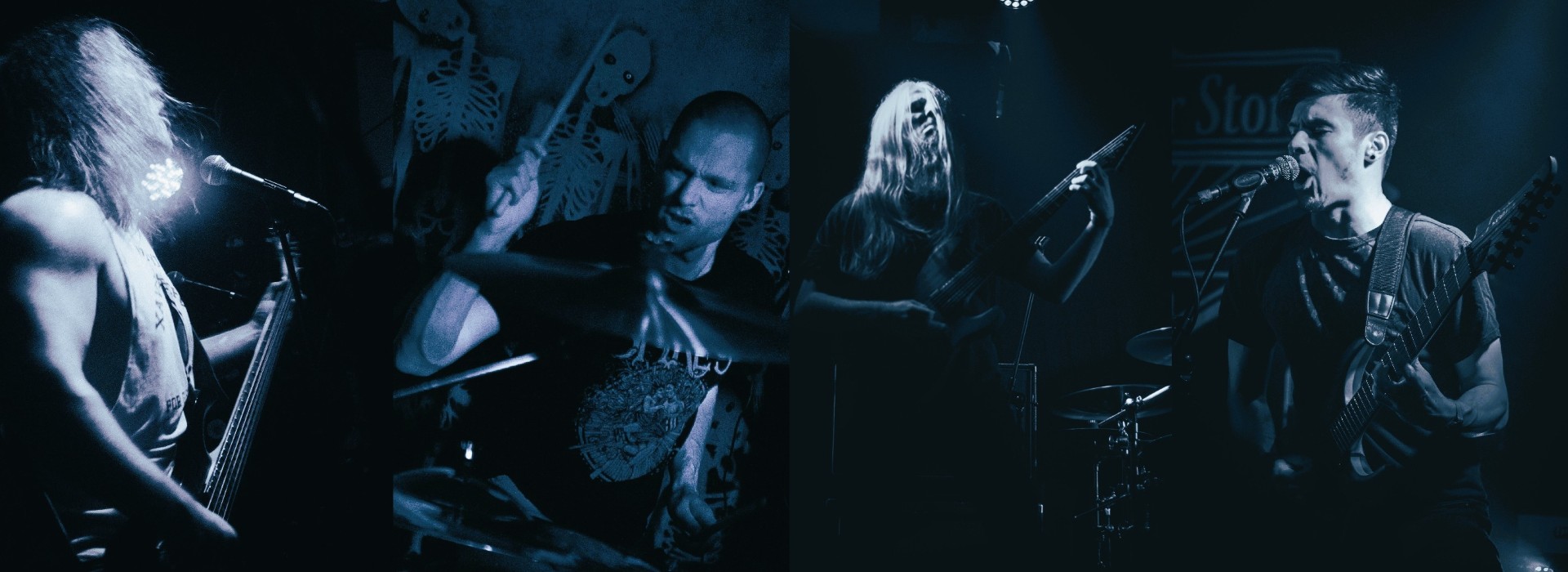
Opening track 'Radium Angels' presents the band's approach in its fullest form. The guitars retain the meticulous character of technical death metal through constantly evolving riff sequences, while the drums' forceful accents prevent the song from becoming a purely mathematical exercise. The contrast between Andy Walmsley's cavernous growls and Bethany Pitts of TRANSGRESSIVE adds more than dynamic variation; it significantly heightens the track's dramatic tension. The occasional clean vocal passages function less as moments of melodic relief than as brief pauses that amplify the impact of the eruptions that follow. Likewise, the avant-garde touches and progressive transitions serve not as ornamental flourishes but as structural devices that continually reshape the song's momentum.
The EP reaches its heaviest point with 'Reign of Error'. Here, technical intricacy takes a step back while massive grooves and beatdown-inflected passages move to the forefront. Although the songwriting draws on DECAPITATED's mechanical brutality, CAR BOMB's rhythmic unpredictability, and the physical force of modern metalcore, BEYOND GRACE never reduces those influences to straightforward imitation. The relentless pressure of the riffs, coupled with the sharp interplay between screams and guttural vocals, gives the song a distinctly live-oriented character. The breakdowns aren't included simply to flatten the listener; they become dramatic pivot points that express the song's political outrage through rhythmic weight.
'First As Tragedy' contains the EP's most compelling compositional idea. Its opening barrage of thrash-infused speed and technical aggression gradually unfolds into an atmospheric finale, yet the transition never feels like an abrupt stylistic detour. As the closing section develops, the increasingly weighty harmonic language, the guitars allowing more space to breathe, and the rhythm section's measured restraint naturally expand the song's dramatic scope. That these shifts feel so convincing despite the track's concise runtime speaks to the band's careful attention to song architecture.
Closing the EP is a reinterpretation of MANIC STREET PREACHERS' 'If You Tolerate This Your Children Will Be Next', which feels less like a nostalgic tribute than a complete reinvention. While the original's melodic and melancholic core is rebuilt entirely within a death metal framework, the riff-driven approach fundamentally transforms the song's identity. The cover succeeds because it doesn't merely make a familiar composition heavier; it makes it sound like a natural extension of BEYOND GRACE's own musical language.
The production strikes a similarly well-judged balance. The guitar tones are dense and compressed in keeping with modern death metal standards, yet the mix never allows the instruments to consume one another. The drums remain articulate enough for the technical passages to retain their clarity, while the vocals sit prominently without feeling artificially pushed to the front. That approach highlights the complexity of the riff writing without sacrificing the music's sense of groove.
"Welcome to the New Dark Ages, Part 3" occupies a distinctive place at a time when technical death metal can increasingly drift toward sterility and technical exhibitionism. BEYOND GRACE use progressive ideas not as a showcase for virtuosity, but as a means of increasing the physical impact of their songs. Equally important is the way the band's political themes are reinforced through the pressure of the riffs, rhythmic disruption, and vocal variety rather than reduced to direct slogans. This EP doesn't radically redefine the genre, but it does refine the hybrid space between modern death metal and hardcore into something more focused, more controlled, and ultimately more convincing, providing a powerful closing chapter that further sharpens BEYOND GRACE's artistic identity.
OZAN