
ALBUM REVIEW
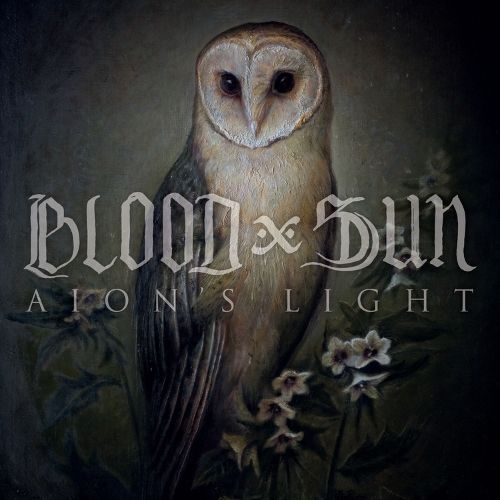
BLOOD AND SUN – Aion’s Light
Pagan folk shaped by cassette darkness.
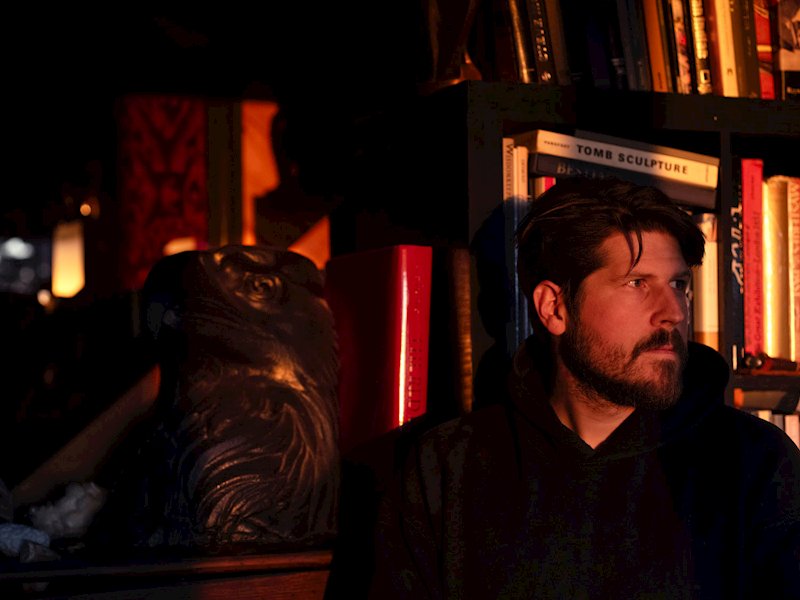
BLOOD AND SUN’s third full-length, "Aion’s Light", finds Luke Tromiczak taking his vision of American neofolk back to its most stripped-down recording foundations. Recorded on the same Tascam 414 four-track cassette recorder used for the project’s earliest demos, the album was tracked in the order the songs were written, with effects committed directly to tape and each overdub limiting the options available for subsequent adjustments. This approach affects not only the sound itself but also the way the compositions take shape. While preserving the spontaneity of Tromiczak’s initial ideas, the decision to forgo later corrections also makes their inherent risks part of the music.
The album brings together the folk traditions of the 1970s, the dark aesthetics of underground black metal, and atmospheres reminiscent of old horror films. Yet reducing "Aion’s Light" to lo-fi neofolk would mean overlooking the dramatic variety of its compositions. Striking acoustic guitar chords form the foundation of arrangements that expand through bass, keyboards, and percussion. Rather than merely extending a limited pool of musical ideas, repetition gradually lends them greater emotional weight. The rough texture of the tape recording is not a flaw separate from this framework; it helps determine how the guitars, vocals, and atmospheric details blend together. That said, the effectiveness of this approach does not mean every track is equally strong as a composition.
Luke Tromiczak’s resonant baritone is the primary element defining the album’s narrative identity. His theatrical phrasing brings together the storytelling tradition of folk and the dramatic sensibilities of gothic music. Recalling the dark narrative world of Leonard Cohen, this vocal style carries particular weight on tracks such as 'Gifts of Oneiroi' and 'Aion’s Light'. 'Jacob’s Ladder', meanwhile, reveals another side of the album through its evocation of Western music. Its dramatic storytelling establishes a distinct character despite the simplicity of the guitars. 'Life Lessons' follows a similarly direct path, with Tromiczak’s vocal performance maintaining the music’s emotional centre.
As the album progresses, the songwriting begins to yield more convincing results. The unsettling atmosphere of 'Horrid Host' becomes more credible through the fluctuations and imperfections of the cassette recording. The instability of the sound heightens the track’s unease, while the simplicity of the arrangement prevents that effect from dissipating. 'Axe and Mistletoe' stands out for its rhythmic movement and dramatic build. The pulse-like percussion combines with the atmospheric textures of the keyboards, opening up a broader expressive space for the song. Here, the relationship between the different layers does more than establish a dark mood; it also shapes the music’s tension.
'A Nation Falling' is one of the moments when the album moves closer to a more traditional neofolk approach. Its simple guitar foundation and measured delivery create space for the lyrics to come to the fore. By contrast, 'All Is Bloom All Is Ruin' expands the album’s dramatic scope through a more grandiose arrangement. The increasingly prominent keyboards and rising musical intensity distinguish it clearly from the more restrained arrangements of the preceding tracks. 'Kiss the Wilds' also serves as a point of emphasis for the album’s atmospheric side. Taken together, these songs reveal that Tromiczak is not simply applying the same sonic palette to different compositions; he is attempting to draw different dramatic scales from similar musical materials.
Even so, the limitations imposed by the recording method do not prove equally productive throughout the album. The opening title track and 'Kiss the Wilds' struggle to attain the dramatic weight found in the later songs. The storytelling power that becomes increasingly apparent as the compositions unfold has yet to fully establish itself in the opening stretch. This can be understood as an imbalance resulting from the spontaneity gained by recording the songs in the order they were written. The four-track setup preserves the initial form of the ideas, but it does not guarantee that every composition will reach the same level of maturity.
A more significant trade-off emerges in the album’s sonic landscape. Although the raw texture of "Aion’s Light" reinforces the music’s directness and fragility, it cannot replace the broader, richer soundscape heard on BLOOD AND SUN’s previous album, "Love & Ashes". The keyboards and acoustic guitars here sit closer together within the more limited recording environment, and in certain passages, the music’s grander dimensions struggle to fully unfold. Nevertheless, a cleaner, more expansive production would not necessarily improve the album’s character. The instability created by the cassette texture intensifies the unease the music seeks to convey, particularly on tracks such as 'Horrid Host'. The question, then, is not whether a raw sound is inherently good or bad, but where this choice becomes a creatively effective part of the songwriting.
On "Aion’s Light", BLOOD AND SUN brings the American neofolk tradition into contact with gothic storytelling, pagan associations, and the underground aesthetic of black metal, transforming the genre’s familiar acoustic simplicity into a more dramatic mode of expression. Elements that evoke disparate musical worlds, from Scott Walker and Woven Hand to Swans and Of the Wand and the Moon, function less as evidence of direct imitation than as reference points that illuminate different facets of the album’s approach. Its originality lies not in the number of influences it draws upon, but in its ability to hold traditional folk songwriting, rough recording textures, and theatrical vocals within a coherent aesthetic framework.
Although "Aion’s Light" does not achieve the same level of success with every track, it clearly demonstrates Tromiczak’s songwriting ability and distinctive vocal identity. Sacrificing the detail and depth that a more polished production could provide occasionally restricts the music’s expressive range, yet that same decision lends a particular fragility to the album’s most compelling moments. The result of this risky undertaking is a neofolk record that prioritises preserving the initial shape of its compositions and the imperfections of its delivery over achieving a flawless sonic design. Its most lasting impact comes when it builds its darkness not through grandiose arrangements, but through the tension created by simple chords, measured vocals, and the shifting texture of cassette tape.
