
ALBUM REVIEW
CH’AHOM - Anthropic Rites of Sublimation
Ritualistic, dark, progressive and uncompromising death metal.
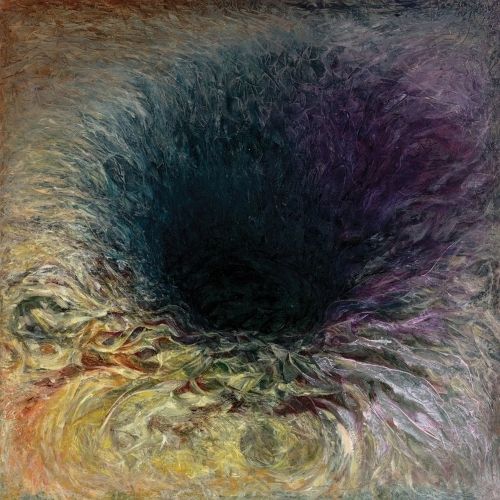
In Germany’s underground death metal scene, defining CH’AHOM simply as a black/death metal band leaves out a significant part of the world the band has built through its music. Drawing on the rituals, architecture, and concepts of death found in pre-Hispanic cultures, the fictional universe running through "Anthropic Rites of Sublimation" does not feel like a concept layered onto the music after the fact, but rather a framework that shapes how the compositions move. Released on September 18, 2026, via 20 Buck Spin, the five-track second album runs for roughly 29 minutes and, as a result, feels less like a collection of independent songs than a record opening onto different sections of the same dark space.
One of the first things that stands out about CH’AHOM’s music is the way it combines death metal’s physical weight with black metal’s approach to tremolo picking and vocals without surrendering to technical showmanship. Riffs frequently change direction, rhythmic accents shift, and the relationship between guitars and drums keeps the structures in constant motion. Even so, many of the transitions never create a sense of randomness or complexity for its own sake. In the faster sections, blast beats, tremolo guitars, and sharp rhythmic breaks drive the music forward, while the heavier mid-tempo passages show that this movement is not simply a matter of speed. This is where CH’AHOM’s progressive side becomes most apparent: complex structures are used not to explain the music itself, but to alter the tension within the riffs.
The opening track, 'Cult Of Xaman', is a direct example of this approach. The song begins with a dark, ritualistic atmosphere before shifting into direction-changing guitar riffs, bursts of speed, and rhythmic breaks. The sounds in the background and the way the vocals occasionally recede behind the instrumentation keep the track from becoming merely a death metal attack. The combination of black metal screams and deep, coarse death metal growls is another element that helps define the album’s overall character. Rather than constantly pushing the vocals to the foreground, CH’AHOM makes them part of the music’s darker texture.
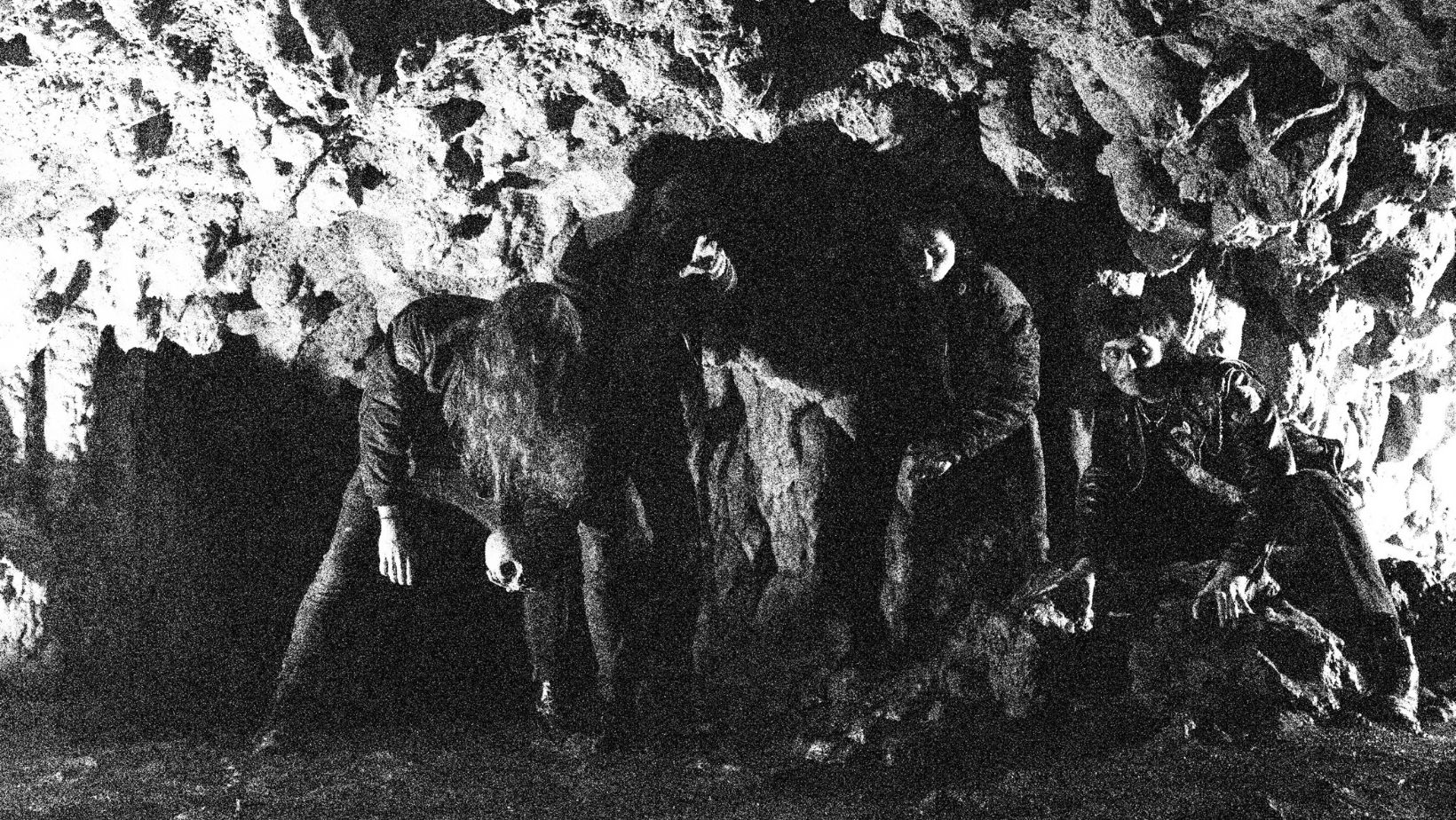
photo by: Schwarz Leere
Following 'Cult Of Xaman', 'Reign Of Nohol' brings the progressive side further into focus. Between death metal’s more direct riffing, the guitars open into unusual rhythmic movements and atmospheric transitions. The way the riffs connect gives the impression that the song is not following a conventional verse-chorus structure, yet the arrangement never feels completely uncontrolled. The drums consistently support the guitars’ movement, while the rhythmic changes preserve the song’s backbone. What matters about the technical approach here is that it never pushes the music toward the sterile, overly polished aesthetic of modern technical death metal. The raw, cavernous production preserves the physical weight of the guitars and drums.
'Priests Of Lik’in' is one of the album’s shorter and more direct tracks. Within its roughly four-minute runtime, CH’AHOM reveals a more accessible side without abandoning its technical detail. The clearer progression of the riffs gives the song a more defined place within the album. Melodic touches, tremolo passages, and rhythmic aggression come together within the same structure. Particularly here, the distinction between technical playing and songwriting becomes important: the complexity is audible, but complexity itself is not what defines the whole track.
'Chosen Of Chik’in', meanwhile, makes more pronounced use of transitions between atmosphere and direct death metal attack. Preserving space between the guitars and drums keeps the song from becoming an endlessly dense mass of sound. The contrast between heavier sections and calmer passages shows that the album does not build its dark atmosphere solely through distortion or speed. Some atmospheric and doom-tinged moments introduce a different kind of intensity after the constant forward motion of the preceding tracks. Instrumental sounds carrying an ancient ritual feel and vocal layers used in the background further reinforce the musical expression of the concept.
The album’s real expansion comes with 'Insemination', which runs for 10 minutes and 44 seconds. Following the shorter, sharper structures of the first four tracks, this runtime gives CH’AHOM the space to develop its ideas on a broader scale. The song initially moves at a slower pace; the distance between the riffs opens up and the structure is established in a more controlled manner. An atmospheric section then emerges: reverberated guitars and a mid-tempo drum rhythm create a temporary departure from the physical violence found elsewhere on the album. That calm does not last long; when the mid-tempo, heavy death metal riffs return, background lead guitars and layered vocals once again create an atmosphere of unease.
The importance of 'Insemination' lies in more than simply being the album’s longest track. The abrupt movements heard more frequently across the first four songs take on meaning within a broader composition here. The return of certain musical ideas from earlier tracks prevents it from feeling like an isolated finale disconnected from the rest of the album. For that reason, "Anthropic Rites of Sublimation" is better understood as a whole rather than on a song-by-song basis. The boundaries between tracks occasionally become deliberately blurred, while the album’s roughly half-hour runtime reinforces that sense of unity.
Another striking aspect of CH’AHOM’s music is the way the band combines the traditional physical weight of death metal with a ritualistic atmosphere. The album’s concept is not simply a backdrop contained in the lyrics or cover artwork. The ritualistic accents in the drums, instrumental sounds evoking ancient cultures used in the introductions, background choirs, and atmospheric interruptions place the fictional world of four civilizations developing around a cenote directly into the musical structure. Death therefore does not remain merely one of extreme metal’s frequently used themes; it becomes a concept that shapes the album’s form. The idea of people developing rituals, hierarchies, and social structures in the face of inevitable extinction finds its musical counterpart in the way the music constantly moves between violence and ritual.
One important consequence of this approach is the album’s restraint in melodic terms. CH’AHOM does not rely on long melodic passages or obvious choruses to create atmosphere. Instead, it builds a memorable character through tremolo guitars, brief lead touches, rhythmic repetition, and atmospheric space. As a result, the individual tracks may not immediately distinguish themselves from one another on a first listen. But this has less to do with the compositions sounding alike than with the album deliberately moving within a single narrative. Even more direct tracks such as 'Priests Of Lik’in' remain part of that whole.
The production is also an important part of this aesthetic choice. Rather than fully polishing the technical details of the guitars, the raw, heavy sound places them within a sense of physical density. The audible bass is particularly notable; it is not simply used as a supporting instrument buried beneath the guitars. The drums are another one of the album’s most pronounced physical forces. Blast beats and heavy strikes come to the fore in the faster sections, while the weight of the drums in the mid-tempo passages gives the riffs greater support. This balance keeps the band’s technical side from being sterilized by the production.
The album’s position within the genre spectrum also becomes clearer here. Black metal, death metal, war metal, and progressive/technical death metal elements all coexist, but the album does not make any one of them its absolute center. Certain riff movements recall the cosmic and progressive death metal approach of BLOOD INCANTATION’s early period, while the heavier mid-tempo sections can evoke INCANTATION. However, CH’AHOM’s pre-Hispanic ritual aesthetic, atmospheric passages, and use of ritualistic sounds prevent these references from becoming a directly imitated model. What ultimately defines the band is the way it makes these influences functional within a single dark narrative.
"Anthropic Rites of Sublimation" therefore aims to be more than a death metal album interested in displaying technical proficiency, but it does not do so by claiming some grand musical rupture either. CH’AHOM’s achievement lies primarily in the way it uses familiar extreme metal tools. The riffs are harsh, the drums are physical, the vocals are feral, and the production is raw; yet the ritualistic sounds, rhythmic breaks, atmospheric sections, and extended closing track placed among them give the album a context of its own.
At roughly 29 minutes, the album brings this music to a close without stretching its impact unnecessarily. The way 'Insemination' approaches its unexpected ending in particular works as a musical counterpart to the album’s relationship with death and extinction. What matters here is less the dramatization of death than the acceptance of its inevitability. CH’AHOM does not express this through quiet resignation, but through ritual, violence, and chaos.
"Anthropic Rites of Sublimation" is an album in which CH’AHOM manages to hold death metal’s primal weight together with a progressive approach to structure and a ritualistic atmosphere, placing greater importance on cohesion than on the memorability of individual tracks. Each of its five songs has its own space to move within, yet the band’s real identity emerges from the enclosed, dark world they create together. It does not attempt to break down genre boundaries; instead, it narrows its own territory by connecting the harshness of black, death, and war metal, the flexibility of progressive structures, and the ritual aesthetic of its concept within the same narrative. What remains is not merely a ferocious death metal record, but a compact work whose music and subject matter cannot be considered separately, revealing more of its detail with each listen.

https://www.facebook.com/20buckspin
https://www.instagram.com/20buckspinlabel