
Album Review
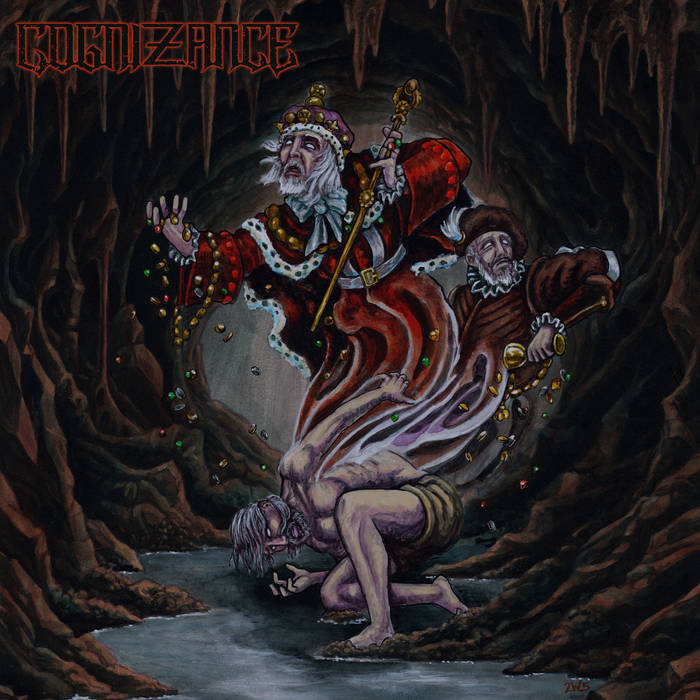
Cognizance - In Light, No Shape
Cognizance
Willowtip Records
Technical Melodic Death Metal / Deathcore
7.5/10
The UK technical death metal outfit Cognizance released their fourth full-length album, In Light, No Shape, on May 1 via Willowtip Records. This time, Cognizance don’t seem particularly concerned with proving anything. That’s the first impression it leaves. In Light, No Shape doesn’t pursue extremity as spectacle; instead, it leans toward a more deliberate focus. A controlled abrasion where highly calculated outcomes and unstable strikes coexist side by side without colliding.
Considering the band’s lineup stability since 2012, the personnel shift stands as the most visible rupture on In Light, No Shape, though the real transformation is found in subtler details. Alex Baillie stepping into vocal duties doesn’t only reshape the front line — it also produces a noticeable shift in the band’s internal dynamics. The guitars no longer rise like layered architecture; instead, they function more like a pressurised machine, a change that is perhaps most evident in the drumming, an essential structural component of the album’s organic closing texture. There’s a rawness in the execution, but not in the usual sense of a “deliberately dirty sound.” It’s more about physical contact: edges left unpolished, transitions refusing to hide their seams.
“Transient Fixations” establishes this tone early on; not through excess, but through an approach that avoids unnecessary ornamentation and plays directly to the point. It moves quickly, yet never feels rushed. The technical framework is dense and clearly articulated, but consciously restrained, as if the band is resisting the impulse to over-detail everything. This tension carries into “A Game of Proliferation,” where the structure hints at something broader but keeps folding back into itself, delaying the expected burst of release.
There are moments where this approach almost works against itself. “Inflection Chants” lingers too long within its own atmosphere, while certain parts of “Vertical Illusion” give the impression of complexity added out of habit rather than necessity. Yet these imperfections also reveal how the band is attempting to shape its new direction. They show a group testing its instincts in real time, still undecided on how far to push forward or pull back.
When the balance locks in, the impact becomes more destructive. “A Reconfiguration” strips the structure down: rhythm first, then detail — and for that reason the track hits harder than expected. “Witness Marks” and “Subterranean Incantation” bring melody further into the foreground, but this does not dilute their destructive force; instead, space and pacing take over part of the weight usually carried by sheer density. These tracks don’t feel like a step back, but rather a choice to distribute intensity in a more controlled manner.
The production supports this direction as well. It avoids the genre’s typical hyper-polished sheen in favour of a more fluid structure. Instruments are not locked into rigid positions; instead, they circulate within the mix, creating a sense of movement rather than separation. This occasionally blurs finer details, but it also introduces a sense of vitality that cleaner productions often lose.
The most memorable aspect of the album lies in its relationship with momentum. Tracks like “Induced Contortions” and “The Zone” return to technical intensity, yet even here the focus seems less on moments of explosion and more on control. Which ideas are allowed to remain partial, and which are carried through to completion. It doesn’t always move smoothly — and it never intends to.
"In Light, No Shape" feels like a band narrowing its focus rather than expanding its scope. Not a reinvention, not even a clearly defined step forward. More like a refusal to repeat the same language. Some ideas are left unrealised, some transitions deliberately remain angular. But that unease forms the album’s identity. It doesn’t settle into a fixed shape. And that, ultimately, seems to be the point.
OZY