Album Review
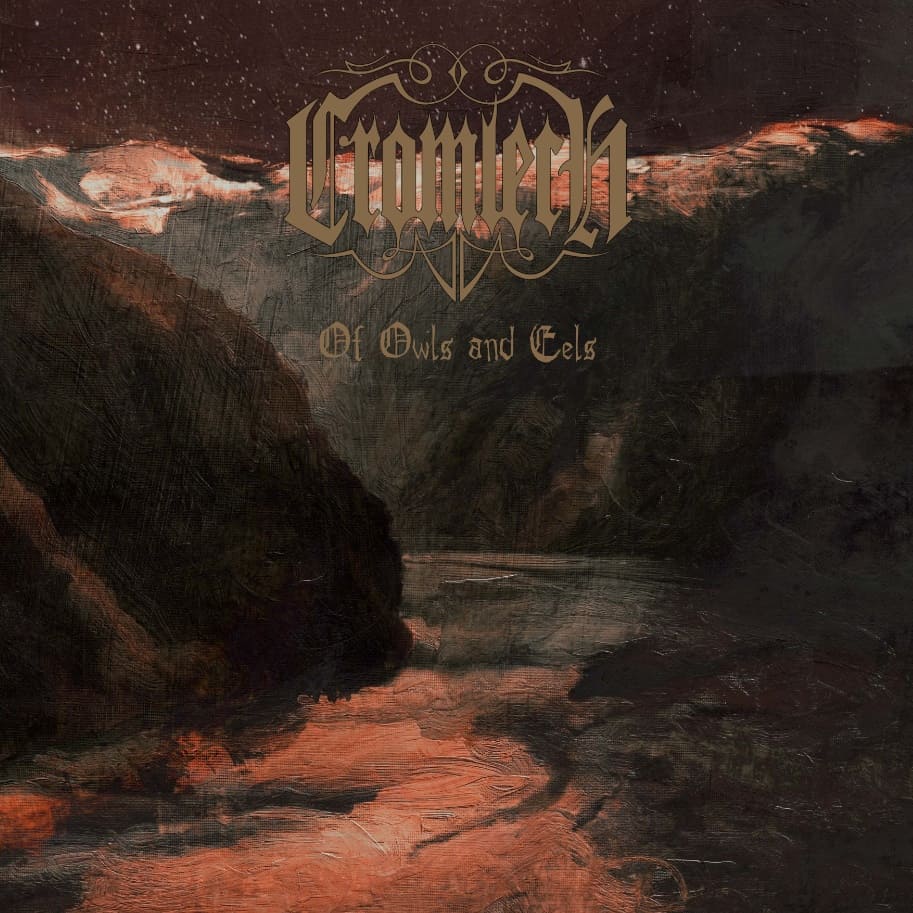
CROMLECH - OF OWLS AND EELS
Darkness Shall Rise Productions
Black Metal
08/10
Of Owls and Eels doesn’t so much begin as it seeps in—like a low hum rising from somewhere deep within the echoes of the past. It feels carved out of time itself, shaped by a mind that remembers through darkness. First conceived in 1994, Cromlech resurfaces under Eugen Herbst’s unpredictable vision, both revering and unraveling the frozen traditions of black metal. This is neither a memorial nor a hollow exercise in nostalgia; it’s closer to the echo of a lost identity wandering through a fog-drenched labyrinth—at once outwardly expressive and deeply introspective, ritualistic yet exploratory.
The album opens with “Old Incineration Hymn,” a brief but striking lament. The breath of a church organ and the weight of a shadowy ceremony immediately pull the listener inward. What follows, “Past Forever,” feels like suppressed rage breaking the surface—layered, suffocating organ textures, pitch-black vocal lines, and guitars that spiral upward in barely controlled tension.
Tracks like “Owls in the Fog” and “Ice Curse” further cement the album’s cold, gothic core. “Ice Curse” in particular stands out, its chilling melody cutting straight to the bone. At times it slows into something resembling a dirge, only to drag you into a darker trance with ritualistic percussion. Subtle touches—like the careful use of ride cymbals—reveal a level of detail that rewards close listening. For fans of the genre, it strikes that rare balance between the familiar and the quietly refreshing.
At the heart of the record lies the two-part “Eels” section, where things take a more introspective turn. “Eels (Part I)” introduces acoustic guitars, spoken word passages, and dim, ghostlike keys—figures that seem to whisper from within a dead dream. Here, Cromlech steps outside the rigid boundaries of black metal, guiding the listener into something more internal, more personal. Its continuation, “The Quiet Witness,” bends the perception of time and space, unfolding like a surreal nightmare that lingers long after it fades.
The album closes with “Mordlust,” functioning almost like a death march. It delivers a crushing yet emotionally charged finale, weaving melodic fragments into waves of brute force. Vocally, the performance remains fluid throughout—shifting from piercing, near-hysterical cries to hushed, almost whispered passages. This dynamic range adds a strong theatrical dimension, giving the album an ever-shifting emotional weight.
With Of Owls and Eels, Cromlech moves beyond simply channeling the spirit of the ’90s. Instead, it reaches into the present with a kind of melancholy that doesn’t fully belong to that era. It reminds us that black metal isn’t just about speed or aggression—it’s about narrative, atmosphere, and the ability to evoke something lasting. Here, melodies settle in like memories, while passages echo like fragments of forgotten rituals. This constant drift between dream and wakefulness doesn’t try to define reality—it erases its boundaries altogether.
Of Owls and Eels isn’t just a continuation of a return—it feels like a message sent from the shadow of the past. Black metal, in this sense, becomes more than a genre; it becomes a form of memory. And within that memory, the deepest marks are left in those fragile spaces between silence and noise. Cromlech walks that fine line with intent—honoring the past while unearthing buried emotions, forgotten moments, and the lingering traces time refuses to fully erase.