Album Review
DARK MILLENNIUM - Come
DARK MILLENNIUM approach riff design on their sixth full-length album “Come” not as a linear progression, but as a perceptual architecture that is constantly being dismantled and rebuilt. The guitars are defined by psychedelic abrasion layered around classic death metal assaults and unresolved chord structures drifting in the low-mid frequencies. This framework causes the riffs to be perceived less as “completed” ideas and more as temporary pauses within an ongoing movement. In particular, the abrupt ruptures that emerge during transitions prevent the compositions from revolving around a fixed center, keeping the tracks in a constantly shifting form.
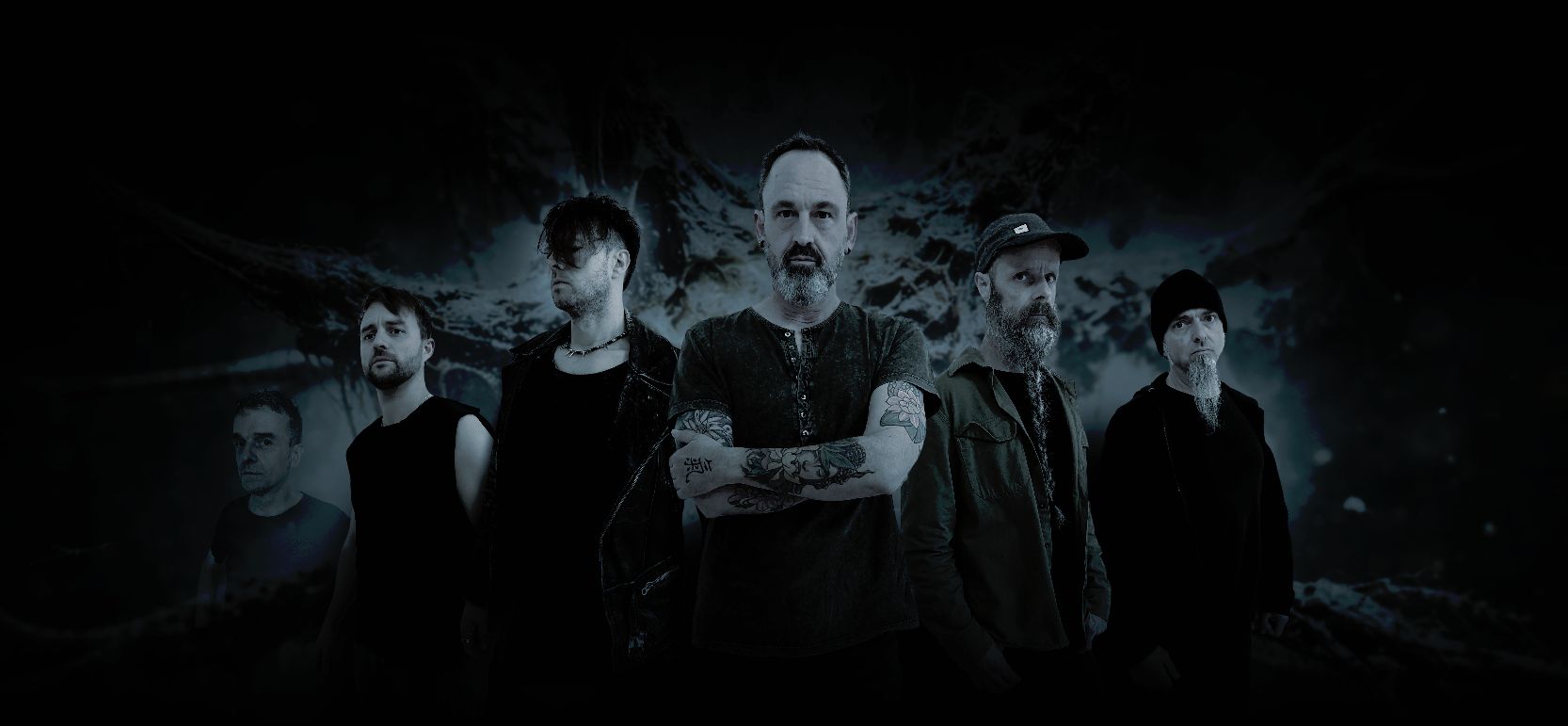
The drumming performance is one of the most decisive elements of this unstable structure. The shared drumming language of Andre Schaltenberg and Christoph Hesse operates not only through tempo changes, but through a continuous displacement of rhythmic center of gravity. Aggressive death metal passages that push forward in one section transform into an almost ritualistic slowness within the heavy doom segments that follow. These transitions pull the dramatic flow of the tracks away from traditional “song structure” logic, moving it closer to a stream-of-consciousness perception of time. However, this variability does not always create a sense of organic cohesion; in some sections, the transitions between rhythmic ideas are deliberately left sharp, producing moments of conscious rupture rather than controlled chaos.
The bass guitar, through Gerold Kukulenz’s interpretation, moves beyond its supporting role and becomes an element that defines the harmonic center of gravity, particularly in mid-tempo passages. In tracks such as “Amber”, the bass lines create a gravitational stabilizing force that anchors the psychedelic guitar loops, while in more aggressive sections this role disintegrates, and the low frequencies turn into an amorphous mass that heightens the overall tension.
The vocal performance opens a space in which Christian Mertens is positioned as the most defining instrument. His vocal approach is not based on a single technique; instead, there is a constant shift between whisper-like close-mic passages, guttural mid-tones, and suddenly erupting screams. What matters here, however, is less the variety itself and more the relationship the vocals establish with the rhythmic structure. Rather than riding on top of the riffs, Mertens often cuts through them, using phrasing as a disruptive force within the rhythmic flow, while creating his own orbit. This becomes one of the key components reinforcing the album’s overall sense of “fragmented consciousness”.
From a compositional standpoint, “Come” almost entirely abandons conventional verse–chorus logic. The tracks are not built from connected themes, but from sections that constantly negate one another. As in the transition between “Here” and “Amber”, the atmosphere created by one piece is often not resolved in the next, but instead redirected through another psychedelic form. This approach removes the album from a linear listening experience and turns it into a constantly repositioning sonic architecture.
Production choices are a critical factor supporting this structure. The analog-leaning, dirty yet controlled mix creates a distinct “dusty” space, particularly in the overlapping frequencies of the guitars. This aesthetic deliberately moves away from the sterile, hyper-separated mixing approach commonly found in modern extreme metal, producing a conscious blur between the instruments. However, this blur does not always function as a dramatic advantage; in some dense passages, the proximity between guitar and drum layers causes certain details to be lost. This leaves open the question of whether this is an intentional production decision or a structural limitation.
One of the album’s most critical aspects is the question of whether its psychedelic and avant-garde elements truly transform the underlying structure. In tracks such as “Green God” and “Witchcraft Island”, the more open melodic and ritualistic passages suggest a different atmosphere on the surface, yet they rarely create a rupture that fundamentally alters the riff logic; instead, they function more as layers added on top of the existing structure. In contrast, sections like “Fear Forest”, with their dissonant guitar writing and asymmetrical riff cycles, genuinely stretch the death/doom framework and produce a more lasting structural impact. This contrast reveals that the experimental ideas do not always operate at the same depth.
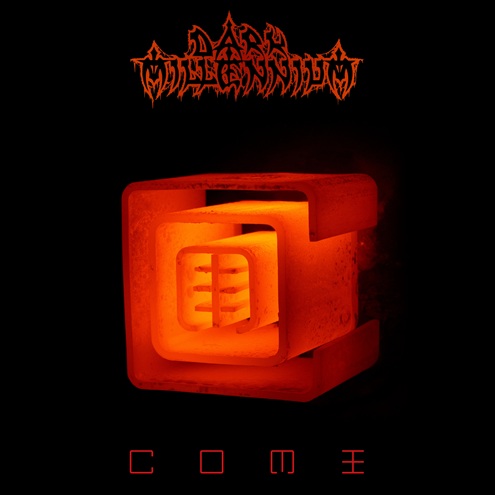
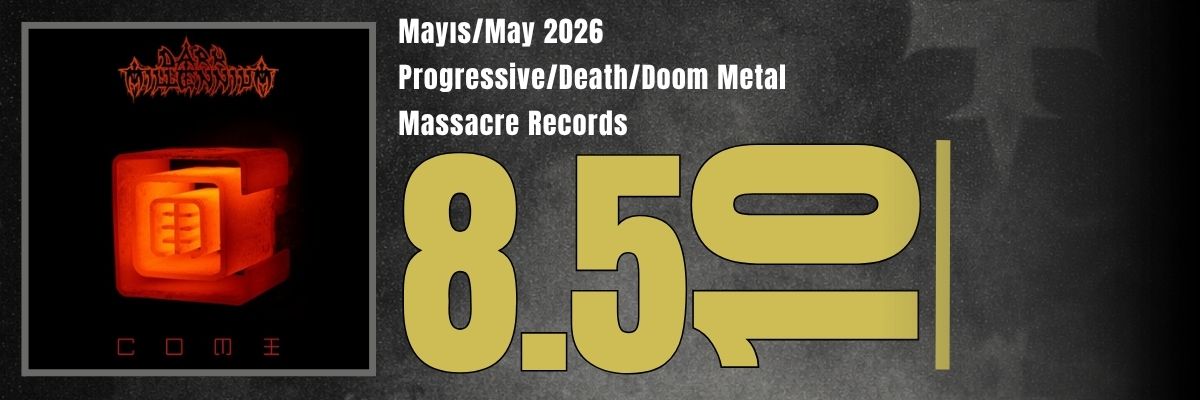
The same ambiguity is also felt in the visual aesthetic. The minimal and symbolic cover design aligns with the album’s analog and raw sonic character, yet this simplicity sometimes fails to establish a true tension with the music’s intensity, instead functioning as a surface-level accompaniment. In other words, the visual language falls short of fully reflecting the album’s sonic complexity.
Ultimately, “Come” is built on a compositional approach that does not completely abandon DARK MILLENNIUM’s death metal-rooted identity, but continuously disrupts and redefines it. The album demands not linear listening, but constant shifts of attention and repeated refocusing. However, this demand is not always balanced by structural resolution; in some sections, the density of ideas exceeds the form’s capacity to contain them. Even though DARK MILLENNIUM have taken long breaks throughout their career, their continued presence, output, and distinct voice within the death metal scene remain highly significant.
OZY
https://darkmillennium.bandcamp.com/
https://www.facebook.com/DarkMillenniumOfficial
https://www.darkmillennium.de/
https://www.instagram.com/darkmillennium