
Album Review
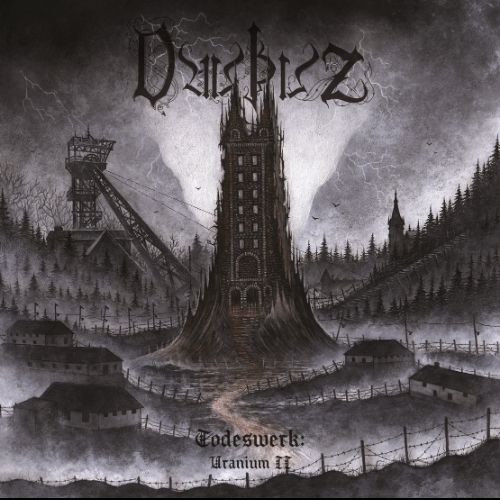
DAUÞUZ - Todeswerk: Uranium II
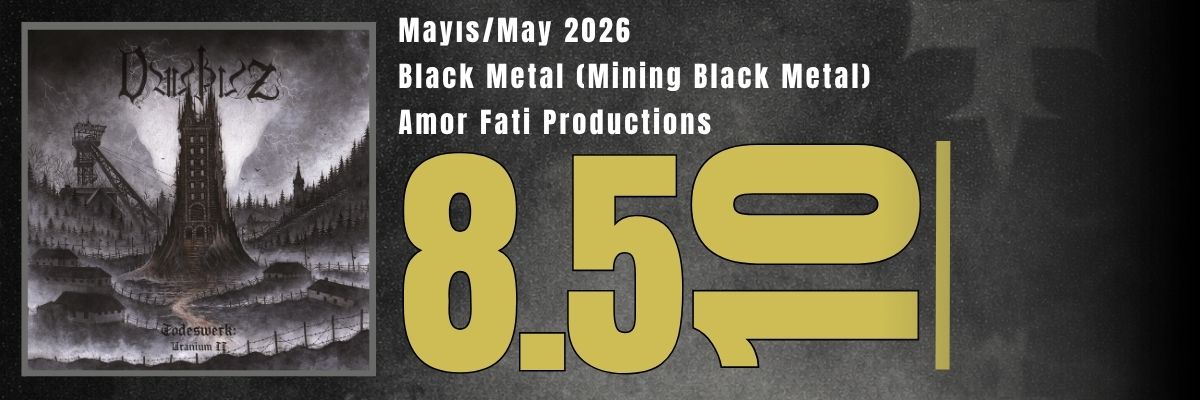
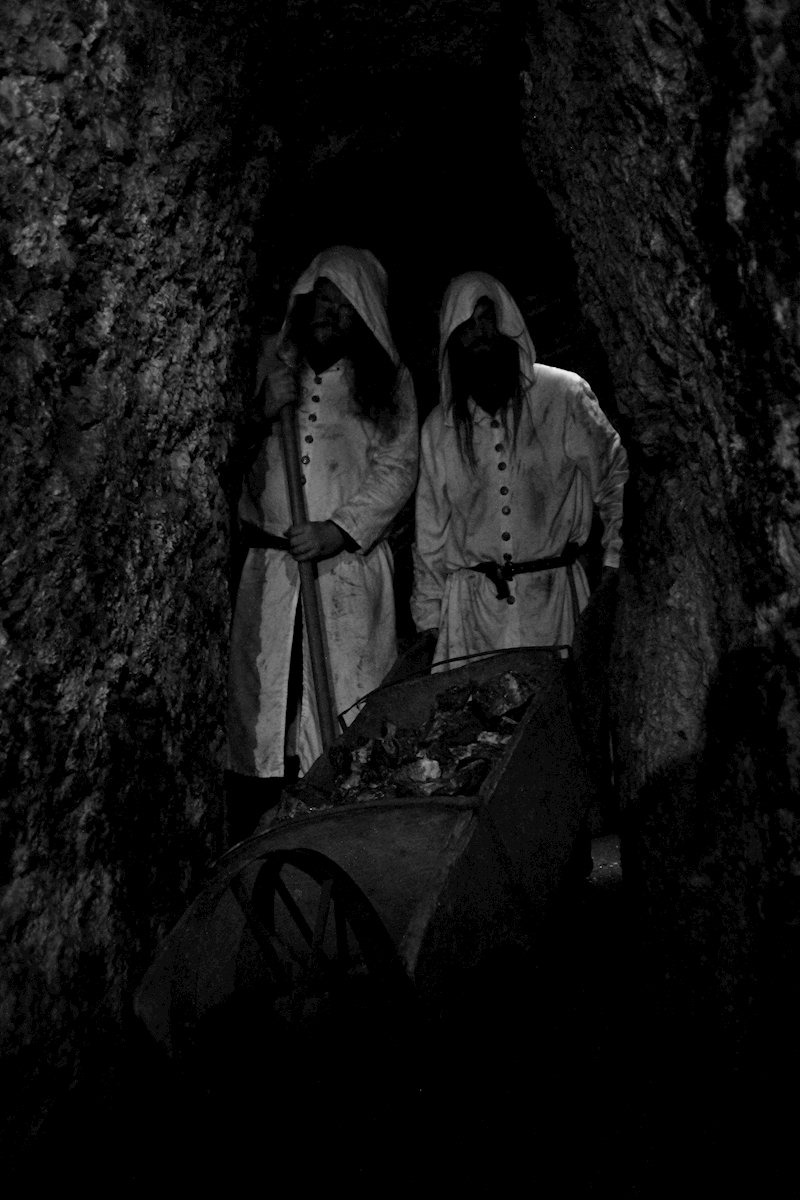
DAUÞUZ have been active since 2016 as a German duo who shape their black metal around a highly idiosyncratic concept they define as “Mining Black Metal.” Across their discography, they have constructed a narrative centered on mining themes, merging it with melodic and aggressive guitar structures rooted in the aesthetics of 1990s black metal, thereby forging a distinctive sonic identity. In particular, the uranium-mining-focused thematic thread they initiated with “Uranium” is carried forward with “Todeswerk: Uranium II,” now expanded into a darker, more historical and industrial framework.
From its opening moments, the album constructs its riff architecture across a layered surface where acoustic guitars and extended tremolo structures come into contact with one another. The melancholic acoustic guitars and subtle string textures that emerge at the outset function not merely as an atmospheric introduction, but as a guiding mechanism that shapes the internal organization of the pieces. What DAUÞUZ are doing here is positioning acoustic material not as a simple source of contrast, but as a structural tool that divides the form into segments.
On the electric guitar side, while tremolo-based melodic lines remain faithful to tradition, these riffs now unfold within a more clearly segmented compositional framework. Particularly in pieces like “Uranlager,” structures fractured by acoustic transitions cause the tracks to flow in blocks rather than linear aggression. At first glance, this may appear to fragment the flow, yet it effectively translates the album’s mining-related concept of “layer-by-layer excavation” into a compositional principle.
There is a noticeable increase in control within the rhythm section. Blast beats are no longer at the center of the writing; instead, a framework emerges that is supported by mid-tempo transitions and highlights the melodic direction of the guitars. The impact of a session drummer here creates a stable flow rather than mechanical harshness, and especially in tracks like “Des Häftlings Bergmannstod,” the drums assume a role that directs rather than merely carries the guitar riffs. This approach places the album’s energy distribution on a more consciously structured foundation.
The most critical area of expansion emerges in the vocal architecture. Hysterical black metal shrieks, deeper guttural tones, shouted passages, and occasionally choral-tinged low clean vocals now function not merely as expressive variety, but as structural elements that reshape the dramatic direction of the tracks. This multi-layered vocal approach, in certain sections, adds a secondary narrative line on top of the guitars, expanding the center of the composition; the vocal work becomes an instrument that reframes the riffs rather than simply following them.
The function of acoustic guitars and string usage becomes clearer at this point. Interludes such as “Hammerzwang” and “Bluteisen” operate not merely as atmospheric voids, but as segments that reposition the main composition. While these transitions at times risk becoming separate modules that slow the flow, within the overall structure they serve to segment and redirect the pieces.
The production maintains the treble-heavy tradition of black metal, yet there is a more solid low-end guitar presence. This choice improves the readability of tremolo riffs while also occasionally creating a sense of congestion in faster passages. Nevertheless, the overall approach is focused less on “dirt” and more on separation of layers, moving the album away from pure lo-fi aesthetics toward a more controlled narrative space.
Thematically, the narrative of uranium mining, forced labor, and industrial exploitation carries a density that runs parallel to the music. However, DAUÞUZ do not embed this theme directly into riff writing; instead, they carry it through vocal layers and atmosphere. As such, while the concept is strong, it functions less as a structural determinant of the music and more as a framework laid over it.
At the same time, the key factor elevating the album lies in DAUÞUZ’s micro-level reorganization of their language. Vocal layers shift from decorative elements into structural components, acoustic passages become form-defining rather than purely atmospheric, and the rhythm section transforms from a supporting element into a mechanism that directs the riffs. The change is not revolutionary, but it is a clearly perceptible internal restructuring on a functional level.
Ultimately, “Todeswerk: Uranium II” is not an album that breaks DAUÞUZ’s aesthetic boundaries; rather, it is a work that brings the internal workings of those boundaries into a more deliberate, segmented, and multi-layered compositional logic. For the listener, this record demands not constant aggression, but a segmented, shifting, and layered listening experience. With this reinforced internal architecture in mind, the album positions itself not merely as a safe continuation, but as a maturation step within its own aesthetic language.
OZAN
facebook.com/DauthuzBM
amor-fati-productions.de
amorfatiproductions.bandcamp.com
facebook.com/amorfatiprod