Album Review
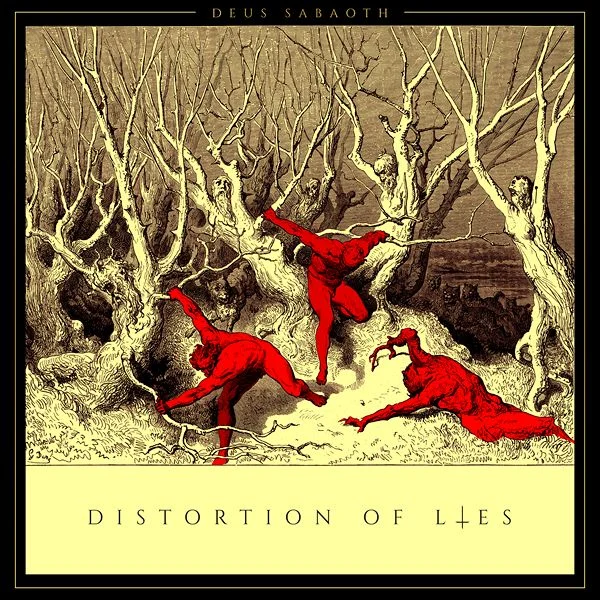
DEUS SABAOTH - Distortion of Lies
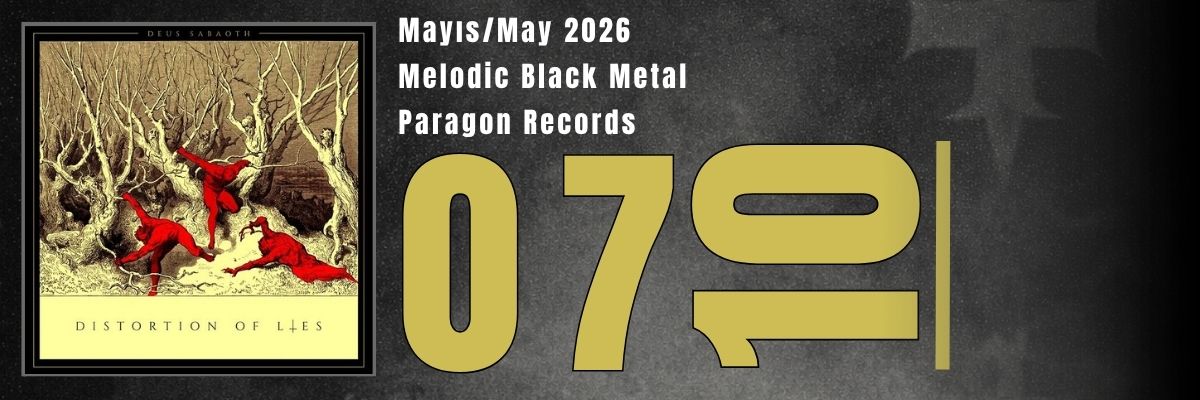
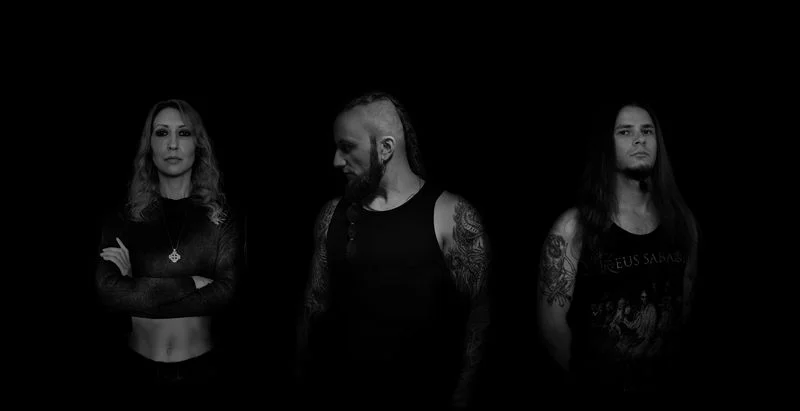
DEUS SABAOTH, a Ukrainian melodic black metal trio formed in 2023, has quickly established itself on a trajectory of rapid output between two albums. The band’s music is built on a framework that seeks to expand black metal’s traditional tremolo riff language through violin, piano, and folk-referenced melodic layers. “Distortion of Lies” is positioned as an attempt to reconfigure this multi-layered approach through a more stripped-down mix and a more controlled compositional language.
From its very first seconds, the album constructs its riff architecture not as a vehicle for dramatic intensity, but rather as a surface design that generates constant tension. The typical tremolo-based guitar language of black metal here rarely establishes a clear center; instead, it is tasked with creating a broad harmonic field behind a vocal-driven mix. This shifts the role of the guitars within the composition from a “structural backbone” toward atmospheric filler. Particularly in the opening track, the more direct and dissonant chord movements are punctuated by melodic fragments, yet these fragments never reach a level of significance that would alter the structural direction of the riffs.
The rhythmic dimension of the album attempts to generate a continuous sense of forward motion through the drums, with a structure oscillating between blast-tempo eruptions and more marching, processional passages. However, these transitions often fail to lock into an organic synchrony with the guitar writing. Especially in the faster sections, while the drums assume the role of driving force, the guitars are not articulated with the same intensity, flattening the internal dynamics of the songs into a single axis. This creates an overall sense of energy that feels “ready to explode yet deliberately restrained,” though this restraint does not consistently translate into a deliberate compositional tension strategy.
The vocal performance is placed at the center of the mix, a choice that becomes one of the defining structural parameters of the album. The screaming technique functions as a means of amplifying dramatic density, yet in moments where the guitars recede, the vocal layer becomes the reference point that aligns all other compositional elements. This, in turn, disrupts an equitable distribution of narrative across instruments, particularly in more melodic passages where guitar leads or brief violin entries are introduced.
One of the album’s most pronounced structural tensions emerges in the auxiliary instrumentation deployed for melodic expansion. Violin, piano, and occasionally folk-referenced harmonic lines operate as discrete layers scattered within the compositions. While piano intros and violin passages in both opening and mid-album sections carry the potential to broaden the atmosphere, they frequently fail to integrate into the developmental logic of the riffs, instead remaining as separate surfaces. At times, these instruments create emotional contrast; however, rather than reshaping the harmonic core of the composition, they function as decorative layers placed atop the existing structure. The violin, in particular, often remains at the level of an “instant color shift,” leaving open the question of whether it serves as a compositional pivot or merely an atmospheric embellishment.
Examining the overall formal structure, the album relies more on segmentation than on a clear dramatic arc. Tracks are generally constructed through atmospheric openings, followed by aggressive riff blocks and intermittent melodic transitions. Yet the connections between these blocks are not consistently organic; transitions between melodic and aggressive sections often feel resolved through arrangement choices rather than compositional necessity. This results in a fragmented sense of flow across the album.
On the production side, the lack of clear guitar definition and forward presence directly impacts the album’s melodic ambitions. The mix prioritizes vocals and overall atmosphere, pushing detailed riff articulation into the background. In the context of melodic black metal, this reduces the perceptibility of the riff writing itself. While the drums remain relatively legible, allowing rhythmic structures to be followed, the blurred guitars obscure the clarity of compositional intent.
The tempo and intensity fluctuations across the album are at times reinforced by doom-influenced slowdowns. In these sections, guitars shift toward wider-spaced chord structures, and the atmosphere becomes more static and weighty. However, these decelerations often serve to extend existing material rather than introduce new thematic ideas. This increases the album’s capacity for variation, yet keeps its compositional directional shifts relatively limited.
“Distortion of Lies” ultimately reflects a recurring tendency within contemporary melodic black metal: an approach that seeks to expand atmosphere while failing to sharpen riff-centric writing, enriching its palette through additional instrumentation without fully integrating those elements into compositional necessity. Compared to its predecessor, the album moves toward a less bombastic and more stripped-down black metal form, yet this reduction does not translate into greater compositional clarity; instead, it largely redistributes layer density without fundamentally redefining structural intent.
In its final shape, the album demands an active mode of listening: one that isolates riff trajectories within a vocal-dominant mix and distinguishes when melodic instruments assume structural weight versus when they remain surface-level additions. Even so, this effort does not yield equally rewarding returns across all tracks. DEUS SABAOTH demonstrates a clear sense of direction, yet the compositional realization of that direction often remains at the level of concept, without generating the kind of decisive structural rupture that would fully reframe its musical execution.
OZAN
https://www.facebook.com/deussabaothband
https://www.instagram.com/deus.sabaoth_band/
https://deussabaoth.bandcamp.com/