
Album Review
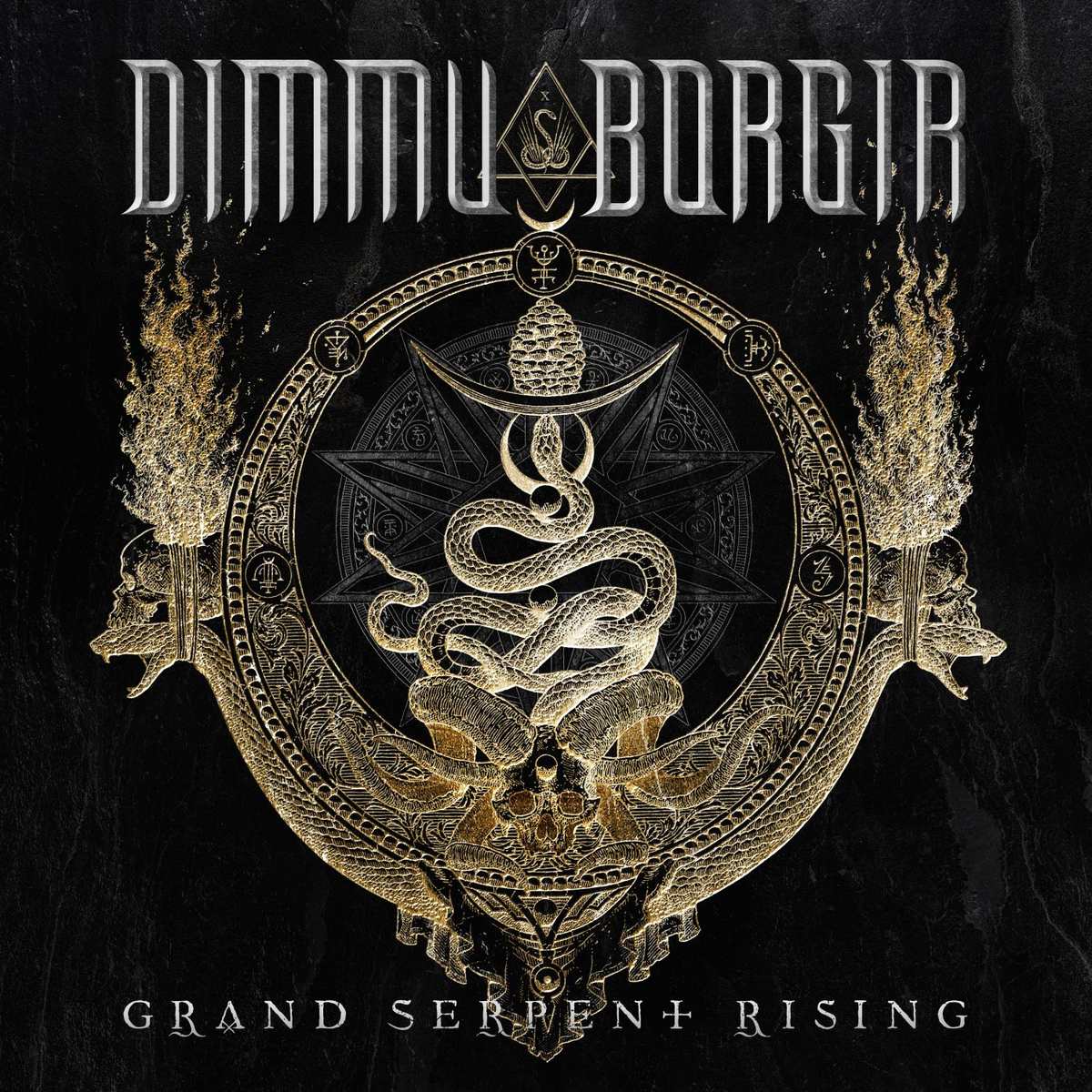
Dimmu Borgir - Grand Serpent Rising
For more than three decades, Dimmu Borgir have never operated as a band making solely black metal. Particularly in the post-“Puritanical Euphoric Misanthropia” era, the group constructed a framework that reshaped the genre’s aggressive core through symphonic spectacle, gothic dramatization, and cinematic arrangements. Although many fans expected “Grand Serpent Rising” to function as another expansion of that same approach, the album instead feels like a rebalancing of an aesthetic structure that had been steadily bloating for years. The record’s central shift lies precisely there: for the first time in a long while, the orchestrations no longer overpower the riffs, instead assuming a supporting role that moves around them.
That change is especially apparent in Fredrik Nordström’s production. Where the previous two albums occasionally suffocated beneath sterile layering and excessive density, the mix here creates a far more organic space. The natural resonance of the drums, the mid-range dominance of the guitars, and the more restrained placement of the keyboards allow the album to sound massive while still retaining a tangible physical weight. Daray’s performance is crucial in this regard; while the blast-beat intensity remains high, the drums for the first time in years feel like an element shaping not only tempo, but the album’s dramatic transitions as well. The abrupt shifts in “Ascent,” the near-thrash rhythmic propulsion, and the sense of unchecked velocity all evoke the band’s early-2000s aggressive phase.
Galder’s departure was, in theory, a development that could have weakened the band’s guitar-centric core. Yet “Grand Serpent Rising” has, interestingly enough, become a more guitar-focused record by contrast. Silenoz’s riff writing is more visible here than it has been in a long time. On tracks such as “Repository Of Divine Transmutation” and “Recognizant,” the heavy metal-derived lead work functions as more than melodic ornamentation; it becomes a structural device that redirects the songs themselves. In particular, in moments where tremolo passages are layered over classic heavy metal melodic expansions, the album deliberately blurs the boundary between symphonic black metal and epic heavy metal. Alongside this, Norway has, since the ‘90s, cultivated a strong lineage of genre-faithful black metal guitarists, drawing from a deep well of accumulated scene experience. Within this context, Damage’s contribution is felt less in terms of riff construction and more in the energy he brings to the band.
At this point, the album’s most striking aspect is not simply that the orchestrations have been reduced, but how they are being used. In the past, Dimmu Borgir often relied on symphonic layers primarily to generate sheer density; here, the orchestration behaves with far greater selectivity. On “Phantom Of The Nemesis,” the dramatic string arrangements genuinely function as part of the riff architecture itself. By contrast, certain sections of “The Qryptfarer,” with their gothic piano textures and choral transitions, once again push the album’s theatrical side a little too far into the foreground. The band still occasionally surrenders to its own aesthetic reflexes in that regard, but this grandeur no longer serves as the foundation of every single composition.
The return to Norwegian lyrics also marks one of the album’s most interesting directions. “Ulvgjeld & Blodsodel” openly nods toward the Viking-era Bathory aesthetic, yet it reframes that influence not through raw pagan romanticism, but through Dimmu Borgir’s widescreen compositional approach. The controlled pacing, march-like rhythmic structure, and choral ascents prevent the track from functioning as mere nostalgia bait. Meanwhile, “Slik Minnes En Alkymist” edges toward melodic pagan black metal without collapsing into kitsch; there are moments where the melodic language recalls the epic sensibilities of bands like Moonsorrow or Thyrfing, yet Dimmu Borgir’s more controlled and theatrical compositional mindset succeeds in integrating those elements into the band’s own sound.
The album’s core issue, however, still lies in structural economy. Across a runtime nearing seventy minutes, the band continuously piles on new transitions, melodic variations, and atmospheric layers. While this creates an impressive sense of density in the short term, it occasionally weakens the individual identity of the songs themselves. “Grand Serpent Rising” feels like an album that will often be remembered through passages rather than complete compositions. Individual riffs, transitions, and melodic surges linger in the memory, but the songs as fully formed entities do not always feel equally cohesive. This is a lingering issue inherited especially from the “Eonian” era, and the band has not entirely overcome it here either. In other words, fans expecting the kind of instantly memorable hit tracks traditionally associated with the band will once again find that impulse largely absent.
Even so, the album’s most significant achievement lies in Dimmu Borgir finally re-establishing the balance between symphonic spectacle and black metal aggression — or at the very least, demonstrating the reflex to pursue such a recalibration. “Grand Serpent Rising” does not radically reinvent either the genre or the band’s career trajectory by tearing down existing boundaries; instead, it disciplines the increasingly uncontrolled aesthetic framework the band had built over the last two decades. Within today’s landscape of hyper-sterile, algorithmic symphonic black metal production, that is precisely where the album becomes noteworthy: Dimmu Borgir are no longer trying to sound bigger. Instead, they seem more interested in wielding their enormous aesthetic vocabulary with greater precision and awareness. As a result, the album feels less like a “comeback” narrative and more like the refocusing of an artistic identity that had long been drifting in scattered directions.
OZY