
Album Review
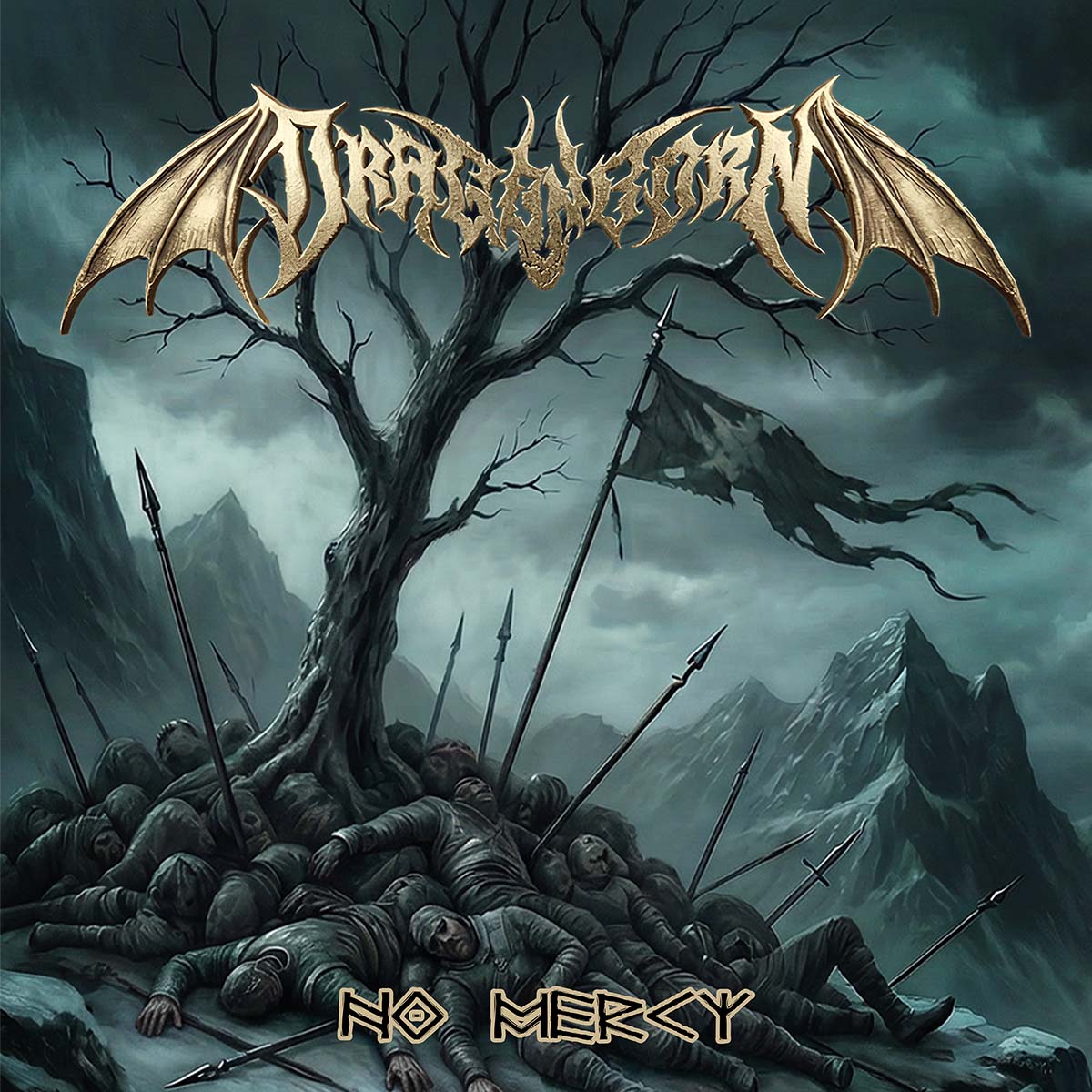
DRAGONBORN - "No Mercy"
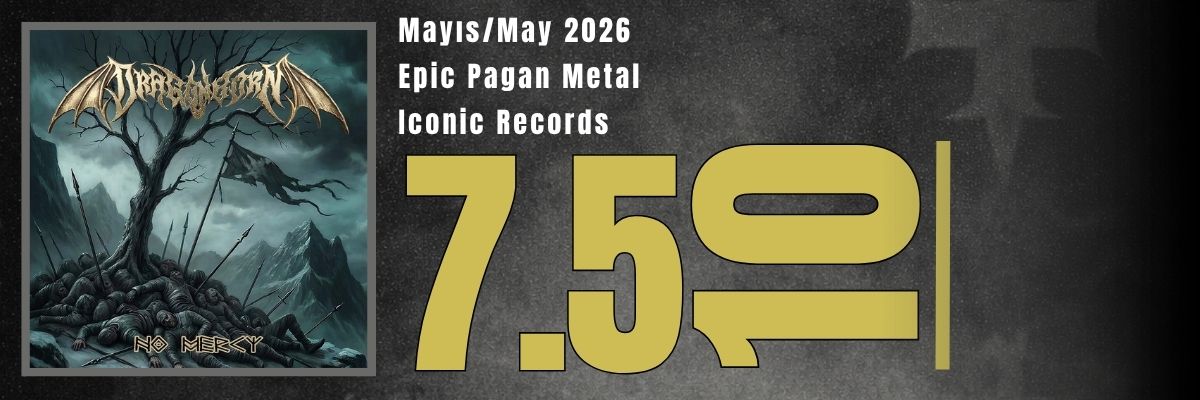
DRAGONBORN stands out as a formation emerging from Turkey, operating in the tension field between epic and Pagan metal aesthetics while attempting to merge them with aggressive riff structures. The band constructs a compositional language that aims to bind melodic expansiveness with a rigid rhythmic backbone within the same framework. No Mercy stands out as the point where this approach becomes more defined, with the formula being tested across varying intensities.
The "No Mercy" EP opens with a compositional approach that seeks to enhance a sense of “storytelling” within established Pagan/epic metal riff and structural templates, without abandoning those long-standing conventions. At the core of the EP lies a guitar framework that constantly shifts between forward-driving, palm-muted aggressive attacks and open-chord passages. This dual usage preserves rhythmic propulsion while creating space for melodic lines; however, this space is more often built on variations in intensity of the same motif rather than independent harmonic expansion.
The opening track, “Ash Before Dawn,” begins not with a direct riff statement but with a low-intensity, atmospheric setup. Here, guitars are used in the background more as sustained, pedal-driven layers of extended frequency rather than foregrounded articulation; the sense of dramatic escalation is built through a gradual increase in spectral density rather than a linear crescendo. This choice represents an early example of an approach that recurs throughout the EP: the compositions are conceived less around riffs and more around the accumulation of tension. However, this tension is developed less through rhythmic transformation and more through a logic of layering and subtraction.
With “Warhorns for Liars,” the structure returns to a classic Pagan metal framework: fast double-bass drumming, densely midrange-heavy guitar walls, and vocals pushed prominently within the mix. The drum writing functions here primarily as a linear velocity engine; rather than blast-oriented transitions, a continuous-flow double-kick pattern is favored. This stabilizes the track’s energy profile but limits rhythmic variety. The guitar riffs are largely built on open-position power chord sequences and short melodic breaks; these breaks function less as structural transformations of the riff and more as decorative extensions layered onto it.
Tracks such as “Execution” and “Revenge of Pagan Storms” represent the EP’s most saturated distortion environments. Here, the emphasis on mid-to-low frequency guitar tone creates a noticeable congestion in the same spectral space occupied by the kick drum. This can be read as an intentional production choice, as the mix prioritizes a sense of “battlefield density” over clean separation. However, this approach also weakens articulation in certain riff transitions and causes rhythmic detail to blur. As density increases, readability decreases.
The EP’s most distinct moment arrives with “Valexus – Lord of Ice.” The tempo is significantly reduced, and the guitars operate with wider-spaced, sustain-heavy chord structures. What stands out here is the female vocal, which for the first time functions not merely as a melodic layer but as a harmonic counterpart. Berrak Saka’s vocal line does not mirror the aggressive articulation of the main vocal; instead, it builds a contrasting melodic contour above it. At moments, this expands the track’s center of gravity, with vocal layers becoming more structurally defining than the guitar harmonies, particularly in the midsection. However, this effect is not sustained; as the track progresses, it reverts to the conventional riff–vocal hierarchy, preventing this contrast from developing into a structural shift.
“When Steel Forgot Fire” is the most compositionally controlled piece on the EP. The guitars operate through more clearly defined motif repetition, and the riff architecture is divided into more distinct sections. For the first time, the drums act not only as a driving force but also as a transition-defining element; tom fills and broken snare patterns make sectional changes more perceptible. Nevertheless, instead of generating unexpected harmonic ruptures, the track chooses to dramatize existing motifs. This reinforces the narrative intent, but rather than opening a new direction musically, it reframes the same material under different dynamics.
The closing outro exposes the EP’s overall production philosophy: here, riffs step back in favor of reverb space and sustained decay. With guitars withdrawn and drums minimized, the section leaves the preceding material as a kind of lingering echo. However, this conclusion functions less as a structural dissolution and more as an atmospheric fade-out strategy; rather than transforming the internal logic of the composition, it simply extinguishes it.
The production as a whole sits close to contemporary Pagan metal aesthetics: midrange-focused guitars, high-transient drum presence, and vocals consistently centered in the mix. This approach enhances energy delivery in aggressive sections but simultaneously causes melodic detail to dissolve within layered guitar textures. The central contradiction of the EP emerges here: while there is an intent to create melodic diversity, the mix architecture often homogenizes rather than supports that diversity.
In the current Pagan/epic metal landscape, many bands employ a similar “folk/epic atmosphere + aggressive riffing” formula. DRAGONBORN’s attempt to differentiate itself lies in the inclusion of female vocals and intermittently expanded atmospheric passages. However, these elements largely remain additive layers rather than structural components that reshape riff composition. The potential heard in “Valexus,” in particular, is not developed to the same extent across the rest of the EP, leaving the impression of ideas that are occasionally introduced but not fully completed.
Ultimately, "No Mercy" stands as a work that correctly constructs the rhythmic engine of Pagan metal and its epic melodic framing, yet keeps compositional risk-taking within limited bounds inside that framework. For the listener, the EP demands engagement not through constantly shifting structures or radical formal disruptions, but through controlled intensity and familiar riff progression. This makes it a functioning entry within its scene, while simultaneously keeping the epic scope it gestures toward largely on the surface.
OZAN
https://dragonbornofficial.com/
https://dragonborn.bandcamp.com/
https://www.facebook.com/dragonbornGL