
Album Review
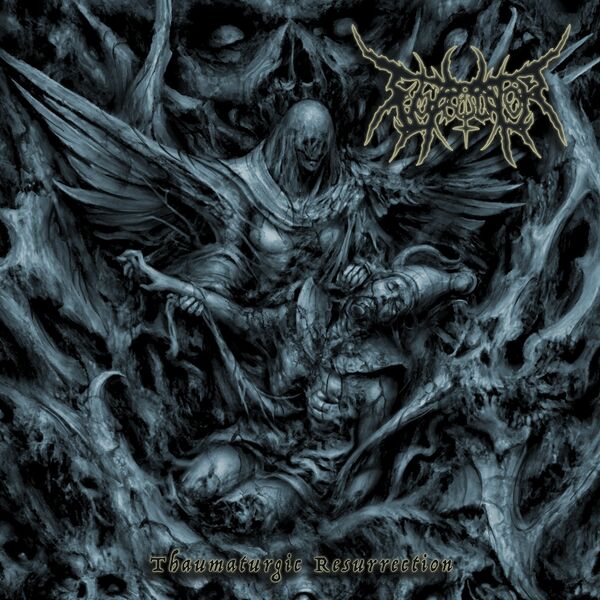
Emasculator - Thaumaturgic Resurrection
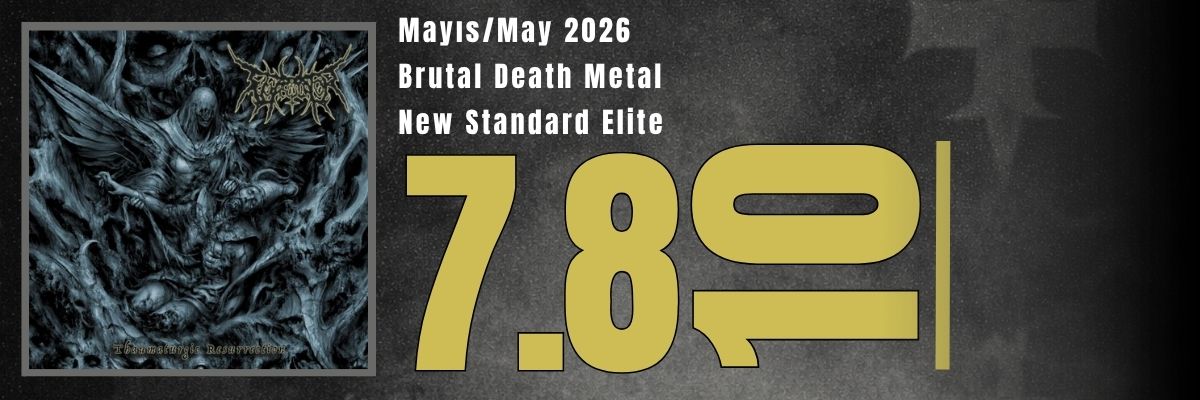
The name Emasculator isn’t unfamiliar to us — our local karıcore outfit EMASKÜLATÖR had already introduced that name into our lives long ago. This time, however, the name enters our radar attached to a rock-solid recording crafted by four talented women brought together from different countries. Despite being only a two-track release, there’s a vision here strong enough to catch the attention of a label like New Standard Elite.
The contemporary production model of brutal death metal no longer operates solely through sheer intensity. The modern branch of the genre, particularly the one shaped around labels like New Standard Elite, has embraced an approach that balances technical complexity with controlled riff economy, while rendering chaos manageable through production clarity. Emasculator’s “Thaumaturgic Resurrection” demo positions itself precisely within that framework. However, the record achieves this not merely by repeating the genre’s current standards, but by applying a riff-centered compositional discipline with remarkably aggressive density within a short-format structure.

Despite its demo status, the most striking aspect of the material is that the songs never feel like “rough sketches.” The structure here functions more like a compressed and tightly focused version of a full-length compositional mentality. Rather than relying on constant tempo shifts or technical showmanship, the guitar writing focuses on how blocks of low-tuned riffs connect to one another. Passages opened through palm-muted attacks often transition into new rhythmic variations before fully resolving, allowing the tracks to generate constant tension without falling into conventional breakdown logic. The relationship between the mid-tempo crushing sections and sudden blast-driven transitions in particular gives the material not only violence, but also a strong sense of direction.
The drums are not merely an engine providing intensity here. The use of blast beats is extremely controlled; transitions are primarily deployed to reinforce the accents of the guitar riffs. This approach allows the band to avoid the “constant maximum speed” problem frequently encountered in modern brutal death metal. The way the kick patterns lock into the riff syncopations gives the material a mechanical rigidity, while the dry snare tone and forward-pushed mix choice amplify the music’s claustrophobic pressure. Unlike many recordings released in demo format, what exists here is not murkiness, but a deliberate sense of compression.
The vocal performance maintains the genre’s familiar guttural aesthetic, yet what matters is not the depth of the tone itself, but its function within the mix. The vocals rarely step ahead of the riffs; instead, they operate more like an additional layer thickening the guitars’ low-frequency pressure. This decision prevents the “vocal-centered spectacle” feeling that occasionally surfaces in brutal death metal and shifts the focus directly onto the rhythmic movement of the compositions.
On the production side, the greatest success of “Thaumaturgic Resurrection” lies in its refusal to turn modern digital clarity into a sterile surface. The grainy texture preserved within the guitar tone and the fact that the drums never feel completely buried beneath triggers maintain the recording’s physical weight. The typical high-pressure mix character associated with the New Standard Elite school is present here as well, yet the frequency distribution never allows the riff details to disappear. This becomes especially important during the faster passages, because many contemporary brutal death metal recordings blur riff identity while increasing density. Emasculator, on the other hand, manages to preserve the balance between technical intensity and distinguishable riff structure.
From an aesthetic standpoint, the demo remains fully tied to the contemporary visual and sonic codes of modern brutal death metal. There is no radical genre expansion or experimental deviation here. However, the recording never claims otherwise. The demo’s approach is built more around refining the existing language of the genre. For that reason, the material’s value emerges not through “innovation,” but through how disciplined its application of modern brutal death metal production standards actually is. Their refusal to rely on unnecessary atmospheric extensions within such a short format, and their direct focus on riff functionality, makes the demo feel more purposeful than many comparable contemporary releases.

“Thaumaturgic Resurrection” is not a record that redefines the boundaries of brutal death metal. However, it is a work that employs the genre’s current understanding of intensity, production control, and riff engineering with considerable awareness. And that is exactly what it demands from the listener: not passive consumption in search of constant speed, but an attentive engagement with how riffs connect to one another, how rhythmic pressure is layered, and how modern brutal death metal is now being “constructed” — resulting in a recording whose sound both commands attention and raises expectations for the future.
OZAN
https://emasculatorbdm.bandcamp.com/
https://www.facebook.com/Emasculator
https://www.instagram.com/emasculator_bdm/