ALBUM REVIEW
Encasement - Encasement
Experimental black metal shaped by complex rhythms.
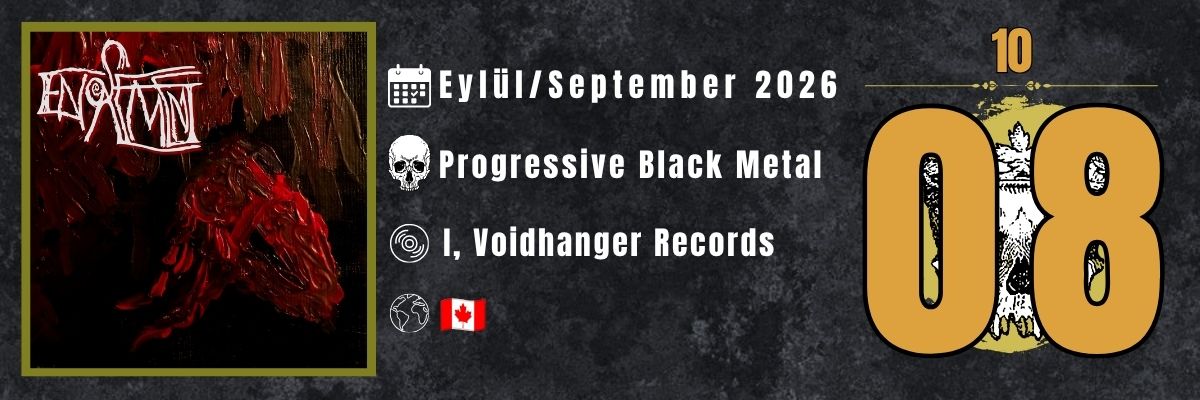
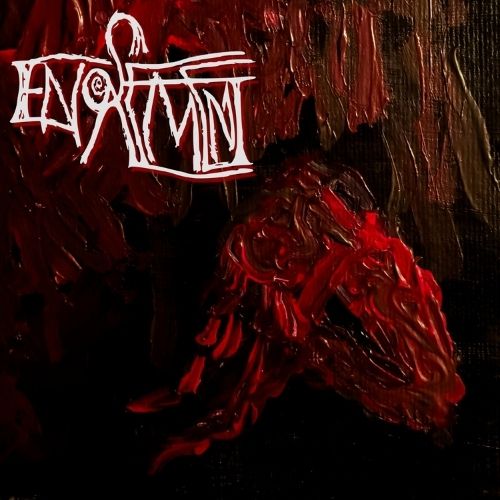
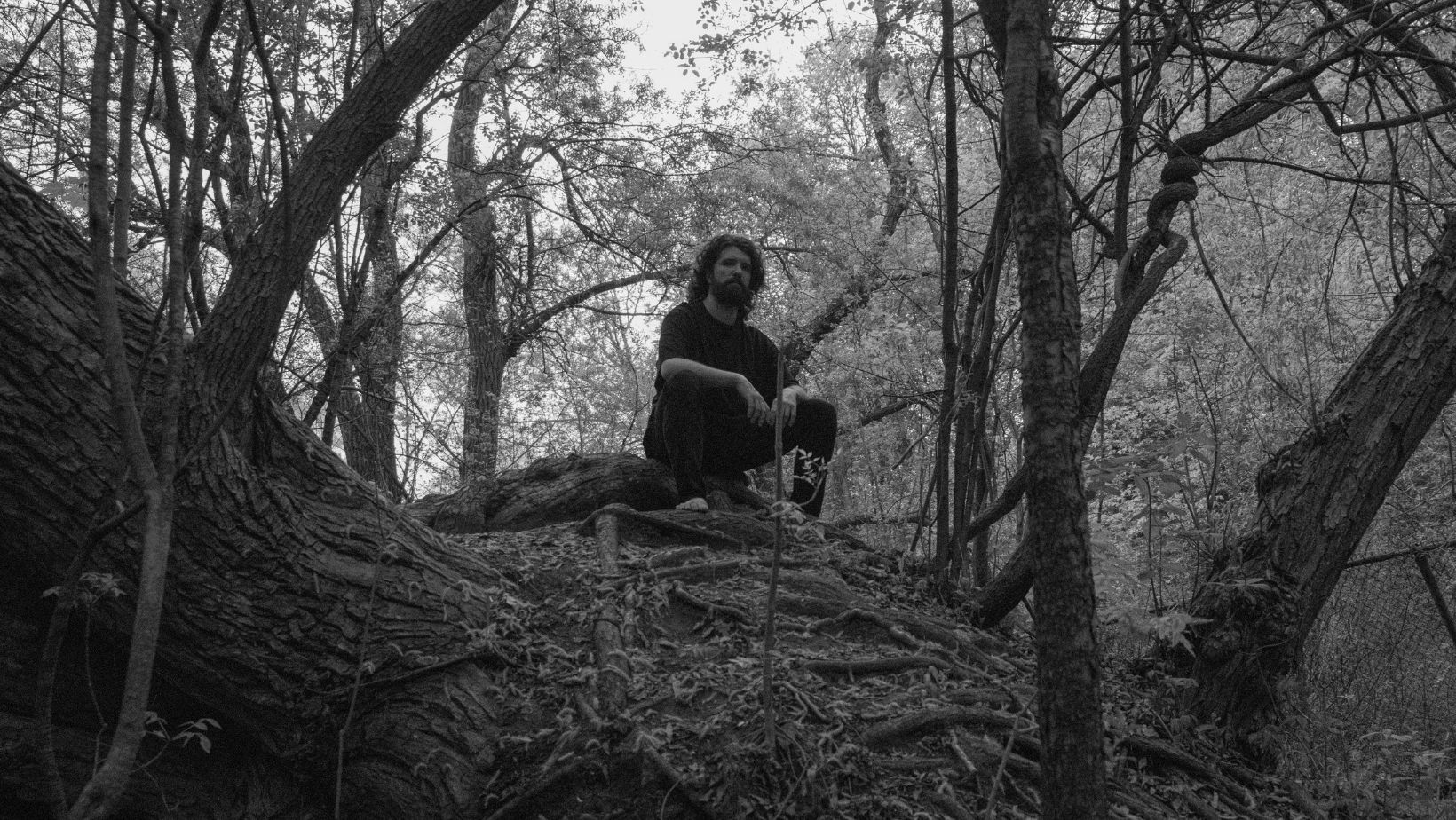
James Thompson’s solo project Encasement, launched in 2024, brings together the dissonant legacy of avant-garde black metal with progressive metal’s polymetric approach and death metal’s more physical conception of riffing on its self-titled debut full-length. Rather than adhering to a regular metrical logic, “Encasement” is an album where riffs stretch beyond expected points, syncopations constantly trade places with blast beats, and the guitars move around chord clusters that generate tension rather than a tonal center. What stands out most about the album, starting from this premise, is its ability to use all these elements throughout its compositional journey in ways that alter one another’s function and, at times, reinforce each other.
“Exodus” establishes the foundation of this approach within its opening minutes. The guitars do not use traditional tremolo lines merely to create atmosphere; they set them against sharp transitions and irregular rhythmic accents. The track’s dark, brief introduction connects to the denser sections that follow not through a conventional black metal build-up, but through a fragmented compositional logic. Thompson’s pronounced improvisational impulse is evident here, yet the material is never left completely uncontrolled. Ideas that initially appear disconnected gradually develop into longer, more defined sections as the album progresses.
At this point, limiting “Encasement” to the label of experimental black metal would be inadequate. The guitars’ low-tuned, sharp and angular riffs, particularly on “The Pillory,” move toward the more mechanical side of progressive metal. The interplay between low-register palm-muted strikes and high, cutting guitar lines is pronounced enough to recall the thall aesthetic that developed around Vildhjarta. However, this influence never becomes the album’s fundamental language. On the contrary, that rhythmic mechanicality is continually disrupted by tremolo melodies, dissonant chords and black metal’s high-intensity drumming. As a result, the progressive element ceases to be a separate layer pasted onto the black metal and instead becomes a tool that shapes the rhythmic behavior of the riffs.
“Apparitions” is one of the clearest examples of this approach. Throughout its roughly ten-minute runtime, syncopated and polymetric ideas take prominence, while Thompson prevents the extended rhythmic passages from slipping into monotony with tremolo guitars. What matters here is not simply the use of complex meters, but the friction between rhythmic order and black metal’s sense of continuous forward motion. The guitars simultaneously produce accents that interrupt the meter while their tremolo lines propel the track forward, allowing the composition to sustain two different modes of movement at once.
A similar tension is established in tracks such as “Exodus” and “Fragmentation” through heavier, more sparse sections. When dissonant chords spread across extended passages, the music pulls back from its blast beat-driven intensity; then syncopated rhythms and drums that build once again set the space in motion. This approach recalls the heavier and more cerebral riff passages of GORGUTS during the “Colored Sands” era. Yet “Encasement” is not simply assembling a collage of influences. The tremolo and blast beat tradition of black metal, the hard-edged riff architecture of death metal and the rhythmic fragmentation of progressive metal continually constrain one another within the same composition.
The role of the rhythm section, therefore, extends beyond merely supporting the guitars. When blast beats are placed alongside syncopated strikes, they create the album’s fundamental tension. A rhythmic pattern that determines the flow of a section is often cut short by an unexpected transition, giving way to a more angular structure. Thompson’s tendency to stretch the boundaries of the meter becomes particularly apparent in these transitions. The fact that certain ideas do not resolve within a conventional bar length prevents the songs from reaching predictable rhythmic closures. As a result, the music is built less around technical display than around a persistent sense of structural imbalance.
The vocal approach likewise adapts to this shifting structure. Thompson alternates between high-pitched black metal screams and more guttural death metal vocals according to the demands of each section. This choice does more than provide vocal variation; it also changes, from moment to moment, which metal tradition the songs seem to gravitate toward. In tremolo- and blast beat-driven passages, the higher vocals bring the black metal identity to the forefront, while guttural tones make the death metal influence more pronounced over heavier, more compressed riffs. The vocal performance thus ceases to function as an independent character element and instead supports the direction of the arrangement.
The album’s atmospheric side emerges less from shoegaze influences than from the way the guitars handle melodic material. In Thompson’s music, melodic passages rarely arrive at clear, comfortable resolutions; dissonance, sustained chords and tremolo lines prevent the melodic ideas from settling around a stable center. The atmosphere is therefore created not by adding a separate ambient layer, but through the tonal ambiguity of the guitars. The brief, dark introductions found in sections such as “Inertia” function as sparser manifestations of the same approach.
The production is directly connected to this aesthetic. With Thompson handling the album’s recording, mixing and mastering himself, the music retains a presentation that preserves the raw character of the compositions rather than turning them into a polished studio product. As the label also emphasizes, the recording process was largely instinctive; consequently, the primary function of the production is less about demonstrating technical perfection than preserving the immediacy of the performances. This choice, in particular, prevents the layers of guitars and abrupt rhythmic shifts from being smoothed out by an overly sterile mix.
Alongside this, influences from classical and orchestral music form one of the album’s less visible yet important layers. References to Shostakovich, Prokofiev and Ravel do not become dominant in the form of direct orchestral arrangements; instead, they are felt more in the construction of dramatic intensity and harmonic movement. This approach becomes particularly apparent in the more theatrical passages surrounding “The Pillory” and “Absolution.” The distinction matters here because the classical music references are not added as decorative embellishments on top of the metal. Even so, it would be difficult to say that they become a defining compositional system across the album as a whole. The essential architecture is still carried by guitar riffs and rhythmic disruptions.
This is crucial to the experimental character of “Encasement.” None of the album’s unconventional elements exists on its own for the purpose of creating an identity. Progressive rhythms, death metal riffs, dissonance, atmospheric passages and classical music influences are continually tied back to black metal’s central framework. Thompson’s approach therefore does not directly enter the “more dissonance, more chaos” competition so common in contemporary avant-garde black metal; instead, it attempts to absorb ideas from different genres into the fundamental mechanics of black metal’s movement. Although it occupies the same broad territory as contemporary reference points such as Liturgy, Deafheaven and Thantifaxath, “Encasement” distinguishes itself particularly through the weight it places on rhythmic structure.
Of course, this approach comes at a cost. In some transitions, the connections between fragmented ideas can give the impression of one idea following another rather than of deliberate compositional tension. But the album’s fundamental aesthetic operates precisely along this boundary: the songs reject the secure connections of traditional song architecture without becoming completely formless. Thompson’s greatest strength lies in his ability to remain between these two extremes.
“Encasement” is therefore not a black metal album that becomes progressive simply to showcase its technical complexity. A more accurate description would be a work that uses progressive and death metal tools to expand the structural boundaries of black metal. The way Thompson connects rhythmic disruptions, dissonant guitars and different vocal techniques within the same compositions carries the album’s identity beyond the sum of its cross-genre references. The result is a debut that does not expect easy resolutions from the listener, yet never turns its complexity into a display of inaccessibility.
The right way to listen to this album is less about trying to decipher each riff individually than following the constantly shifting internal logic of the songs. Because the defining quality of “Encasement” is not that it has discovered a single new element, but that it continually rearranges black metal’s traditions of tremolo, blast beats and dissonance through polymetric rhythms, death metal heft and controlled experimental passages. Thompson’s first full-length makes room for itself within the experimental wing of underground black metal without abandoning the language itself. That approach raises expectations for the project’s future. For that reason, Encasement already prompts the question of whether the project will eventually follow the career path of bands that begin as one-man operations before developing into conventional extreme metal lineups.

https://www.instagram.com/encasementband
https://linktr.ee/hypaethralrecords
https://instagram.com/hypaethralrecords
https://www.facebook.com/hypaethralrecords
https://twitter.com/hypaethralrecs
https://www.threads.net/@hypaethralrecords
https://bsky.app/profile/hypaethralrecords.com
https://www.instagram.com/i_voidhanger_records