
Album Review
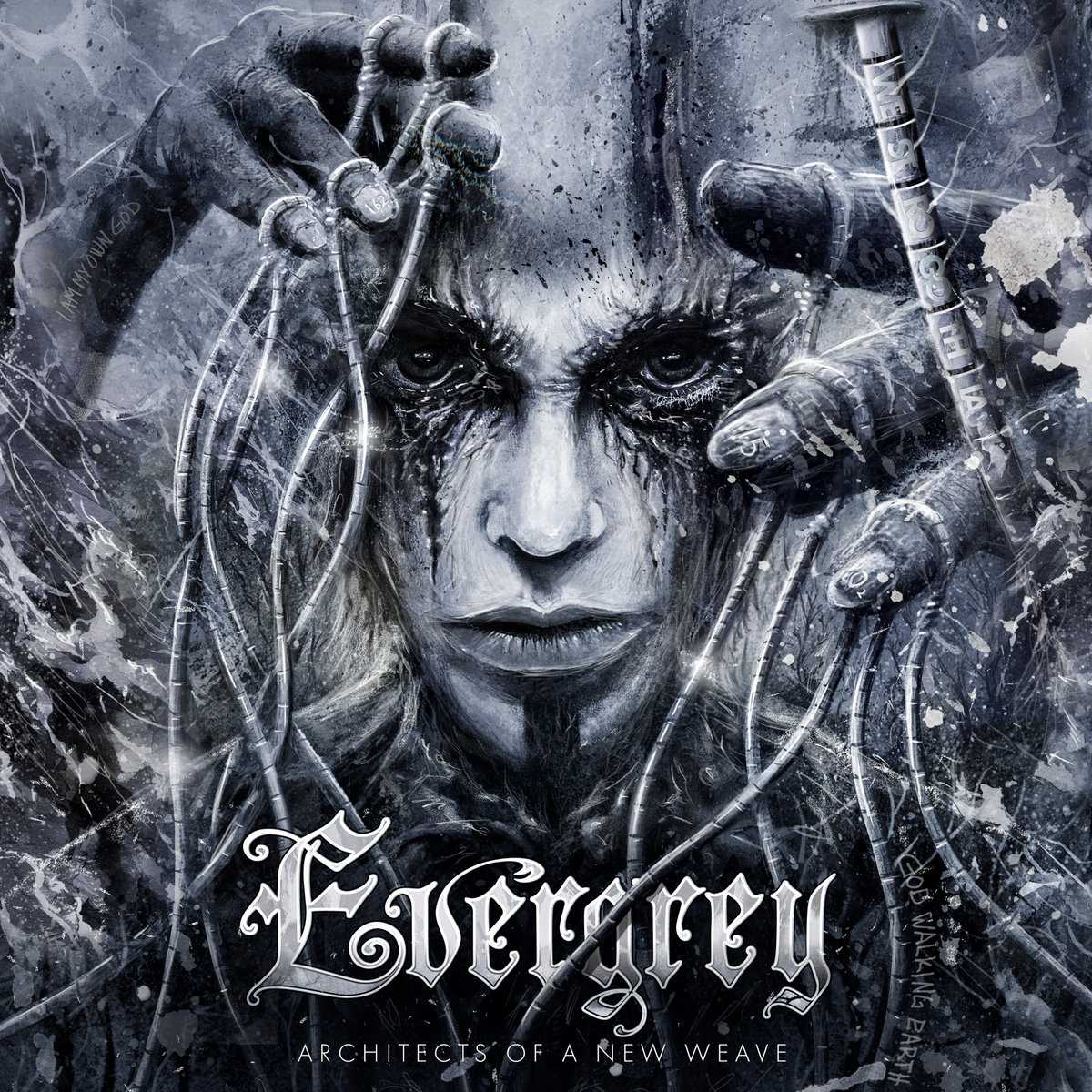
Evergrey - Architects of a New Weave
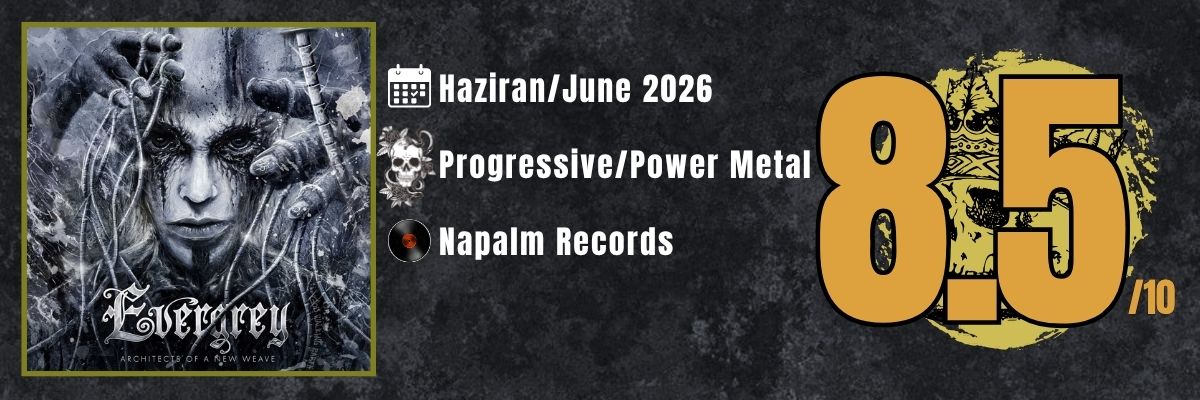
Evergrey, in a career spanning more than three decades, has carved out a self-defined space between melodic prog metal and dark emotionality, positioning itself as one of the most consistent names on the Swedish scene. Led by Tom S. Englund, the band merges technical prog elements with accessible melodic structures, often employing a compositional language rooted in inner conflict and melancholy. “Architects of a New Weave” arrives as a new chapter in this long-running trajectory, an album that simultaneously carries continuity and structural tension.
Evergrey’s fifteenth studio album opens with “Welcome to the Pattern,” immediately establishing a density that places riff design and layered production at the center of the mix. However, this density operates less as a traditional atmospheric-building strategy and more as a constantly saturated mixing field. The guitars are clearly weighted in the low-mid frequencies, yet this heaviness frequently collides with the ever-expanding surface of synthesizers and orchestral textures. The resulting structure does not allow individual riffs to breathe within themselves, instead forcing them to exist within a persistently crowded backdrop.
The album’s guitar writing continues Evergrey’s characteristic dramatic minor-key harmonic language; particularly in the opening tracks, the riffs carry a strong harmonic center. Songs such as “The Shadow Self” and “The World Is On Fire” are built on clearly defined, punchy riff blocks. However, the synthesizer layers and orchestral expansions placed around these riffs often obscure the rhythmic articulation of the guitars.
The core issue here is the split role of the guitars between structural support and atmospheric contribution. While the riffs remain structurally strong, the constantly expanding keyboard and orchestration layers often produce a homogeneous wall of sound rather than clear harmonic contrast. This particularly affects mid-tempo transitions, where riffs begin to function less as sentence-forming elements and more as filling material.
The drum performance is technically clean and precisely positioned within the production, yet it fails to carry significant dramatic weight in the mix. Although the kick and snare are clearly defined, the rhythmic narrative often operates as a static metronomic layer beneath the guitar-synth wall. This results, especially for listeners expecting prog-metal dynamics, in a lack of sharply articulated dynamic breaks.
In particularly dense orchestral passages, the drums lose much of their transient impact. This choice is likely intended to maintain a clean and wide mix, but as a consequence, a portion of the rhythmic dramatization is pushed into the background.
Tom S. Englund’s vocal approach remains one of the album’s most stable elements. The melodic lines are still the most defining component of Evergrey’s identity. On tracks such as “The World Is On Fire” and “Chains of Shame,” vocal melodies function clearly as hooks, running parallel to the guitar harmonies and creating a strong sense of contrast.
Despite this, the dense mixing approach narrows the natural dynamic range of the vocals in several sections. While Englund’s dramatic peaks remain intact, the constantly expanding layers of synthesizers and choirs do not always guarantee vocal prominence.
The album’s production language is modern, high-resolution, and built on a wide stereo field. In this respect, the mix is notably clean; however, this cleanliness at times works against rather than in favor of the musical density of the arrangements.
The use of synthesizers is particularly striking: rather than filling gaps, they tend to form a near-continuous surface. While this approach gives certain passages a cinematic expansiveness, it also eliminates the natural spacing of the riffs. As a result, the album can occasionally feel less like a metal composition and more like a continuously saturated production layer.
At this point, the critical question becomes: does this density truly transform the compositions, or merely thicken them? The album more often leans toward the latter. The layers do not reconstruct the structural logic of the songs, but instead elevate the existing melodic framework into a more polished surface.
The first half of the album presents a clearly stronger structure. “The Shadow Self,” “The World Is On Fire,” and the title track represent Evergrey’s melodic prog metal identity in its most coherent form, built on a strong riff-vocal relationship. Here, the guitars work in tandem with vocal melodies to establish a clear dramatic direction. However, from the middle section onward, the structure becomes more uneven. Tracks such as “Heaven” and “The Script” maintain a melancholic tone but fail to generate hooks as immediate or forceful as the earlier material. At this stage, the album experiences not so much a drop in intensity, but a decline in instantaneous impact.
Tracks like “Longing” construct a strong atmospheric framework but pull back rhythmic momentum, weakening the overall flow of the album. These pieces are not inherently problematic, but within the broader dramaturgical arc they occasionally feel like a braking point.
Mikael Stanne’s contribution on “A Burning Flame” provides a particularly functional enhancement. The parallel vocal lines between the two singers expand the melodic core of the track. Importantly, the guest appearance is not used merely as tonal coloration, but as a second structural vocal pillar within the composition.
On the guitar side, Stephen Platt brings a more modern soloing approach. Compared to the earlier blues-influenced lead style, the solos are more sharply articulated and technically driven. This shift creates a more controlled, albeit slightly more sterile, energy in the lead sections.
The album positions itself between melodic prog metal and a more accessible gothic/alternative metal spectrum. Compared to bands like Katatonia or Dark Tranquillity, Evergrey’s defining distinction remains its commitment to a refrain-centered compositional logic. However, “Architects of a New Weave” attempts to expand this formula through denser production, at times risking an over-crowding of the formula itself.
The critical tension here lies in Evergrey’s attempt to balance melodic clarity with production density, a balance that is not maintained with equal consistency across all tracks.
“Architects of a New Weave” demonstrates that Evergrey still possesses a strong melodic core in terms of composition. The guitar writing, vocal melodies, and overall harmonic direction remain firmly grounded. However, the album’s defining characteristic is that the surrounding layers of dense production do not always translate into structural necessity.
For the listener, this album demands an experience that is less about constant peak moments and more about navigating an uneven arc between strong openings and more restrained middle and closing sections. Evergrey does not abandon its identity here; rather, its attempt to expand that identity does not consistently result in structural transformation.
Ultimately, the album delivers craftsmanship at a consistently high level within the melodic prog metal framework, but that craftsmanship is carried at times not purely by compositional necessity, but by productional density.
OZAN