
Album Review
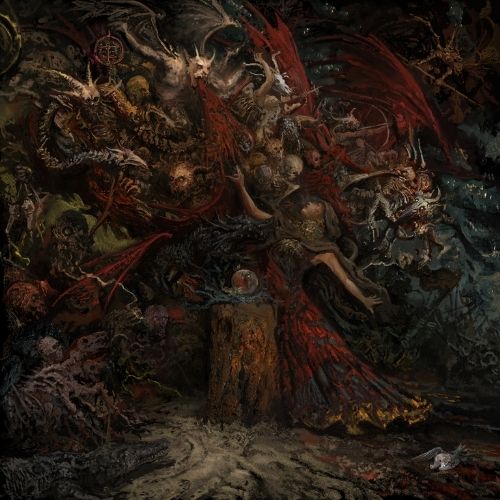
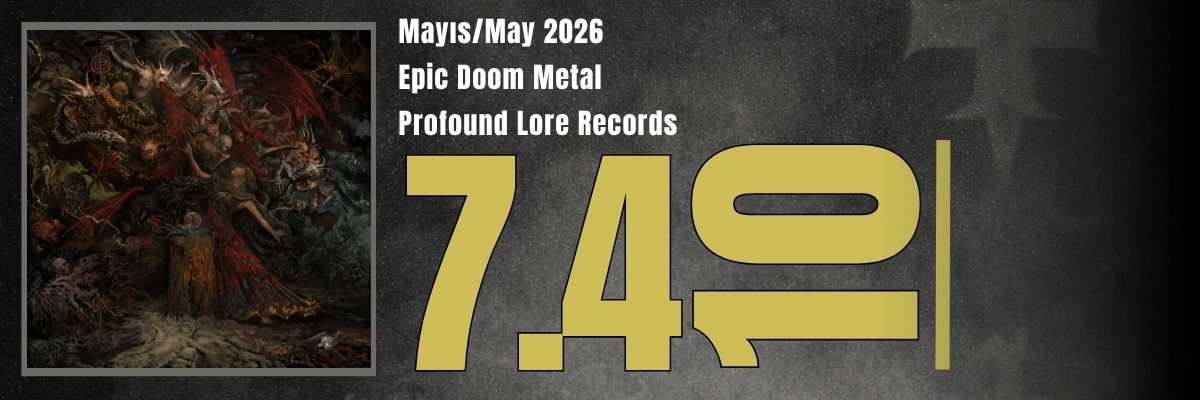
GODTHRYMM - Projections
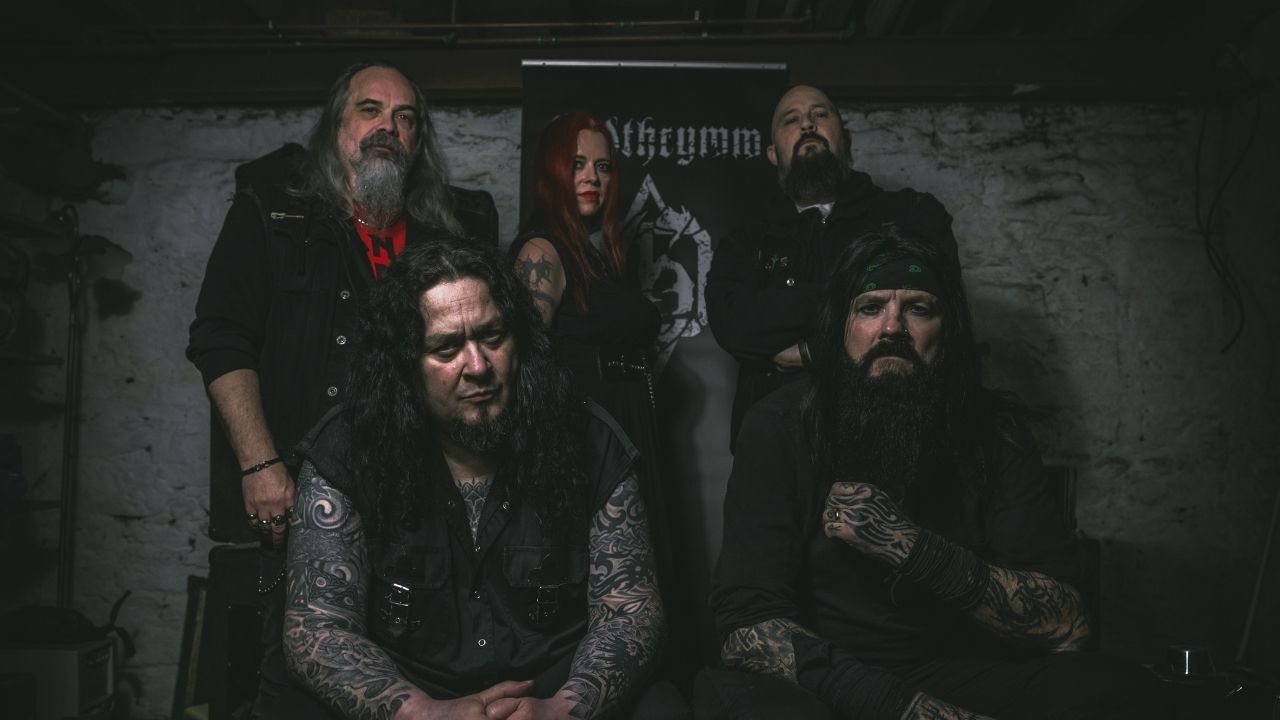
GODTHRYMM emerged as a project shaped around Hamish Glencross and Shaun Taylor-Steels, rooted in the British death/doom tradition and, more specifically, the post–MY DYING BRIDE scene aesthetic. Across their first two albums, the band reinterpreted the heavy, melodic, and melancholic riff legacy of 90s UK doom through a contemporary production sensibility. The third installment of the “Visions” trilogy, “Projections”, aims to steer this trajectory closer to more traditional doom metal frameworks. However, rather than eliminating the band’s characteristic fragmented structures and atmospheric fluctuations, this shift instead establishes a new line of tension. This review will examine how GODTHRYMM negotiate the balance between riff writing, vocal layering, and compositional cohesion during this transitional phase.
The compositional language of “Projections” initially suggests a riff-centric move toward traditionalism. Yet this approach, particularly in the wide, sustain-heavy flow of mid-tempo guitar work, does not resolve into a clear sense of direction; instead, it produces a structure that moves through shifting levels of intensity across the tracks. The opening song, “Trenches Deep”, immediately exposes this approach: while the riffs carry significant weight, brief thrash-leaning accelerations and loosely aligned transitions prevent the piece from stabilizing around a single dramaturgical arc. At this point, GODTHRYMM’s intended “more traditional doom metal” form does not fully align with the actual riff execution; the intent toward classicism exists at a conceptual level, but the phrasing remains structurally fragmented.
On the guitar front, Hamish Glencross’s riff writing continues to function as a central axis: long-note-driven structures, concentrated in the low-mid frequency range, dominate the sound, prioritizing weight over melodic resolution. Kris McLaughlin’s addition as second guitarist does not so much introduce contrapuntal lead interplay as it reinforces a layered wall-of-sound effect. This increases sonic density but does not equally expand harmonic movement. In other words, the band sounds “larger” but not necessarily “more complex.” This choice reinforces a shift away from MY DYING BRIDE’s lineage toward a more CANDLEMASS-oriented block-like dramatic structure; however, these blocks often behave as adjacent sections rather than organically transitioning forms.
The rhythm section remains the most stable element of this framework. Shaun Taylor-Steels’s drumming establishes a near-marching sense of tempo, carrying the natural weight of doom without breaking its gravitational pull. The issue, however, lies in how this stability fails to sufficiently prepare the tracks for their dramatic pivots. In pieces such as “The Sun Never Fell”, atmospheric guitar intros create a strong suspended state, yet the subsequent riff-driven sections enter in a way that feels abrupt rather than organically resolved from that suspension. Despite this, the track’s final expansive harmonic development stands as one of the album’s most coherent moments, where the riff logic finally aligns with a genuine upward dramaturgical arc.
Vocal layering represents the most defining tension field of “Projections”. Hamish Glencross’s vocal approach shifts toward a harsher, more metallic articulation reminiscent of Nick Holmes, while Catherine Glencross’s vocal and harmonic contributions significantly reshape the tonal balance of the mid-to-late sections. The issue is that this transition is not always embedded seamlessly within the compositions. On tracks such as “Jewels”, the female vocal line at times expands the melodic structure but also steps forward in a way that interrupts atmospheric continuity, making arrangement decisions more visible than the intended emotional flow. In contrast, “Endure My Skin” presents a more integrated structure: the inclusion of Aaron Stainthorpe (MY DYING BRIDE) as a growl vocalist functions not merely as a guest appearance, but as a natural extension of the track’s accumulated tension. The layering of vocal lines here becomes structural rather than decorative for the first time.
The album’s strongest moments typically emerge between two extremes: on one side, more aggressive, straight-forward riff propulsion (“Truth In My Own”); on the other, expanded, almost epic doom-adjacent harmonic development (“Hope Is Eternal”). However, the middle ground between these poles often fails to clearly define what each track is aiming to become. This creates the central issue shaping the album’s overall flow: while GODTHRYMM attempt to establish a more direct and assertive expressive language, they remain unable to fully detach from the atmospheric and layered structures of the British doom tradition.
Within this context, “Projections” functions not only as an attempt at stylistic adjustment but also as a transitional space in terms of production logic. Wide, clean guitar tones, the avoidance of excessive low-end blur, and the clear positioning of drums as a structural backbone within the mix align the album with contemporary doom production standards. Yet this clarity, rather than intensifying internal tension, occasionally separates sections too distinctly; in other words, the mix produces transparency of segmentation rather than cohesion.
The closing track, “Hope Is Eternal”, represents one of the album’s more successful attempts at managing this fragmented architecture. Here, rapid riff transitions, expansive lead guitar lines, and layered vocals begin to converge along a shared axis, bringing the album’s divergent tendencies closer to a unified movement. In retrospect, this also clarifies why earlier tracks feel more dispersed: the issue is not a lack of material, but rather the inconsistent application of compositional unity across individual songs.
In its current form, “Projections” reads as a work that attempts to redefine GODTHRYMM’s position within the UK doom tradition, yet struggles to translate that redefinition into a consistently coherent compositional system across its tracklist. What it demands from the listener is a willingness to follow strong riff passages not in isolation, but across extended forms with patience; however, the album’s internal architecture does not always sustain that patience through a unified flow. As a result, the record remains in an intermediate space, constantly oscillating between stylistic intention and structural execution, without fully resolving that motion into a definitive form.
OZY
https://godthrymmdoom.bandcamp.com/
https://godthrymm.com/
https://www.instagram.com/godthrymm/
https://x.com/godthrymm