Album Review
Gravvålnad - Dreams of Evernight
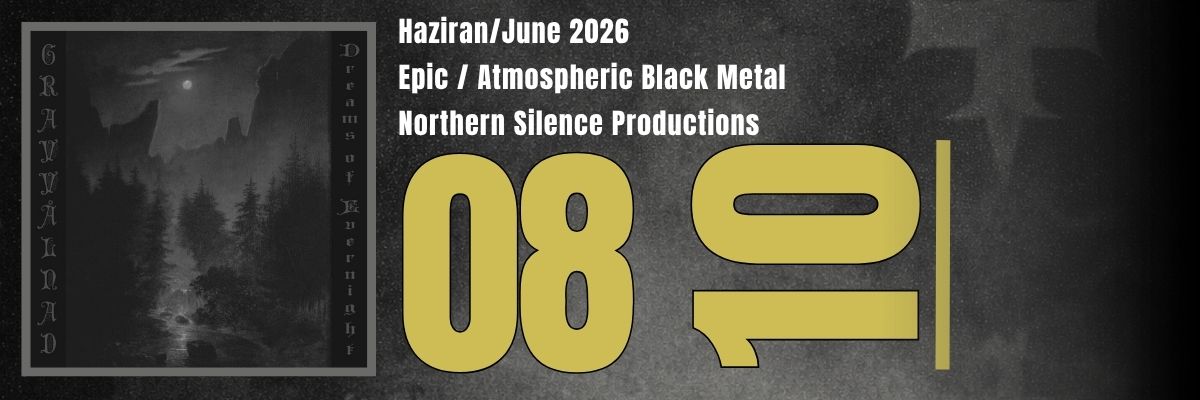
The Swedish solo project Gravvålnad carries the contemporary production language of atmospheric black metal across “Dreams of Evernight” not through speed, aggression, or dense technical display, but through a sense of continuity, the expansion of riff cycles, and the patient construction of epic-scale structures. From the very opening moments, the synth layers do not function as superficial embellishments added merely to generate background atmosphere; instead, they operate as a secondary backbone supporting the tonal movement of the guitar melodies. As a result, the album’s “epic” dimension stems not only from track length, but from the constantly open harmonic space.
With “The Return of 12 Ships,” the defining approach becomes clearer: a fusion of traditional atmospheric black metal’s tremolo-driven flow with slower, heavy metal–inspired melodic progressions. Rather than producing constantly forward-pushing aggressive variations, the riffs expand a single melodic idea through subtle tonal shifts. This both amplifies the album’s sense of drama and establishes its distinctly “heroic” tone. The heavy metal influence here differs from the post-metal or shoegaze expansions commonly found in modern black metal; it feels closer to a transfer of old-school epic heavy metal narration and dungeon synth textures into an atmospheric black metal framework.
One of the album’s most striking aspects is how its entirely solo nature directly shapes its mixing and arrangement decisions. While programmed drums could theoretically introduce a mechanical rigidity, Gravvålnad offsets this by avoiding blast-beat dominance. The drum writing often remains in a more recessed position, functioning less as a tempo-driving force for the riffs and more as a rhythmic skeleton supporting their expanding melodic flow. This choice does not necessarily make the album more “human,” but it reinforces its hypnotic cyclical logic. Especially across the longer compositions, the scarcity of rhythmic ruptures forces the listener to focus less on riff changes and more on atmospheric intensification.
The vocal approach, while centered on classic high-pitched black metal screams, does not carry an entirely aggressive character. Occasional clean vocal passages and ritualistic chant sections create dramatic transitions that directly reinforce the album’s fantasy-driven thematic framework. The strongest aspect of these sections, however, is that they never drag the music into folk metal clichés. Even in tracks such as “Riders of the Black Moon” and “Hill of Sorcery and Black Flames,” where the melodic structures edge toward folk influence, the arrangements still preserve the dark tonal tension of black metal. Here, folk elements function less as an independent identity and more as atmospheric tools reinforcing the album’s “ancient narrative” aesthetic. That said, as noted earlier, the vocals do not rely on the conventional high-pitched black metal scream method, which may be challenging for listeners who prefer a more old-school black metal delivery.
On the production side, the album consciously distances itself from the sterile and overly layered approach of modern atmospheric black metal. Guitar tones are kept sufficiently raw, yet without becoming so blurred that melodic lines lose clarity. This balance is crucial, as the entire identity of the album relies on the continuity created by melodic repetition. Had the mix leaned further into lo-fi aesthetics, the epic structures carried by the riffs would have collapsed. Conversely, a fully polished production would have stripped the music of its underground black metal weight. Gravvålnad insistently preserves a sense of rawness while keeping melodic readability at the center.
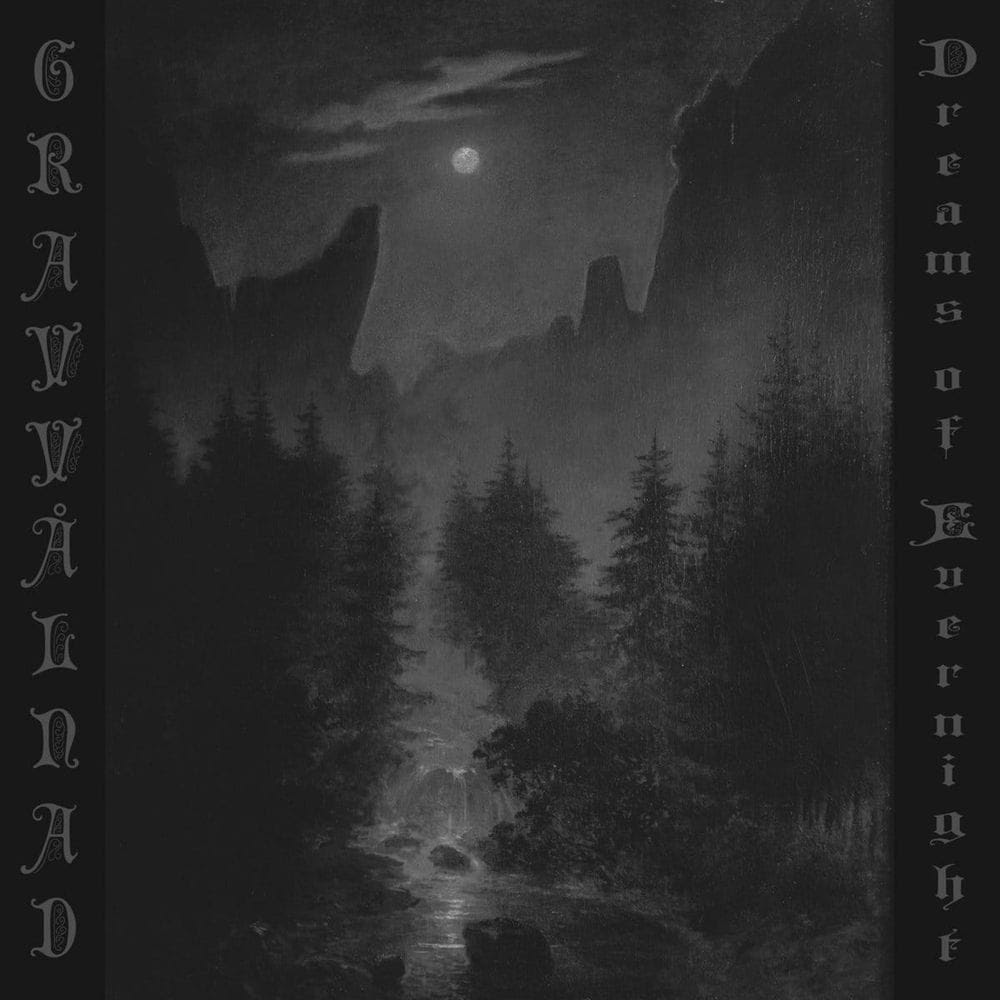
The fantasy world constructed through the album’s artwork and track titles also aligns closely with its musical direction. Titles such as “Cursed Sword,” “Arrows of Evernight,” or “Steps of the Mountain Tower” do not merely function as thematic decoration; the extended song structures genuinely unfold more like chapters of a narrative rather than standalone compositions. In this sense, the album leans toward a more traditional fantasy storytelling aesthetic rather than the cosmic abstraction often found in modern atmospheric black metal. However, Gravvålnad achieves this without tipping into the theatrical excess of symphonic black metal. The synth usage is expansive but not exaggerated; rather than creating an orchestral illusion, it focuses on establishing a sense of space.
“Dreams of Evernight” does not propose a revolutionary shift within the contemporary atmospheric black metal scene. What it does instead is re-concentrate the genre’s melodic and epic core through a patient compositional approach. The key strength lies in its refusal to chase experimentation for its own sake. Rather than constantly layering new elements, Gravvålnad focuses on how limited ideas can be sustained within long-form atmospheric tension. This approach sets the album apart from modern productions driven by immediate impact. “Dreams of Evernight” is not a record that demands attention; it is one that requires immersion. It asks the listener to abandon a consumption habit built around constant change and instead follow how repeating melodic structures gradually gain weight over time.
OZY
Bandcamp: https://gravvalnad-northernsilence.bandcamp.com/album/dreams-of-evernight