
Album Review
Haggus - The Mincecore Manifesto
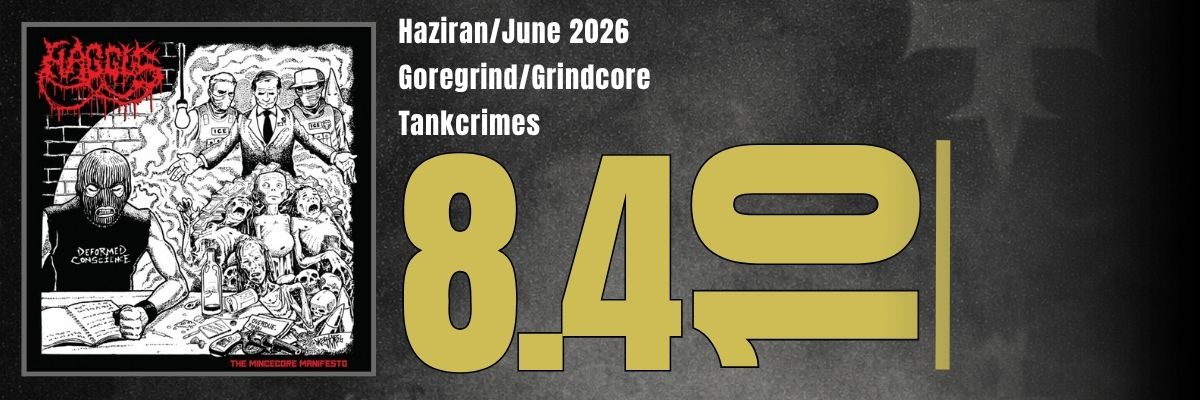
California’s HAGGUS have become increasingly visible within the underground grindcore scene in recent years as one of the most primitive and punk-rooted contemporary representatives of mincecore. Merging the grotesque aesthetics of goregrind with the anarchic drive of crust punk, the band shapes its deliberately anti-technical approach through filthy production, overwhelming speed, and political hostility. Particularly across their more recent material, what stands out is the way they transform mincecore’s chaotic nature from nostalgic imitation into something far more aggressive and contemporarily oppressive. HAGGUS’ music functions almost like a conscious reaction against the sterile and overly mechanical production mentality dominating modern grindcore, while the band’s DIY identity remains central to that aesthetic direction. The Mincecore Manifesto presents one of the densest and most uncontrolled forms of that approach to date.
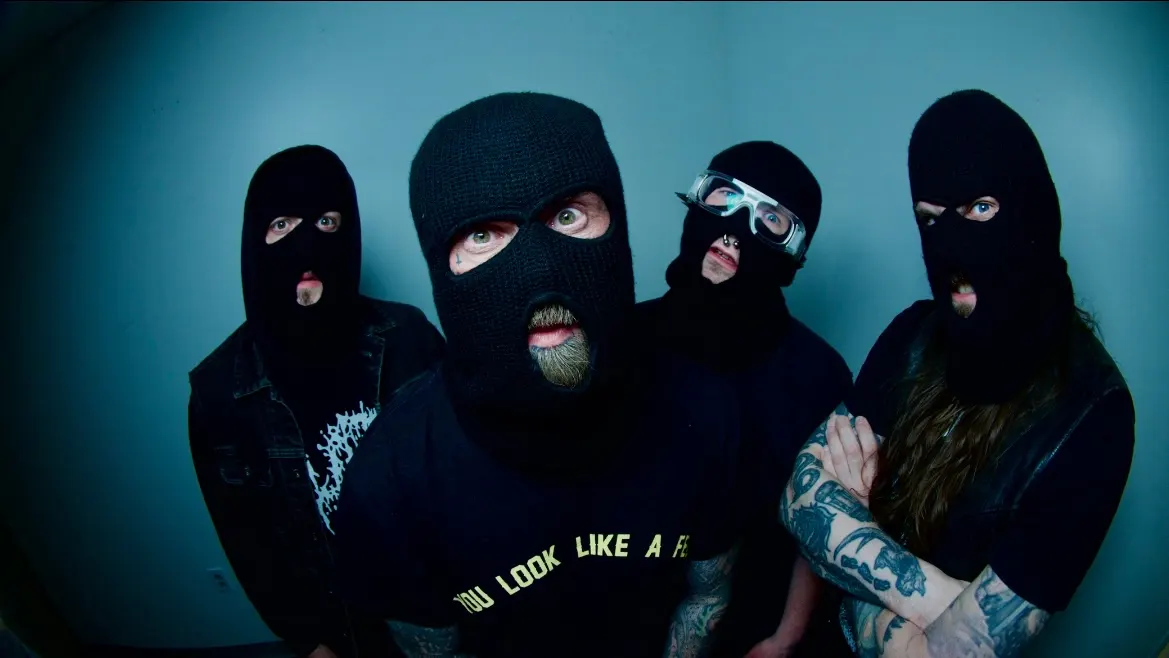
HAGGUS’ music was never built around a grindcore philosophy driven by technical complexity or structural sophistication; the band’s primary concern has always been intensity, speed, and a sense of physical abrasion. The Mincecore Manifesto makes no attempt to render that approach “better” or more sophisticated. On the contrary, the EP’s defining character emerges from the band compressing the rotten D-beat/punk backbone of their earlier material into something even tighter, more hostile, and more unstable. The important point here is that HAGGUS never allows the chaos to become entirely random. The songs are extremely short, the riffs are often little more than variations on a single idea, and the drums move through the classic mincecore “tuppa-tuppa” rhythm, yet the band consciously transforms that repetition into a mechanism of pressure.
The guitar character of the EP is especially striking because the determining force here is not death metal-derived riff construction but the linear forward momentum of crust punk. The riffs are mostly built from two or three moving motifs grinding against each other beneath dense distortion and low-end heaviness, deliberately avoiding technical flourish. That choice narrows the harmonic field of the material while pushing rhythmic impulse to the forefront. This is precisely why HAGGUS’ music generates friction rather than groove; the songs do not pull the listener inward so much as they collapse onto them. Particularly during the faster transitions, the guitars are left dirty enough to nearly blur into themselves, functioning in direct opposition to the sterile separation commonly found in modern grindcore production. Yet the mix never fully sinks into mud. Andrew Solis’ production preserves the directional force of the kick and snare strikes within that overwhelmingly filthy tone, preventing the songs from completely disintegrating.
The drumming, meanwhile, acts as the EP’s primary engine. Blast-beat density is obviously nothing new for the genre, but what matters here is the constant sensation of the rhythms tipping forward. Tempo changes are not used to create dramatic transitions, but to allow the songs to continue without breathing. That gives the EP an almost hardcore punk-derived sense of live-wire momentum. Rather than embracing the hyper-quantized mechanical rigidity frequently heard in contemporary grindcore productions, HAGGUS intentionally preserves a loose and grimy performance feel. At times, that choice reduces the clarity of the riffs, yet within the context of the band’s anarchic aesthetic, that blur becomes less a flaw than a method.
The vocal approach follows the same logic. The movement between pig squeals, gargling goregrind vocals, and more direct punk shouts is not used solely to generate brutality; it also prevents the band from trapping mincecore entirely within goregrind aesthetics. That matters because the EP’s political backbone is genuinely audible within the music itself. While the political discourse of many extreme metal bands remains confined to the lyrical level, here the musical structure carries the same unrest. The constantly overflowing tempos and the mix’s near-collapsing character transform anti-authoritarian rage directly into an aesthetic choice.
At this point, the most important aspect of The Mincecore Manifesto is that it refuses to treat mincecore as a nostalgic preservation space. HAGGUS clearly draws from the Agathocles lineage, yet the EP also positions itself against the excessive technicalization currently dominating the grind scene. As with much of modern metal in general, many contemporary grindcore bands center death metal virtuosity or digital production sterility, whereas HAGGUS consciously chooses to remain “ugly.” But that ugliness is not random; the sensation of riffs repeatedly crashing into the same wall, the vocals approaching incomprehensibility, and the controlled overflowing nature of the mix all function as parts of a unified logic shaping the EP’s entire aesthetic direction.
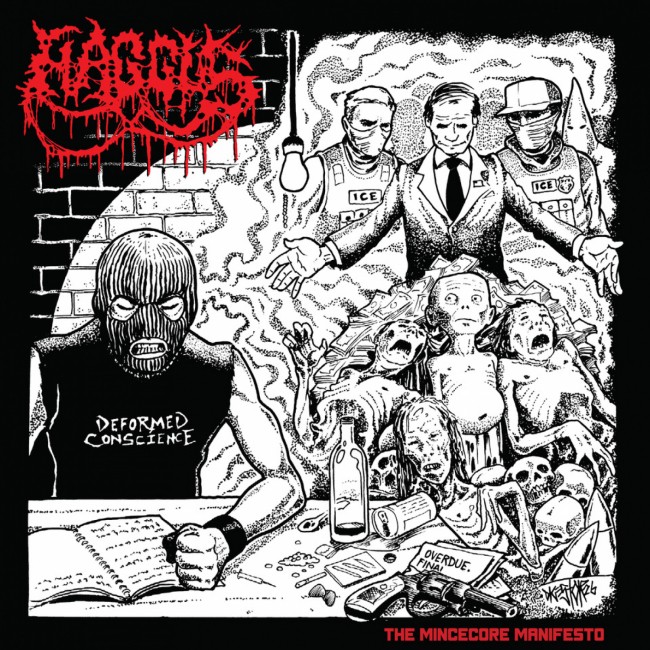
The cover artwork by Digestor reinforces that same approach. Its visual language leans entirely into goregrind and DIY punk heritage; grotesque linework, exaggerated deformation, and a low-resolution dirt aesthetic directly mirror the music’s analog physicality. The visual identity here does not function as decoration for the music, but rather as an extension carrying the same sense of physical erosion. Especially against the backdrop of the excessively clean digital cover aesthetics frequently dominating contemporary extreme metal, this approach creates the effect of a deliberate counter-position.
The EP’s greatest strength lies in its ability to turn its limited set of tools into an advantage. HAGGUS are not inventing a new grindcore language, nor are they structurally moving beyond the genre’s foundational formulas. What the band does achieve, however, is the successful reconcentration of mincecore’s chaotic and primitive nature without surrendering it to contemporary production standards. For that reason, The Mincecore Manifesto is not aimed at listeners searching for technical innovation; it resonates with those who still regard the physical intensity of extreme music, political hostility, and consciously preserved filth as central values. What matters here is not how complex the riffs are, but how convincingly the band transforms that sensation of uncontrolled collapse into a coherent aesthetic framework.
OZY
https://www.instagram.com/haggusmincecore
https://tankcrimes.merchtable.com