Album Review
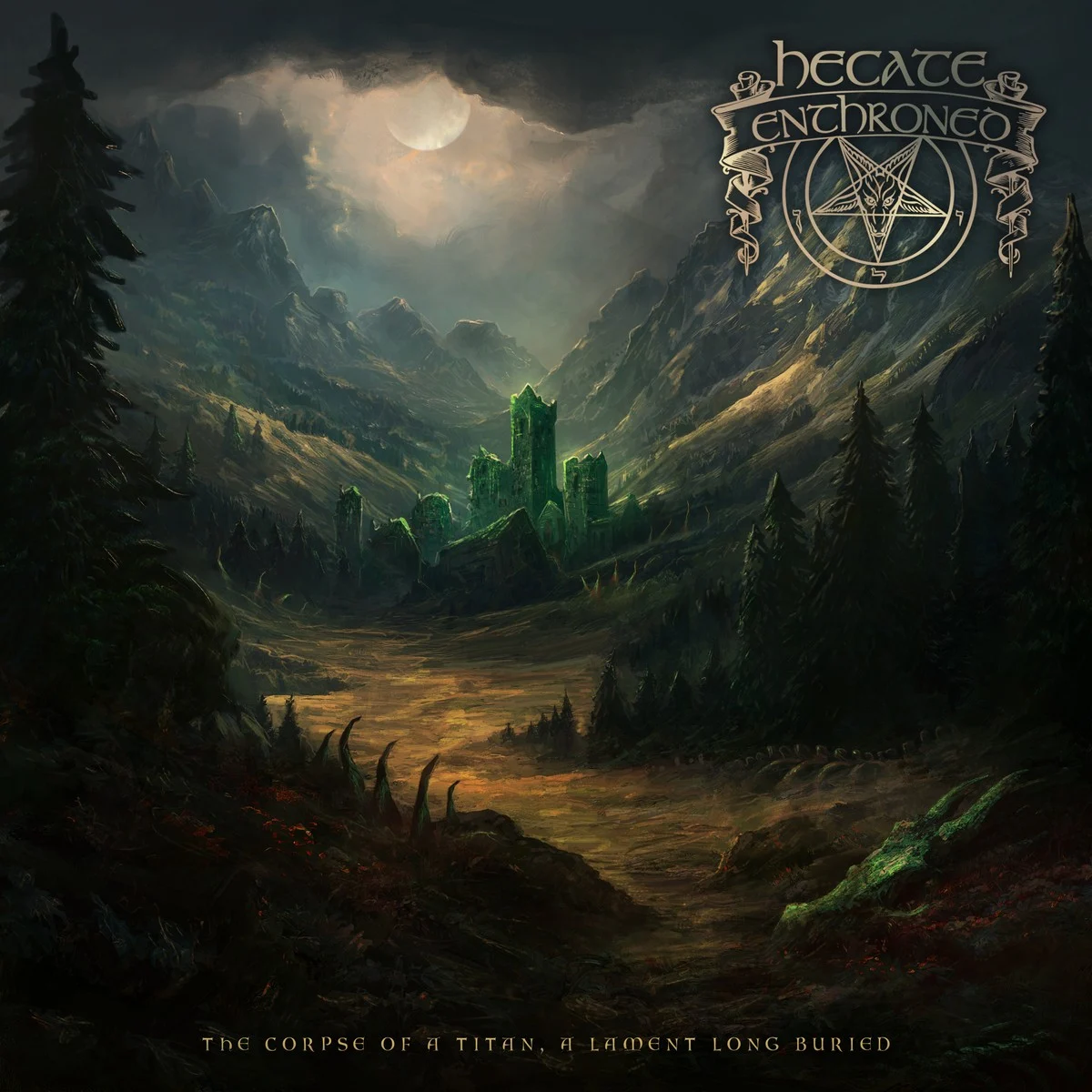
Hecate Enthroned - The Corpse of a Titan, A Lament Long Buried
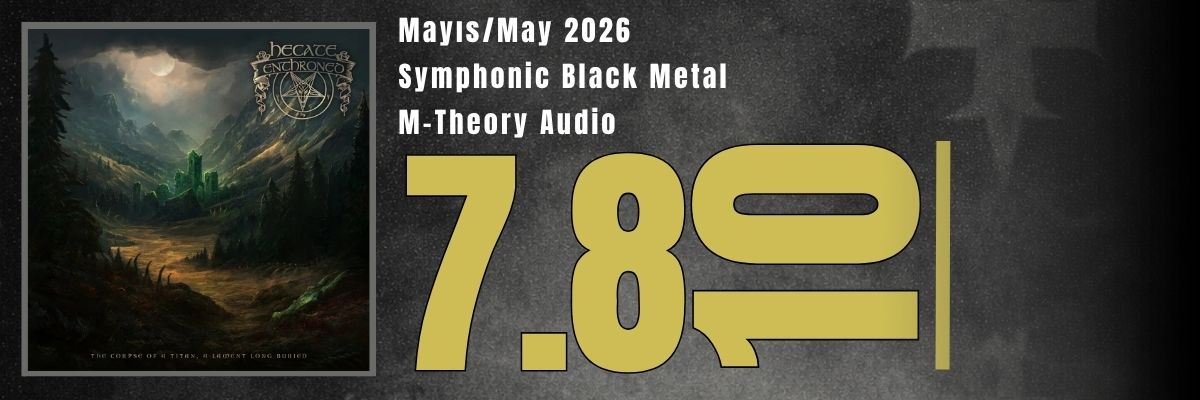
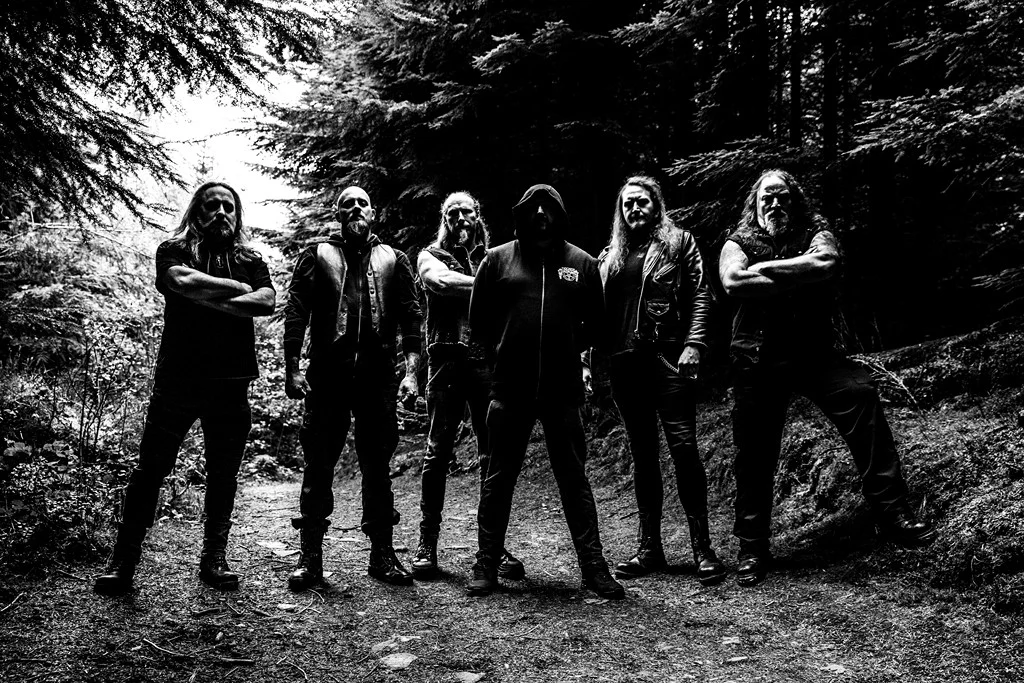
In the mid-1990s, emerging as one of the early figures of the United Kingdom’s black metal scene, Hecate Enthroned carved out a distinct line within the genre’s local evolution through an approach that fused symphonic black metal with the aggression of death metal. While they were frequently associated with a parallel aesthetic language to Cradle of Filth in their early work, the band gradually shifted toward a more controlled, structurally driven compositional mindset that balances orchestral density with extreme metal severity. At their current stage, Hecate Enthroned continue to practice a form of symphonic black metal that both references their roots and is reshaped through modern production standards.
The band’s seventh full-length album, The Corpse of a Titan, A Lament Long Buried, is immediately legible through a dual-layered compositional strategy: on one side, tremolo-based classic black metal riff writing; on the other, an orchestral and keyboard-heavy harmonic veil that continuously expands this framework. The relationship between these two layers defines the album’s entire dramatic tension. Guitars primarily revolve around mid-to-high register tremolo figures and classical minor-key arpeggios, while the drums constantly shift between blast beats and semi-epic mid-tempo transitions. This structure forces the compositions into a segmented dramaturgy rather than linear aggression.
The production approach makes this tension particularly explicit. In Dan Abela’s mix, guitars are neither pushed fully back nor placed in front of the orchestral pads. This is a crucial decision for symphonic black metal: keyboards function not merely as atmospheric filling, but often as a secondary layer that reframes the harmonic direction of the riffs. In particular, the opening track “Adar Rhiannon” and the following “Spirits Stir Within Our Ancestors’ Tombs” generate a constant sense of expansion through this dual-layered structure, without dissolving the rhythmic sharpness of the guitars.
The vocal approach is grounded in a spectral range within Joe Stamps’ performance. Transitions between high-pitched, razor-edged black metal screams and deeper guttural tones prevent the songs from collapsing into one-dimensional aggression. However, the vocals are often positioned less as articulation and more as a rhythmic instrument; this pushes lyrical content into the background and foregrounds the percussive character of the voice itself. This choice results in the album’s mythological thematic framework (British folklore and ancient narratives) being constructed not as storytelling, but through sonic density.
On the guitar writing side, Nigel Dennan and Andy Milnes establish a clear connection to the UK symphonic black metal lineage. In tracks such as “The Arcane Golem,” riffs are constructed in block-like formations, carrying an almost mechanical weight that produces the impression of a massive moving structure above the orchestral layer. In contrast, pieces like “Steed of the Still Water” introduce acoustic guitar passages and more spatial harmonic frameworks. This contrast generates one of the album’s strongest traits—dynamic intensity fluctuation—although in certain transitions it also produces a segmented, collage-like flow rather than fully continuous dramaturgy.
The drum performance constantly reorients the album’s rhythmic backbone. Blast beats are used not only for speed, but as a driving engine that carries orchestral surges forward. Mid-tempo sections reinforced by double bass expand the harmonic field, yet this expansion does not always translate into structural transformation; in some passages, while orchestral density increases, the rhythmic framework remains fixed, resulting in a sense of development through surface-layer shifts rather than formal evolution.
One of the album’s most debated yet defining aspects is its use of keyboards and orchestration. Pete White’s arrangements frequently move beyond supporting “background atmosphere” and assume a guiding melodic role. “Deathless in the Dryad Glade” is a representative example: opening string passages establish the harmonic ground before the guitars even enter, and when they do, they are already embedded within a pre-defined tonal space. This elevates orchestration beyond decoration, but simultaneously limits the independent expressive autonomy of the guitar riffs.
The mid-album piece “PWCA” functions as a structural rupture point. With drums and distortion entirely removed, the track builds a modal atmosphere through piano and acoustic guitar. Crucially, this restraint is not merely a contrast mechanism, but a recalibration of the album’s overall intensity curve. However, such interludes can also amplify a sense of dramatic emptiness in the broader flow, and for some listeners may interrupt the central thematic tension as a “softening phase.”
The use of female vocals and whispered layers, particularly in “PWCA” and transitional segments, enhances the theatrical dimension of the composition. Yet these elements rarely function as independent narrative layers; instead, they act as textural reinforcements that intensify the existing atmosphere. In other words, while aesthetically effective, they seldom alter the structural direction of the album.
The production aesthetic approaches modern clarity without becoming sterile or overly polished. The midrange density of the guitars is preserved, while the transient attack of the drums creates a sharp physical impact, especially during blast beat passages. This balance reflects a clear departure from the band’s earlier rawer recording ethos, while avoiding full alignment with a fully digitalized symphonic metal standard. This in-between position appears to be one of the album’s most deliberate choices.
Toward the closing section, more epic compositions such as “Into a Vale of Endless Snow” attempt to consolidate the album’s thematic and orchestral layers. Yet even here, the structure does not introduce a new language, but rather intensifies existing motifs. This aligns with the album’s overall identity: expansive, yet resistant to radical rupture.
In conclusion, The Corpse of a Titan, A Lament Long Buried constructs a framework within symphonic black metal that places orchestration at its core, integrating riff-based guitar writing into this expanded harmonic field. While the album maintains the genre’s traditional tension between chaos and melody, it seeks not to redefine but to optimize it. For the listener, this results in a continuously expanding yet tightly controlled atmosphere; however, because this expansion is not always supported by structural transformation, the album’s strongest quality—its dramatic intensity—occasionally remains suspended between functional riff architecture and decorative orchestration. Nevertheless, Hecate Enthroned’s return after a long hiatus is impressive, delivering a powerful symphonic black metal record and continuing to produce at a level that feels especially striking in today’s symphonic black metal scene, which is far removed from its former glory.
OZAN