Album Review
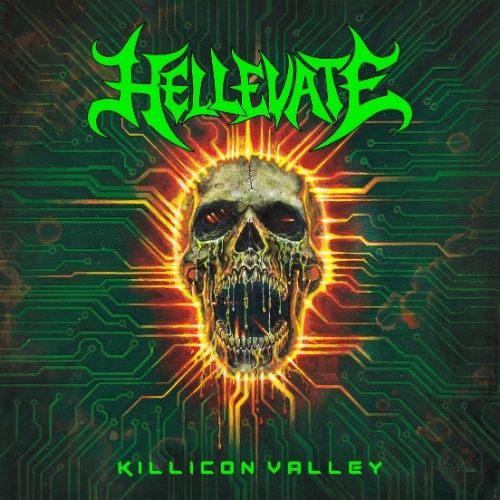
Hellevate - Killicon Valley
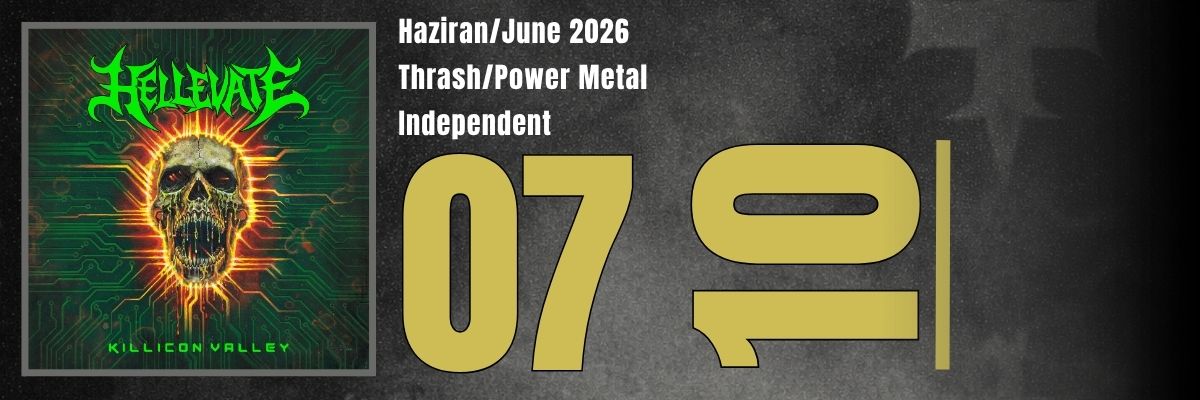
HELLEVATE’s Killicon Valley attempts to reframe the classic velocity aesthetics of thrash metal through contemporary technical and stylistic layering within an increasingly crowded field of modern production. The album’s overall architecture is built on a tension line between “high-tempo continuity” and attempts at melodic expansion.
HELLEVATE’s Killicon Valley constructs its riff architecture on a foundation of classic downstroke continuity, yet does not reduce this to a purely speed-driven thrash reflex; guitars are layered across much of the record with palm-muted pedal-point structures punctuated by periodically opening melodic upper lines. This approach points to a compositional logic that continuously generates friction between pure velocity and harmonic expansion. However, that expansion does not always reach its intended threshold; in certain passages, melodic ideas remain an additional layer placed over the riff core rather than elements that reshape the direction of the rhythmic framework.
The production sits close to the familiar “mid-forward guitars / controlled drum transients” balance of modern thrash mixing. Guitar tones are concentrated in the low-mid range while retaining a sharp top-end sheen, which keeps articulation intact during rapid tremolo transitions. The drums operate largely through double-kick density; the kick drum functions as a constant motoric force, while snare hits become structural markers that signal riff transitions. Rather than generating groove, this setup prioritizes continuity.
The album’s most explicit ambition lies in its desire to expand its thrash core through power metal and speed metal inflections. This is most apparent in sections where guitars shift toward chord-centered harmonic movement. Yet these transitions more often function as tonal coloration rather than structural reinvention of the songs. As stylistic variety increases, compositional transformation does not deepen proportionally.
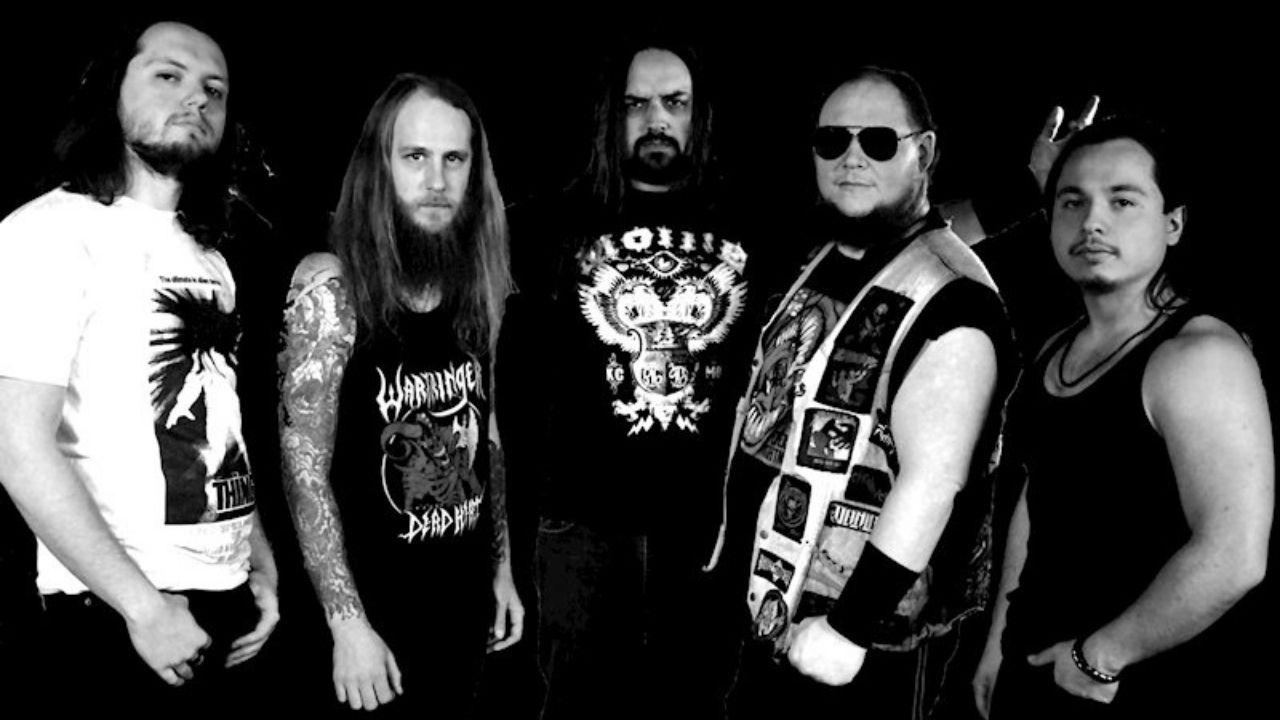
The vocal approach maintains classic thrash aggression while operating within a mid-register sharpened by hardcore intensity. Vocal lines are largely locked to the rhythmic contour of the guitar riffs; instead of generating independent melodic movement, they function as an additional rhythmic accent layer. This choice prioritizes rhythmic cohesion over narrative delivery, though in a full-length format it can contribute to a sense of repetition. Robert fulfills his role effectively, yet for a band now on its third album and still operating largely through its own means in an effort to carve out space in the thrash scene, Killicon Valley ultimately falls short of pushing its impact a step further.
The bass guitar, while not entirely buried in the mix, is largely reduced to a supporting role doubling the guitar wall. It works in tandem with the kick drum in the low end to reinforce density but does not introduce an independent harmonic counter-line. This aligns with the album’s overall aesthetic priority: foreground riff continuity, background instrumental autonomy.
In the middle sections of the album (particularly across more structurally linear tracks), the limited variation in riff development results in a noticeable loss of momentum across its nearly hour-long runtime. The issue here is not a lack of energy, but an unresolved sense of compositional repetition; similar rhythmic frameworks are reintroduced with altered tonal shading, which gradually reduces perceived intensity over time. In contrast, the final portion of the record shifts toward more fragmented and dynamic riff transitions, rebuilding tension toward the album’s closing stages, where guitar writing begins to introduce sharper contrasts.
On the lyrical level, themes of the tech industry, artificial intelligence, and social violence are interwoven with more fantastical elements such as prehistorical creatures and references to Japanese mythology. Rather than forming a concept tightly aligned with the musical structure, this thematic variety continues thrash metal’s traditional broad thematic spectrum. As such, the lyrical layer functions less as a driver of compositional decisions and more as a narrative surface placed atop an already established musical framework.
Killicon Valley ultimately presents an approach that seeks to maintain a balance between speed and melodic expansion within contemporary thrash production practices, yet often locks that balance at the level of riff construction. For the listener, the album demands endurance against repetition across a long-form structure rather than relying on the immediate energy of individual tracks; this keeps it aligned with a performance-rooted thrash tradition while simultaneously limiting its willingness to take compositional risks.
OZY