EP REVIEW
HUNTER OMEGA - Lake Of Death
HUNTER OMEGA sharpens NWOBHM with US metal.
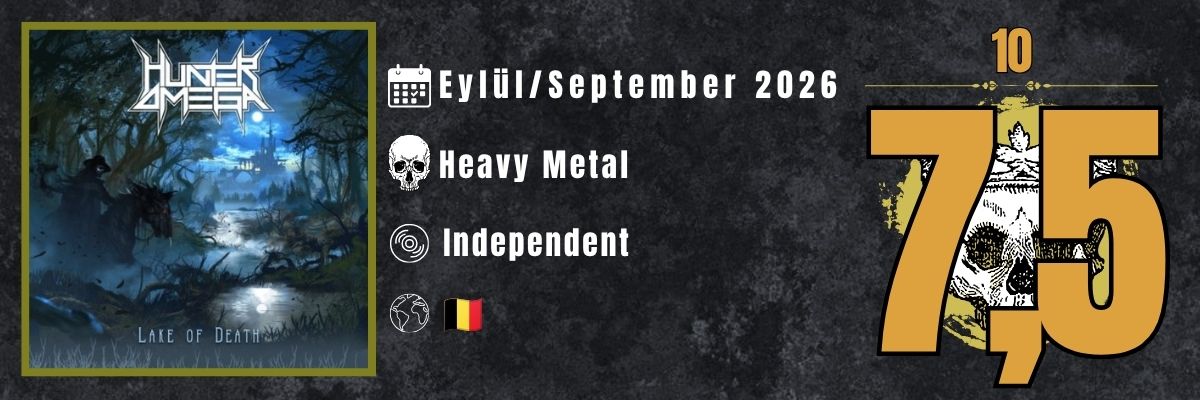
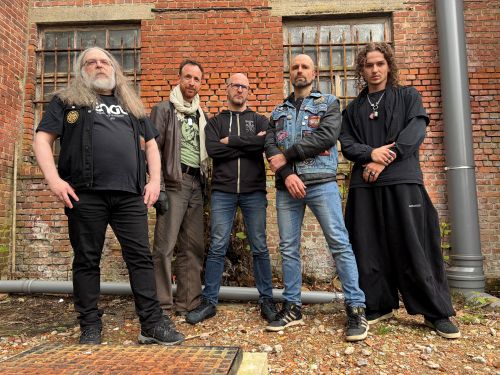
Belgian HUNTER OMEGA are taking their first step onto the metal scene under their new name with the “Lake Of Death” EP, due out September 9, drawing on the experience they have accumulated over the years. The changes to both the band’s name and lineup have not resulted in a radical musical break with the past; rather, they can be seen as a repositioning that tightens the existing heavy metal backbone while bringing the American influences further to the fore. Across its four tracks, the EP blends the melodic and epic side of NWOBHM with the harder riffing approach of classic US metal. The resulting sound is shaped particularly by the rhythmic weight of the guitars and David Walgrave’s vocal approach. While the fundamental songwriting philosophy inherited from the HUNTER era remains intact, the “increase in intensity” claimed by the new identity is felt primarily in the way the riffs are emphasized and in the heightened aggression of the material.
“The Ghost Of Anarchy,” the opening track, is the most direct example of this approach. Built around a riffing backbone that moves between classic heavy metal and US metal, the song gains considerable momentum when the guitars take on a broader and more forceful character in the chorus. David Walgrave’s clean yet hard-edged vocals play an important role here; particularly in the upper register, they evoke the vocal character of ’80s US metal. The Metal Church resemblance is not limited to his vocal tone, either; the way his melodic vocal lines interact with the heavy guitars further reinforces that reference. The gothic and fantastical imagery in the lyrics also runs naturally parallel to the song’s classic heavy metal aesthetic. Elements such as the “spectral melody,” graves, and curses tie the band’s dark narrative to traditional metal storytelling rather than modern visual spectacle.
“Lake Of Death” brings the EP’s US metal side further to the forefront. The traditional heavy metal balance of the previous track gives way here to harder guitar accents and a more direct rhythmic drive. An OVERKILL-esque groove approach reminiscent of their ’80s period gives the track’s rhythmic core greater definition without allowing HUNTER OMEGA to abandon its melodic side altogether. The repeated imagery of winter, graves, snow, and death in the lyrics also mirrors the musical structure: rather than progressing through a complex plot, the narrative moves through recurring images, with the “winter time romance” motif in the chorus reinforcing that sense of repetition. What is particularly notable here is that the band does not resort to unconventional instrumentation or dense layers of production to create atmosphere. The atmosphere comes directly from the guitar tone, vocal melody, and traditional heavy metal arrangement.
“Knight Of The Black Rose Part 3” is the clearest link between the band’s past and its new identity. Bringing the story that began during the HUNTER era to a close, the track operates more explicitly according to an epic heavy metal logic than the EP’s other songs. The melodic character of the guitars and David Walgrave’s vocal delivery, adapted to the narrative, bring the song’s dramatic structure to the foreground. Yet the galloping rhythm that emerges in the final section ties the track directly to the NWOBHM tradition. The IRON MAIDEN influence here goes beyond a superficial reference, playing an active role in changing the rhythmic momentum of the narrative. The shift from the slower-moving epic section into a more dynamic gallop gives the final part of the story a musical lift. At the same time, this choice also draws a boundary around how far HUNTER OMEGA’s new identity actually goes: the band is rearranging traditional formulas, but has not yet fundamentally transformed them.
The EP’s most direct and aggressive track, “F.A.F.O.,” sets aside the more narrative-driven approach of the other three songs. The riffs are shorter, the rhythm more straightforward, and the vocal melody more confrontational. The lyrics follow the same path; centered on the phrase “fuck around find out,” the song opts for direct confrontation and defiance rather than constructing a complex narrative. As a result, it functions as a closer that sits comfortably alongside the short, punchy songs of ’80s heavy metal. Rather than complementing the epic and gothic atmosphere established elsewhere on the EP, this choice forms its opposite pole. That contrast works in terms of the four-track sequence’s overall dynamics.
From a production standpoint, HUNTER OMEGA’s approach keeps the classic heavy metal instrumentation at the center, in contrast to the increasingly layered and sterile production style common in contemporary extreme metal. The guitars are the defining element of the mix, while bass and drums establish a traditional rhythmic backbone that supports the movement of the riffs. This approach turns the potential risk of sounding “old” into an aesthetic choice. “Lake Of Death” does not place contemporary production technology ahead of classic metal composition; instead, it keeps songwriting as the central concern. The broader range of influences and increased intensity mentioned by the label therefore emerge not as an entirely new sonic architecture, but as a more forceful application of existing formulas.
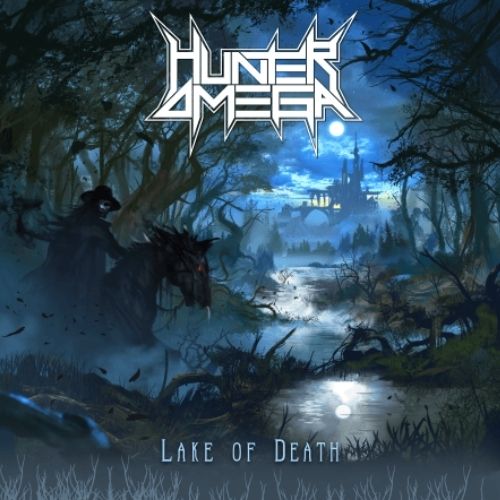
The visual presentation does not contradict this musical direction, either. The artwork provides a framework that supports the EP’s gothic, fantastical, and classic heavy metal narratives without attempting to conceal the genre references embedded in the band’s music. In this respect, HUNTER OMEGA’s new identity does not use the retro aesthetic so common in contemporary metal merely as a visual filter; it follows the same tradition on which the musical material is already built.
The real issue, then, is that “Lake Of Death” represents a controlled evolution more than a rebirth. The arrival of two new members and the adoption of the HUNTER OMEGA name provide a sufficient framework for making the musical differences visible, but the four tracks do not completely break away from the songwriting logic of the previous era. Instead, NWOBHM’s melodic language, US metal’s harder rhythmic approach, and the vocal aesthetic of ’80s heavy metal are brought together within a tighter compositional framework. The EP’s value therefore lies not in pushing the boundaries of the genre, but in defining more clearly which references the band wants to foreground within those boundaries.
“Lake Of Death” is a record that asks its listeners to focus not on the production spectacle of modern metal, but on the riffs and song structures themselves. HUNTER OMEGA is not opening new windows onto heavy metal here; it is reframing HUNTER’s legacy through more pronounced US metal influences and a higher level of intensity. If the band’s next full-length can carry the broader range of influences merely hinted at on this EP into its actual compositional structures, the name change could evolve from a retrospective rebranding exercise into a genuine shift in musical identity. For now, “Lake Of Death” more than fulfills its role as a four-track declaration whose direction is unmistakably clear, rather than a completed version of that transformation.
