ALBUM REVIEW
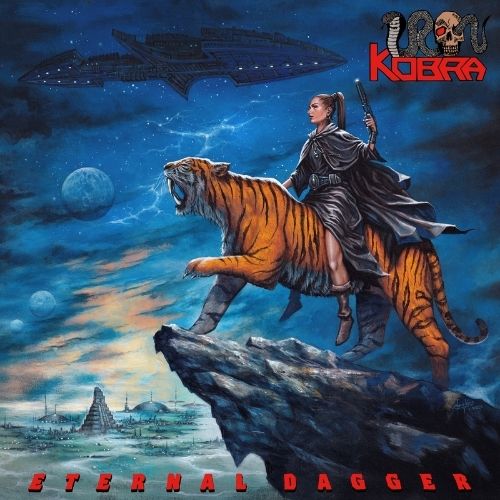
Iron Kobra – Eternal Dagger
Speed Metal Revival Done Right
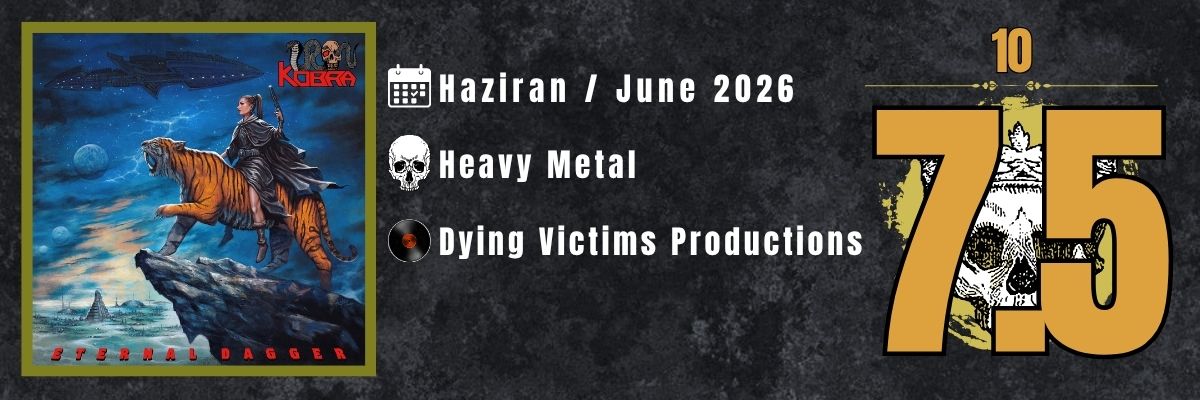
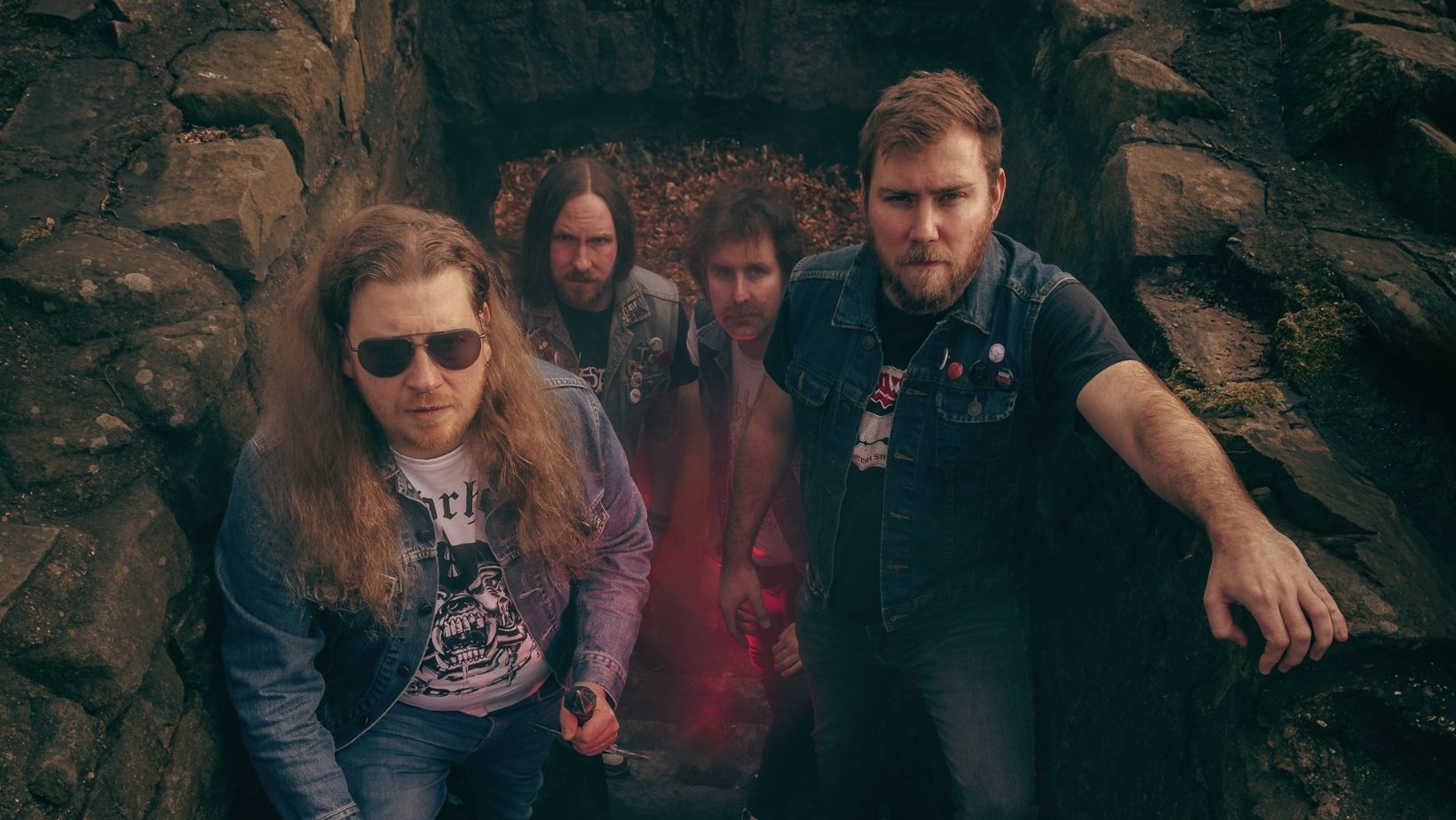
IRON KOBRA return after a long hiatus with “Eternal Dagger”, reasserting a classic heavy metal and speed metal aesthetic within the constraints of a modern production framework. The Gelsenkirchen-based band moves through a riff-driven architecture that directly references the legacy of NWOBHM and the 1980s speed metal tradition. While the album preserves the core codes of the genre, it opens up its claim of reinterpretation through its compositional choices.
From the very first moments, the record avoids any attempt at a dramatic introduction or atmospheric buildup, instead launching directly into a riff-based architecture of velocity. In this sense, “Trembling Dungeons” functions less as an opener and more as a condensed blueprint of the album’s entire aesthetic proposition: synchronized twin-guitar riff lines, sharp palm-muted accents, and a rhythmic flow that is constantly pushed forward yet remains tightly controlled. The straight-ahead propulsion of the drums here is not merely a carrier of tempo; it acts as a structural framework connecting the segmented parts of the guitar riffs. This approach firmly establishes the speed metal–centric compositional logic that defines the album as a whole.
Guitar writing stands as the most decisive element of the record. IRON KOBRA use the twin-guitar interplay rooted in NWOBHM tradition not only for harmonic richness but also as a multiplier of rhythmic density. The riffs are often constructed from continuously shifting motifs locked into the mid-register rather than open-chord expansiveness. This causes melodic lines to emerge primarily when the lead guitar enters in short but frequent bursts. Particularly in tracks such as “Forbidden Fruits” and “Silver Strings & Iron Wings”, there is a clear division of labor between riff cycles and lead melodies: the rhythm guitar sustains forward motion, while the lead guitar generates surface-level memorability. This separation strengthens the album’s melodic imprint while keeping its structural variety within a relatively contained framework.
“Fliehen” introduces a slight fracture within this structure. Here, a punk-oriented rhythmic approach results in less syncopation and a more direct accent system in the guitar work. The use of German lyrics is not merely an aesthetic decision; it sharpens the articulation of the vocal rhythm, creating a more pronounced contrast with the straight-ahead guitar framework. However, rather than producing a fundamental compositional deviation, this shift remains a more stripped-down variation of the same riff-centric logic.
In the album’s midsection, “Shibuya Nights” contains one of the most noticeable stylistic shifts in the structure. While the tempo does not fully subside, the speed metal reflex gives way to a groove- and melody-oriented flow closer to 1980s hard rock and NWOBHM aesthetics. The riffs are more open, less compressed, and carry a more breathable harmonic character. In this track, the lead guitar’s melodic line comes close to assuming an almost equal narrative role with the vocals. This Japan-referenced atmospheric direction functions less as an exotic decorative layer and more as a testing ground for the band’s melodic writing in a different tonal center. However, since this exploratory direction does not evolve into a structural transformation in subsequent tracks, it remains a controlled variation rather than a turning point in the album’s overall compositional logic.
From the perspective of the rhythm section, the bass guitar largely operates as a supportive layer embedded within the guitar wall. Rather than generating an independent counterpoint, it reinforces the low-mid range of the guitars. The drums function as a constant engine sustaining a double-time feel, while the slightly softened and mildly blurred character of the kick drums appears to be a deliberate production choice: it prevents the album from becoming a clinical speed exercise and instead anchors it in a more organic, rehearsal-room-like aesthetic.
The overall production follows the same direction. It avoids the overly separated, high-polish mixes of modern metal. High frequencies are aggressive but not razor-sharp; there is a subtle rounding in the upper range of the guitars in particular. This places the high-energy structure of speed metal onto a warmer tonal foundation. However, this warmth does not always work in the album’s favor; in certain rapid transitions, the softened mix approach can cause riff definitions to blur into one another.
Vocal performance stands as one of the most contested yet defining elements of the record. Ela’s vocal approach leans away from a technically sterile heavy metal standard and instead carries a controlled rawness. This rawness generates a parallel energy with the rhythm guitars in faster sections, while introducing a slight fragility in more melodic passages. However, this fragility is not a dramatic expression but rather a natural byproduct of the rough articulation itself. This helps prevent the album from drifting into an overly polished modern heavy metal production.
The structural architecture of the album is generally built on short, concise, and repeatable riff blocks. There are no dramatic tempo shifts or extended progressive transitions between tracks; instead, a linear songwriting approach typical of speed metal is preferred, where core riff ideas are expanded through variation. Tracks such as “Treacherous Tyrant” and “Unchained & Untamed” represent the purest examples of this approach: fast entry, a brief harmonic expansion in the middle section, and a closing structure built around the repetition of the main riff.
“Mountains Of Madness”, as the longest track on the album, adds a slight weight to this linear framework. Here, the claim of “epic expansion” is not achieved through progressive transformation, but through broader riff spacing and an increased emphasis on groove. Rather than becoming more technically complex, the track shifts into a structure that simply breathes more widely. This remains consistent with the album’s overall character: not an elaborate formal expansion, but a controlled shift in intensity.
Viewed as a whole, “Eternal Dagger” does not attempt to modernize speed metal and NWOBHM influences through contemporary production norms, but instead reworks them with minimal intervention. Elements such as Japanese references, punk-inflected deviations, and 80s hard rock nods function more as surface-level color layers than as drivers of structural transformation. As a result, while the album offers stylistic variation, it does not open up a radically expanded compositional space.
Ultimately, “Eternal Dagger” presents a framework in which riff-based writing is reconstructed without modernization, but with a more controlled and refined execution. The album demands an engagement with a continuously moving velocity flow rather than analytical dissection. Yet the boundaries of that flow remain clear: ideas do not expand, but are instead recirculated through variations in speed and melodic framing. This makes the record strong in terms of immediate impact and live energy, while positioning it in a more limited space in terms of long-term structural diversity.
OZAN
www.dying-victims.de
www.facebook.com/dyingvictimsproductions