ALBUM REVIEW
IRON SAVIOR – Deathbringer
Melodic power metal with sci-fi themes.
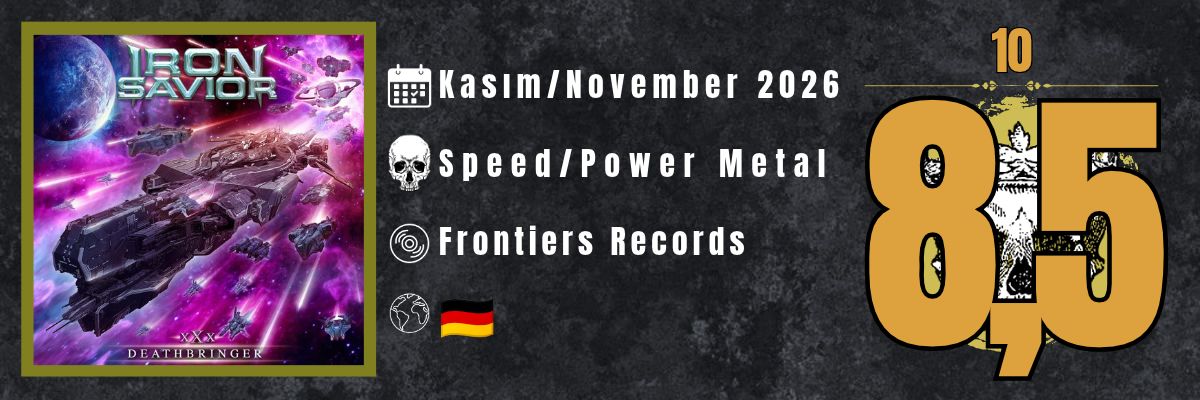
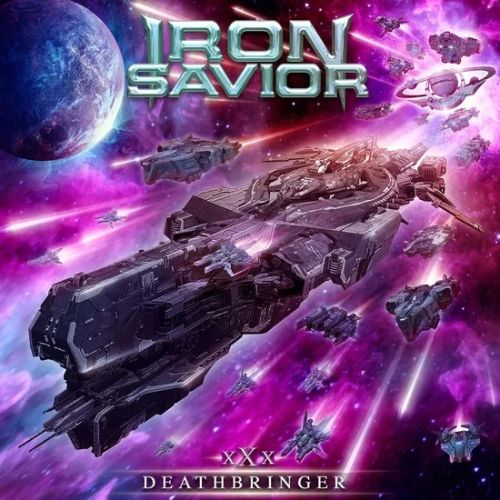
Over the course of their 30-year career, Hamburg-based IRON SAVIOR have developed a distinctive take on melodic power metal, building their musical identity largely on the same foundations. In this universe shaped by Piet Sielck’s passion for science fiction, fast-paced guitars, powerful melodies, multi-layered choruses and space-themed narratives have always complemented one another. "Deathbringer" belongs firmly within this established world. The key question, then, is not how much new ground the album attempts to cover, but how successfully it keeps the band’s familiar songwriting approach alive.
Opening the 13-track album, 'Shadows of Neverness' sets the scene with a dark, dramatic atmosphere despite its brevity. The title track that follows is somewhat more restrained than the high-speed openers the band usually favour. Its driving force comes from the heavy guitar riffs and Sielck’s unmistakable vocals, although it does not fully represent the songwriting variety found elsewhere on the album. Particularly striking is the vocalist’s use of high notes that push beyond his customary range. The fact that Sielck continues to develop his vocal technique at this stage of his career adds another dimension to his performance.
The album really gathers momentum with 'Light in the Dark'. Fast guitar runs, a sharply defined rhythmic structure and layered vocals in the chorus bring its melodic character into focus. The balance between the chorus’s bright melody and the aggression of the instrumental section is particularly effective. The backing vocal arrangements, which occasionally recall BLIND GUARDIAN, also lend the song an added sense of grandeur. What matters here is that the melody does not soften the aggression of the guitars; it moves alongside it. That interplay is precisely one of the reasons IRON SAVIOR’s long-established formula remains so effective.
The pace eases somewhat on 'The Creature's Tale'. Drawing on Mary Shelley’s Frankenstein, the song explores a created being’s search for love and the anger that emerges when that need goes unanswered. The heavier, more crushing riffs provide a musical counterpart to the narrative. What makes the track interesting is not simply its literary reference, but the way IRON SAVIOR bring their own AI character and Frankenstein’s creature together on the same thematic plane. Linking two fictional beings through questions of life and existence creates one of the album’s more intriguing departures from the band’s familiar tales of galactic warfare.
'Back from the Fires of Hell' is one of the album’s most personal tracks, standing apart from its science-fiction narrative. Connected to Piet Sielck’s illness and recovery, the song translates the struggle for survival suggested by its title directly into music. A powerful rhythmic foundation, melodic guitars and an ascending chorus combine its emotional weight with the traditional language of power metal. That personal dimension makes it more than just another anthem. With its more optimistic outlook, 'Climbing Higher' is one of the album’s most immediately appealing compositions. The opening choral arrangement sets the listener up for the chorus from the very first moment, while the melodic structure and fluid rhythm give the song plenty of live potential. Its approach to the chorus may be a little too familiar, but that directness does nothing to diminish its impact.
Even in the slower passages, IRON SAVIOR remain true to their songwriting instincts. Driven by repetitive, crushing riffs, 'To Boldly Go' never settles into the easy familiarity of a conventional mid-paced heavy metal track. The tension running through its rhythmic structure finds a powerful melodic release when the chorus opens up. Its title nods to the STAR TREK universe, while the music complements the band’s fascination with science fiction through a heavier guitar approach. 'Gunslinger', meanwhile, initially rests on a decidedly familiar mid-tempo riff. As the second guitar enters with a melodic line layered over the main rhythm, however, the song gradually shifts direction. Sielck’s vocals adapt to this melodic character, giving the composition an occasional hard rock feel. The tempo picks up towards the end, the vocal line is rearranged and the chorus returns over a different rhythmic foundation, giving the track an unexpected finale. A composition that initially seems so familiar finding a renewed sense of purpose in its closing minutes is one of the album’s strongest examples of songwriting.
'No Deal' is one of the bonus tracks included on physical editions but absent from digital releases. Breaking away from IRON SAVIOR’s usual science-fiction themes with its political criticism of Donald Trump, the song is built around guitar riffs that wear their JUDAS PRIEST influence openly. That influence, however, does not come at the expense of the track’s own identity. The instrumental section and interplay between the vocal parts are particularly effective in reinforcing the chorus’s stage-ready character. Its placement as a bonus track midway through the album, though, makes the running order questionable. Musically and thematically, it is strong enough to have earned a place on the main album, yet its positioning does little for the overall flow.
With 'Dawn of Deliverance', the band shifts back into high gear. Sharp guitar riffs and pronounced rhythmic accents make it one of the album’s most straightforward speed metal outings. The fact that the instruments remain clearly defined at high speed also speaks to the strength of the production. The melodic guitar harmonies, dynamic drumming and vocal layers each retain their definition without sacrificing the music’s aggression. 'Never to Yield', meanwhile, is closer to the epic power metal approach of the band’s early recordings. Its grandiose chorus and Sielck’s powerful high notes give the composition an almost ceremonial character. The melodic backbone may be familiar, but that familiarity is a natural part of the musical identity the band have developed over the years. In fact, it is easy to imagine the song making a more effective album closer.
As it stands, 'Forever and a Day' feels like a somewhat more conventional ending following the preceding track. Its layered vocals and melodic guitar arrangements give the composition enough substance, but its development never reaches the sense of finality created by 'Never to Yield'. The album’s bonus track, 'Fever', is a cover of JUDAS PRIEST’s song from their 1982 album "Screaming for Vengeance". IRON SAVIOR adapt it to their own melodic power metal approach while preserving the character of the original composition. Sielck’s vocal performance is particularly noteworthy here. Having waited a long time before feeling able to tackle a song that demands the kind of range associated with Rob Halford, his ability to perform it now offers a tangible demonstration of his vocal development throughout the album.
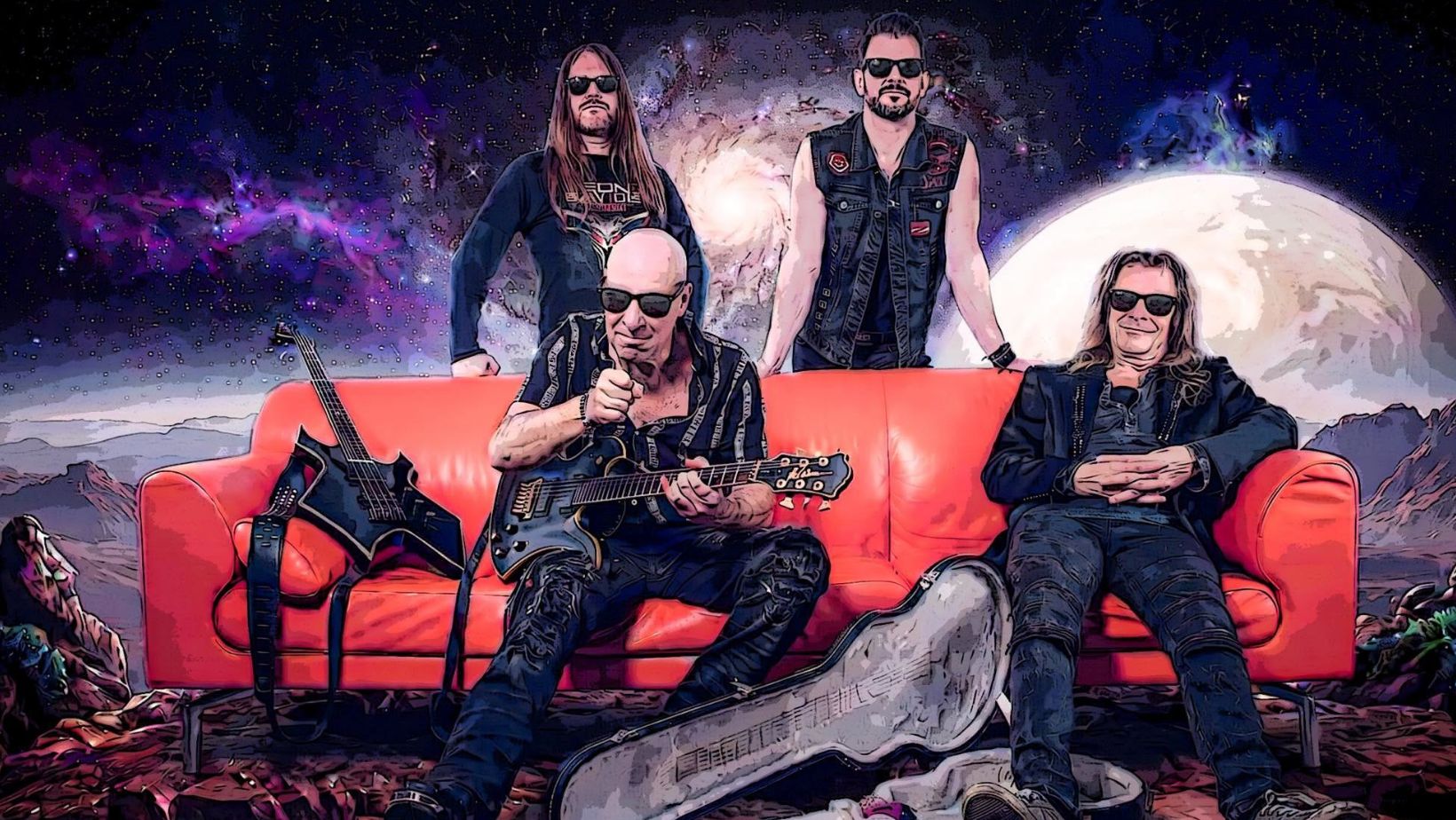
The band’s instrumental cohesion further strengthens the material. The guitar partnership between Sielck and Joachim Küstner combines heavy rhythmic riffs with melodic harmonies and measured solos. Patrick Opitz’s bass work and Patrick Klose’s drumming maintain the dynamism of the faster passages while providing the weight required by the slower compositions. The interplay between guitars and drums is particularly effective, ensuring that shifts in tempo never disrupt the flow. The keyboards and synthetic arrangements in the background also reinforce the music’s science-fiction atmosphere. They never compete with the guitars; their main purpose is to add another layer of depth to an already strong melodic framework.
"Deathbringer" is equally successful from a production standpoint. The guitars’ bite, the impact of the drums and the clarity of the vocals come together in a well-balanced mix. It is particularly important that the instruments retain their definition during the faster passages, as IRON SAVIOR’s compositions rely not only on speed but also on guitar harmonies and vocal arrangements. The clean, modern sound allows these details to come through without making the music feel excessively sterile. Sielck’s production experience is evident in the album’s overall consistency.
Lyrically, "Deathbringer" revisits the science-fiction universe the band have been developing for years. The return of an insectoid species threatening the galaxy after 200 years of peace provides the album’s central narrative thread. However, the Frankenstein reference, the STAR TREK nod, 'Gunslinger', which evokes Stephen King’s "The Dark Tower" universe, the political subject matter of 'No Deal' and the personal struggle explored in 'Back from the Fires of Hell' occasionally disrupt that narrative cohesion. It would therefore be misleading to regard the album as a continuous concept work. While science fiction remains an important part of IRON SAVIOR’s identity, the songs are ultimately defined less by their individual stories than by their musical structures.
The most obvious limitation of "Deathbringer" is its lack of interest in pursuing new territory. The influence of the band’s past is readily apparent in the guitar riffs, chorus arrangements and melodic choices. Elements recalling JUDAS PRIEST’s traditional heavy metal approach and the German power metal scene, particularly bands such as BLIND GUARDIAN and GAMMA RAY, are occasionally unmistakable. Yet these influences never strip the compositions of their own identity. What matters is how effectively IRON SAVIOR put this musical heritage to use. Tracks such as 'Light in the Dark', 'Climbing Higher', 'To Boldly Go' and 'Dawn of Deliverance' demonstrate just how strong the band’s melodic instincts remain. On the other hand, some songs lean too heavily on familiar structures, while the placement of the bonus tracks prevents the album from achieving a completely cohesive whole.
After 30 years in the business, IRON SAVIOR have no obligation to reinvent their musical identity. What matters is keeping that identity alive enough to continue producing new material. Although "Deathbringer" does not stray far from a few established formulas, its powerful choruses, accomplished guitar arrangements and Sielck’s impressive vocal performance make a convincing case for that continuity. For those who miss the band’s early blend of melody and fast-paced power metal, it is one of their most satisfying releases in recent years. Rather than trying to say something new, it demonstrates just how fluently they can still speak their own language.
