
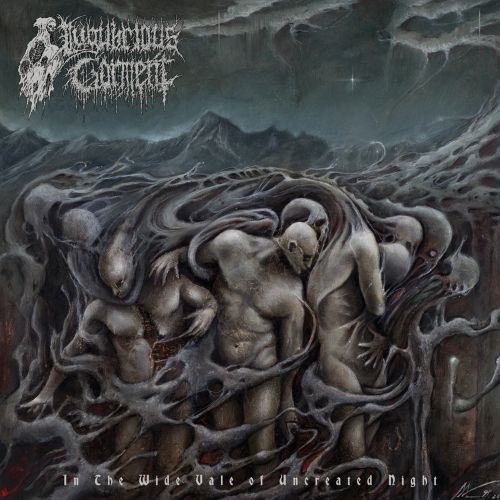
ALBUM REVIEW
LUGUBRIOUS GARMENT – In the Wide Vale of Uncreated Night
Technical prowess, ferocity, and uneven songwriting.
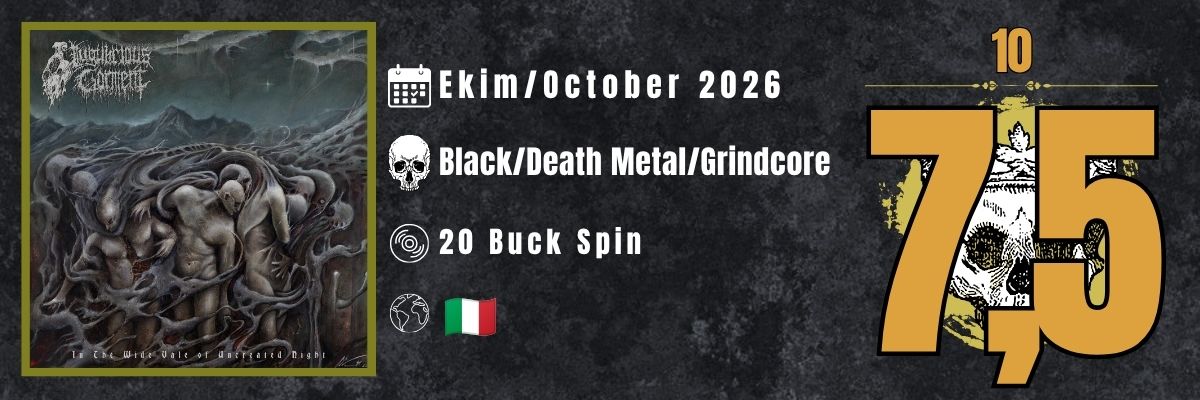
The musical curiosity that has taken different forms across Gabriele Gramaglia’s previous projects finds a more primal, aggressive death metal expression under the LUGUBRIOUS GARMENT banner. Known for his work with COSMIC PUTREFACTION and VERTEBRA ATLANTIS, the Italian musician follows 2025’s "Demo MMXXV" with a debut full-length that avoids turning technical ability into an uncontrolled display of virtuosity. Instead, he embraces a compositional approach built around constantly shifting riffs and abrupt rhythmic changes. Spanning seven tracks and approximately 41 minutes, "In the Wide Vale of Uncreated Night" reveals both the creative possibilities and the limitations of this approach.
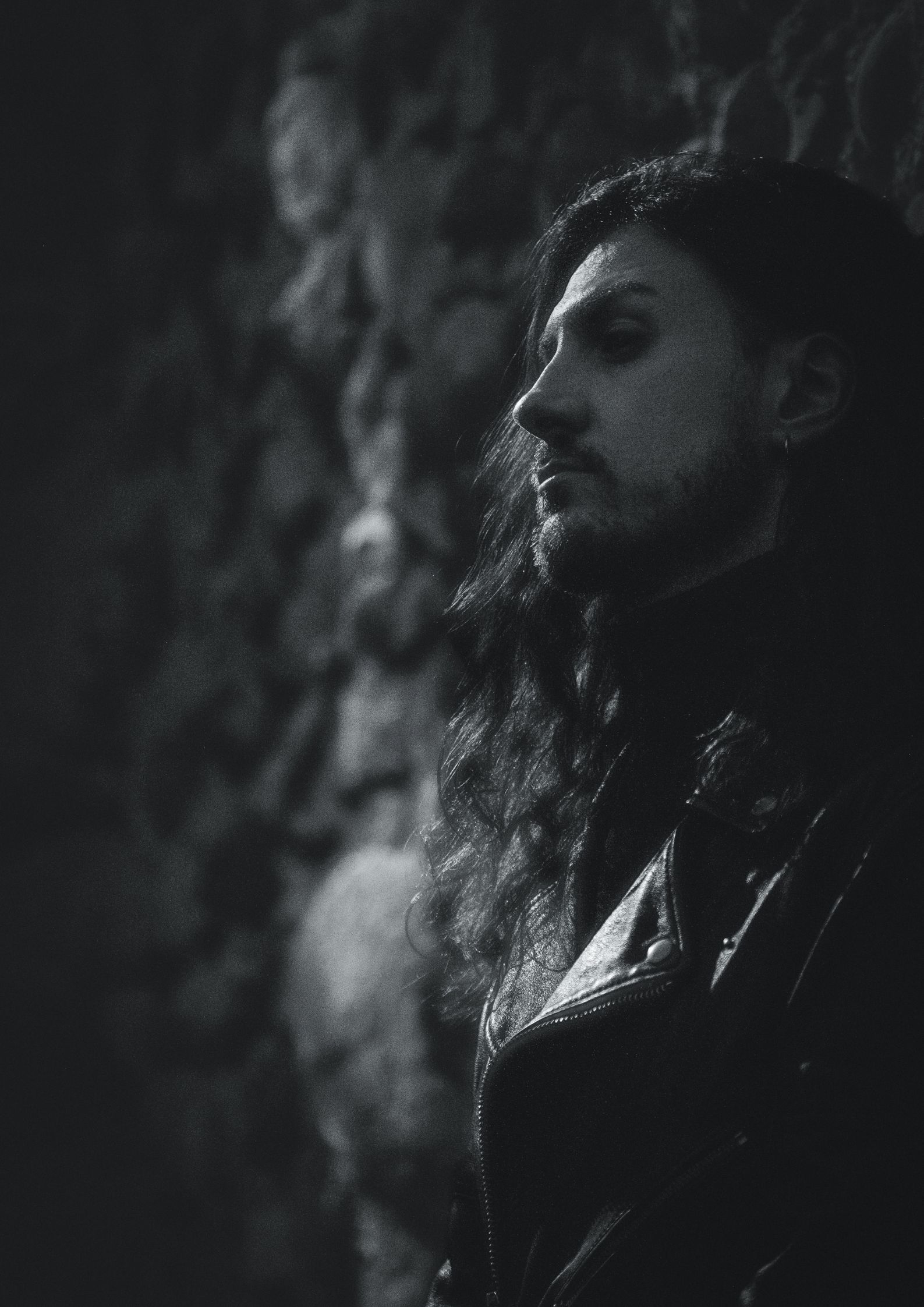
Gramaglia handles guitars, bass, vocals and synthesizers, while Claudio Invidia takes care of the drums. Additional vocals from Yr-nhhngr, violin and viola contributions from Andrea Morgan, and a solo by Giorgio Trombino near the end of ‘Transient Wounds, Spiritual Wilt’ further expand the musical palette. These contributions, however, never overshadow the compositional vision at the album’s core. LUGUBRIOUS GARMENT combines the physical weight of death metal with the intricate, restless riffing of technical death metal, while also drawing on the dark tones of black metal and the sharp-edged attack of old-school heavy and speed metal. Sections that approach grindcore push this combination in an even harsher, less predictable direction.
The opening track, ‘…And Therein Plant, Unto Their Souls Asunder’, provides a good starting point for understanding how this musical language works. Following the initial vocal outburst, sharply defined rhythmic guitar figures gradually develop into a more restless structure, driven by tight drumming. As the tempo rises, the riffs change direction more frequently, weaving winding melodic lines, more traditional death metal patterns and sharp transitions into a single composition. Andrea Morgan’s violin and viola emerge from the surrounding intensity, particularly toward the end of the track, opening up a different expressive space within the music. The strings do more than add an unusual shade of colour; their clear contrast with the guitars’ harshness also broadens the track’s emotional range.
‘Eulogy of Deliberate Malevolence’ approaches a similar sense of motion from a different starting point. Riffs that recall the sharp attack of thrash metal gradually take on a heavier, more punishing character as the track progresses. A stripped-back passage around the midpoint gives the composition room to breathe, but this openness is short-lived, with the music soon tightening back into a dense, aggressive structure. The crucial detail here is that the technical intensity does not stem from speed alone. The way the riffs connect, the shifting rhythmic accents and the drums’ responses to these changes continually push the music in new directions.
One of the defining features of Gramaglia’s compositional approach is his ability to place markedly different metal traditions alongside one another within a single song. ‘Innocence as a Burden, Guilt as a Weapon’ brings the intricate guitar movements of technical death metal together with the more direct riffing of thrash, while ‘Transient Wounds, Spiritual Wilt’ moves through tremolo-picked guitars, rapid chord runs and relentless drum transitions. The prominent solo section featuring Giorgio Trombino adds another point of emphasis to the guitars’ constantly shifting lines. The transition in ‘Transient Wounds, Spiritual Wilt’ from rapidly constructed passages into heavier, groove-oriented riffing is particularly revealing, showing that the album does not rely exclusively on high tempos. This shift in weight transforms the pressure generated by the preceding sections into a different rhythmic form.
That same compositional freedom, however, sometimes works against the songs. When a new transition arrives before a riff has had time to develop or a musical idea has had a chance to settle, it can become difficult to follow the direction of the composition. In ‘Transient Wounds, Spiritual Wilt’ in particular, the succession of ideas makes it harder for individually impressive passages to coalesce into a more cohesive whole. The problem is not a lack of technical ability; quite the opposite, it is the desire to pursue too many ideas at once. Complexity is not inherently a flaw, but every new turn should contribute to the composition’s overall development. "In the Wide Vale of Uncreated Night" does not always maintain that balance.
‘Profaned Fountain of Leaden Waters’ is one of the album’s most compelling tracks in terms of dynamic variety. The winding guitar lines and restless drumming at the outset give way to a heavier, more melodic approach at a mid-tempo pace. This shift is a meaningful choice, demonstrating that the album need not remain confined to the boundaries of technical death metal. The piano passage at the end, in particular, opens up a different listening space after the preceding intensity. Had this kind of dynamic contrast been distributed more evenly across the album, the fast and complex sections might have made an even greater impact. Andrea Morgan’s string contributions on the opening track point to a similar avenue for further exploration: even their brief appearances can alter the music’s expressive character.
The album’s sound helps keep this densely constructed music intelligible. The guitars have a clearly defined edge, while the distortion never becomes a murky mass that obscures the details of the riffs. The separation between the two guitar layers allows rapid note runs and heavier chords to remain audible without drowning each other out. The bass also carries substantial weight in the mix. Rather than functioning merely as a lower layer following the guitars, the bass parts reinforce the underlying rhythmic framework. The drums remain distinct in both the densely packed blast-beat passages and the looser, groove-oriented sections, making it easier to follow the compositions as they change direction. The vocals range from high-pitched shrieks to deeper growls, but retain a fundamentally harsh, guttural character. With the guitars occupying the foreground, the vocals never become a dominant narrator rising above the surrounding complexity; instead, they remain embedded within the instrumentation.
This production approach also reinforces the album’s connection to old-school death metal and early black metal aesthetics. The traditional metallic sharpness and rougher grooves heard in some of the riffs sit alongside Gramaglia’s technical and progressive tendencies. In this respect, LUGUBRIOUS GARMENT is not simply a project seeking to push the complexity of modern technical death metal further. There is also a more direct, physical side to the music, one that occasionally edges toward thrash metal. Even so, these elements do not always come together with equal conviction. Some passages unite different genres within a shared compositional logic, while others feel like a succession of ideas that remain independent of one another. The album’s originality depends less on its use of these traditions than on how meaningfully it connects them.
‘Eternal Scars and Imperative Backfires’ is among the album’s more overtly black metal-leaning passages, driven by more direct, aggressive riffing. Its fast, forceful momentum is interrupted by heavier guitar figures, while the strings that appear toward the end enter a different context from their appearance on the opening track. The closing ‘Eden Fades Like Blurred Nightmares’ is particularly significant for the broader space it gives the album’s melodic possibilities. The relationship between the rhythm guitar’s heaviness and the melodic guitar lines brings into sharper focus contrasts that appeared mostly in brief flashes on earlier tracks. The twin-guitar harmonies and solo sections, in particular, demonstrate that the album’s technical intensity is not built solely on complex riffing. By allowing the melody to assert itself for longer stretches, the finale also partially addresses the need for greater dynamic variety felt throughout the preceding tracks.
Still, the melodic possibilities explored in the closing track do not entirely resolve the album’s broader compositional problems. Ideas are sometimes abandoned before they have been sufficiently developed, preventing strong riffs and striking transitions from forming a lasting sense of cohesion. In this sense, "In the Wide Vale of Uncreated Night" can also be read as a demonstration of the importance of balancing technical proficiency with compositional restraint. The musical curiosity evident in Gramaglia’s other projects takes a wilder death metal form here, but the abundance of ideas does not always lead to the most effective results.
LUGUBRIOUS GARMENT’s debut full-length combines the traditional ferocity of the genre with the restless structures of technical death metal, while leaving room for elements of black metal and classic metal. At its best, the interplay between riffs, drums and melodic transitions continually redirects the songs without sacrificing their musical focus. In weaker passages, however, this variety prevents the compositions from developing fully on their own terms. "In the Wide Vale of Uncreated Night" is therefore not a flawless debut that realises every idea with equal success, but it clearly demonstrates that Gramaglia has more to offer than technical proficiency alone: he also has the capacity to absorb different metal traditions into his own compositional vision. What will determine the project’s future direction is not the addition of even more ideas, but a more considered approach to how the existing ones complement one another.

https://www.facebook.com/20buckspin
https://www.instagram.com/20buckspinlabel
https://20buckspin.bandcamp.com
https://www.facebook.com/p/Lugubrious-Garment-61581118918912