
News
Mansvara - Sable Odes To Nihility
Polish extreme metal scene has, over the past two decades, cultivated two parallel tendencies at once: on one hand, a black/death approach that emphasizes ritualistic weight and massive production values; on the other, the hypnotic, mid-tempo logic of melodic repetition that became particularly prominent in the post-Mgła era. Mansvara, with their debut album “Sable Odes To Nihility,” stand precisely at the intersection of these two axes. The album’s core identity does not arise solely from riff heaviness, but from how those riffs are positioned: a constantly forward-pushing approach that avoids classical chaotic aggression in favor of a controlled architecture of tension.
The opening track “Deathsentence” establishes this immediately. Its staccato riffing and blast beat eruptions are technically familiar, yet Mansvara’s real focus lies in the use of harmonic space. Rather than relying on full chord density, the guitars often move through single-note lines, keeping the music suspended in a foggy, unresolved tonal field. The album’s “atmospheric” quality does not come from layered keyboards, but from these partial resolutions embedded within the riffs themselves. At this point, it is clear the band has absorbed the hypnotic vein of contemporary Polish black metal, but the matter is not simply one of influence. Mansvara reshape that aesthetic language through a more mechanical and physical production sensibility.
The noticeable Behemoth influence becomes particularly evident in the slower passages that recur throughout the album. Certain tracks build their brutality not through speed, but through rhythmic pressure and groove-based repetition. However, the band deliberately avoids turning this into ritualistic grandeur. The riff construction is grittier, more organic, and at times leans toward modern thrash-tinged guitar character. In particular, the dry abrasiveness left in the upper guitar frequencies prevents the album from sliding into a sterile modern production sheen. Because of this, “Sable Odes To Nihility” does not function as a large-scale “epic” black/death record, but rather as an underground release that conveys a controlled sense of dissolution with clarity.
The rhythm section stands as one of the album’s invisible structural pillars. The drums are not concerned with technical display; instead, they focus on sustaining the momentum of the compositions. The kick drums sitting slightly back in the mix occasionally soften the aggression, but this choice simultaneously allows the bass guitar to become unusually present in the overall sound. The bass does not merely fill the low end; with its lightly overdriven tone, it adds a second layer of grime beneath the guitars. This approach becomes particularly evident in tracks like “Consigned Doom.” While the clean guitar introduction and tribal tom patterns theoretically risk cliché, the later density carried by the bass prevents the atmosphere from becoming a superficial “ritual” aesthetic; instead, it becomes part of the structural weight itself.
The vocal performance also reinforces the album’s hybrid identity. The main vocal approach, at times reminiscent of Vader in its dense and rhythmic death metal delivery, is constantly interrupted by black metal shrieks. Especially on “Lingering Void’s Echo” and “Consigned Doom,” the sharper vocal layers prevent the music from being read purely through a death metal lens. What is notable here is that the vocals are not used for dramatic narration, but to emphasize shifts in density within the compositions. Mansvara are not a band that places vocals at the forefront; instead, the vocals function as a secondary percussive element that intensifies the compression created by the riffs.
One of the album’s strongest aspects is its control of tempo. Instead of the constant tremolo saturation commonly found in modern black metal, Mansvara allow their compositions to breathe. “Obsidianize” is the clearest example of this. Its mid-tempo progression, under a continuously active double bass foundation, creates an almost meditative pressure, and the climactic guitar rise at the end becomes one of the album’s most effective ruptures. Moments like this demonstrate that the band is not only focused on generating dark atmospheres, but also on constructing dynamics. Similarly, the fragile guitar introduction of the closing track, followed by its heavy entrance, summarizes the broader idea of “controlled expansion” that runs through the album.
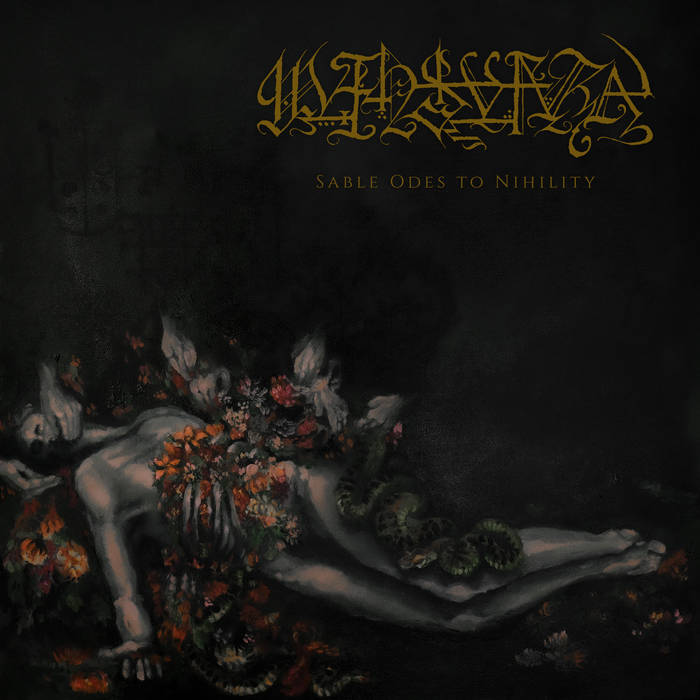
The visual side of the album is also aligned with its musical direction. The logo’s modern yet still readable calligraphic structure, along with the cover’s dark composition that avoids overly theatrical black metal clichés, shows that the band does not define itself through nostalgic underground romanticism. This is an important detail because “Sable Odes To Nihility” is not essentially a revivalist record looking backward. The album embraces contemporary extreme metal production standards; clean mixing, controlled separation of guitars, and precise drum placement make this clear. However, this modern approach does not sterilize the music’s brutality. Mansvara’s achievement lies precisely here: being able to process a contemporary black/death aesthetic without over-polishing it. Returning briefly to the visuals, although the band manages to achieve a coherent and direct link between the artwork and the music, it also exposes the fact that the darker tones used may struggle to maintain clarity on merchandise. It seems inevitable that they will have to move toward different tonal or design choices in that regard.
Of course, the album does not create a completely original language. Especially in the mid-tempo melodic passages, the influence of Mgła becomes at times quite visible, and certain riff transitions lean on a familiar comfort zone. However, what distinguishes Mansvara is that they do not treat these influences merely as stylistic references. The band attempts to dissolve post-metal textures, mechanical groove logic, and death metal weight within a single compositional framework. These ideas do not always function with equal strength; some experimental layers remain atmospheric additions rather than transformations of the riff writing itself. Still, the central tension of the album lies exactly here: Mansvara have not yet found a fully defined personal formula, but even in the process of searching for it, they do not lose the flow of the music.
For this reason, “Sable Odes To Nihility” does not operate as a straightforward, easily consumable black/death album. Its impact is not built through immediate aggression in the first listen, but through the accumulation of repeated rhythmic pressure and partially resolved melodic structures. In the current extreme metal landscape, many young bands either retreat into the aesthetic safety of the past or fail to integrate experimentation into the structural core of their compositions. Mansvara carve out a more controlled space between these two extremes. The most striking aspect of the album is precisely this: its ability to create a more tense and more contemporary center of gravity within the existing language of the genre without completely dismantling it.
OZY
https://mansvara.bandcamp.com/
https://www.facebook.com/mansvarametal
https://www.instagram.com/mansvara