
Album Review
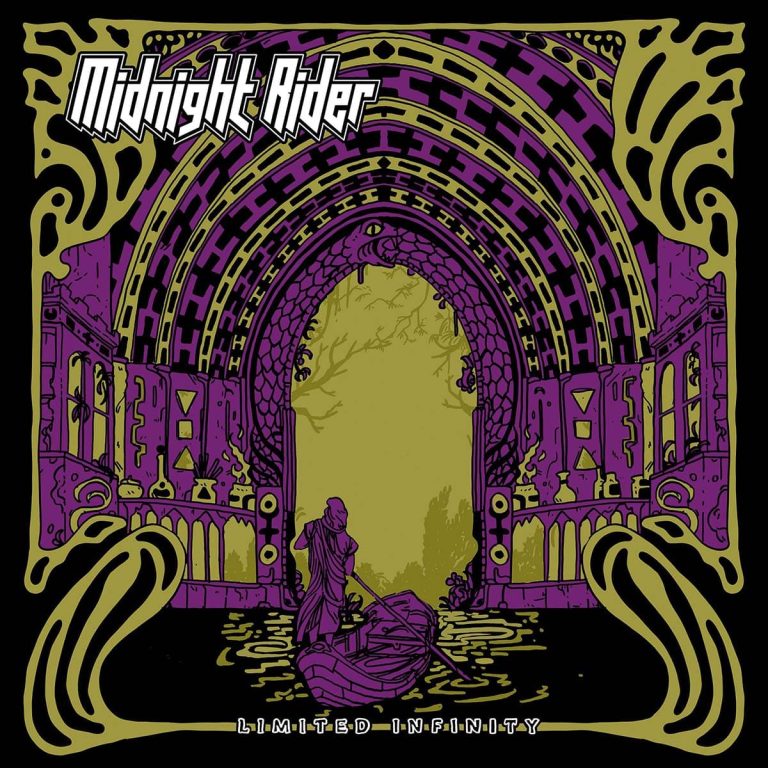
MIDNIGHT RIDER - Limited Infinity
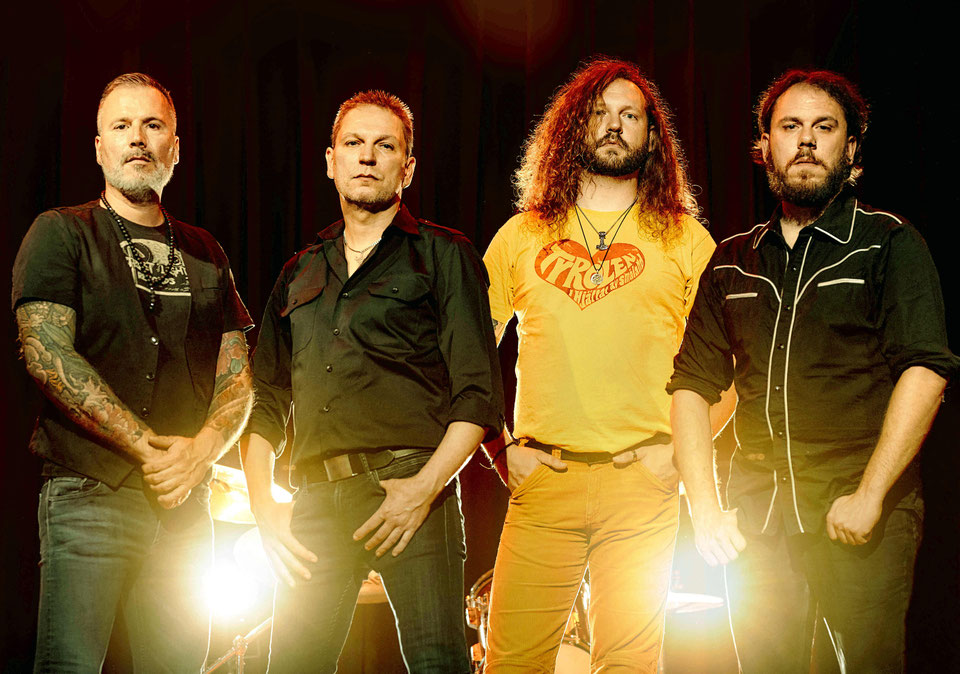
Midnight Rider, reworking 70s hard rock and proto-metal references through a contemporary production approach, presents their third album Limited Infinity, which places classic riff aesthetics at its core. While the band leans into nostalgia with a guitar language rooted in the tradition of Judas Priest and Black Sabbath, they opt for a fluid and accessible songwriting structure. Shaped by a new lineup and Chris Black’s distinctive vocal presence, the record employs its retro references not as a mere stylistic exercise, but as a controlled musical framework.
The album’s most immediately striking detail is how it defines itself through the positioning of the guitar tone within the mix. In “Charlemagne,” the opening riff arrives with a high-mid-focused and distinctly compressed guitar texture; a choice that suggests an attempt to emulate the natural breakup of 70s hard rock amplifiers rather than a modern perception of heaviness. However, the production is not a purely nostalgic reconstruction; the more contemporary, tightly controlled transient response of the drums balances this retro guitar aesthetic and prevents the sound from dispersing into an “old recording” haze.
The core compositional approach of the album is built around a riff-driven progression. The guitars are mostly power-chord based, yet they move with subtle variations rather than the constant “locked-in” rhythmic repetition associated with early Judas Priest. This becomes particularly evident in tracks such as “The Renegade” and “Generations”: the riffs are not written to generate groove, but to directly carry the song structure. This approach brings the album closer to proto-metal references while simultaneously retaining the more fluid songwriting habits of modern heavy rock.
The drum performance is one of the most critical balancing points of this structure. In most tracks, the kick-snare relationship maintains a straight 4/4 backbone, while hi-hat work and tom transitions become the primary elements that intensify the songs’ rock’n’roll character. In “The Battle of Brighton,” the motorik introduction followed by acceleration demonstrates that the drums function not merely as a timekeeping device, but as a structural element guiding the narrative. Despite this, extreme density or technical complexity is not the goal; the rhythmic framework is deliberately kept accessible and fluid.
Chris Black’s vocal approach is the layer that most quickly defines the album’s stylistic identity. Moving away from a Halford-like delivery, a more melodic, mid-range-focused tone is preferred. This vocal character contrasts with the sharpness of the guitars, pulling the material closer to 70s AOR and classic hard rock aesthetics rather than heavy metal aggression. The choruses in “Generations” and “Limited Infinity” function as sections where the vocals do not dominate the riffs, but instead form a melodic surface that carries them.
Guitar solos serve as the album’s main points of dramatic intensification. Jochen Blumenthal’s lead work leans more toward phrasing and tonal control than technical virtuosity; particularly in the solos of “Charlemagne” and “The Battle of Brighton,” a loose yet controlled melodic structure emerges in the spirit of Ace Frehley. The key point here is that the solos do not break the song structure; instead, they behave as temporary layers of intensity placed over an already flowing riff framework.
The album’s claim of “70s reconstruction” is not limited to riff language; song titles, historical references, and narrative themes also support this framework. However, this historical orientation does not radically transform the musical structure itself. References such as Karl der Große or the Mods–Rockers conflict do not create compositional ruptures; instead, they situate the songs within a classic rock narrative tradition. In other words, thematic material functions less as a force that reshapes the music and more as a framing device that validates its existing aesthetic.
On the production side, the most defining decision is the “clean retro” approach. Rather than a dirty, collapsed analog simulation, the mix favors clearly separable instrumental layers. This moves MIDNIGHT RIDER’s sound away from the lo-fi character of genuinely old recordings and into a more controlled, contemporary mixing aesthetic. In some sections, this choice leaves the 70s references as an atmospheric claim, while musically resulting in an outcome closer to 21st-century heavy rock production standards.
Additional instrumentation and stylistic deviations within the album (blues leanings, Sabbath-like heaviness, Thin Lizzy-style dual-guitar sensibilities) generally do not remain at the level of superficial decoration; however, they also do not fundamentally alter the structural logic of the songs. Blues-oriented passages or acoustic closers, for instance, function more as dynamic contrast tools than as expansions of form. As a result, the stylistic diversity on the album operates less as an expansion and more as a controlled map of references.
Ultimately, Limited Infinity constructs a framework that reproduces the riff-centered tradition of classic hard rock while stabilizing it through modern production discipline. Because the compositions avoid radical structural breaks, the listener is consistently presented with a familiar harmonic and rhythmic space; yet this familiarity is maintained as a deliberate aesthetic choice. Rather than pushing boundaries, MIDNIGHT RIDER aims to reconstruct an already existing language in the clearest, least distorted, and most functional way possible.
OZAN