ALBUM REVIEW
MINENFELD – Instruments Of Industrialized Warfare
Old-school death metal marches relentlessly.
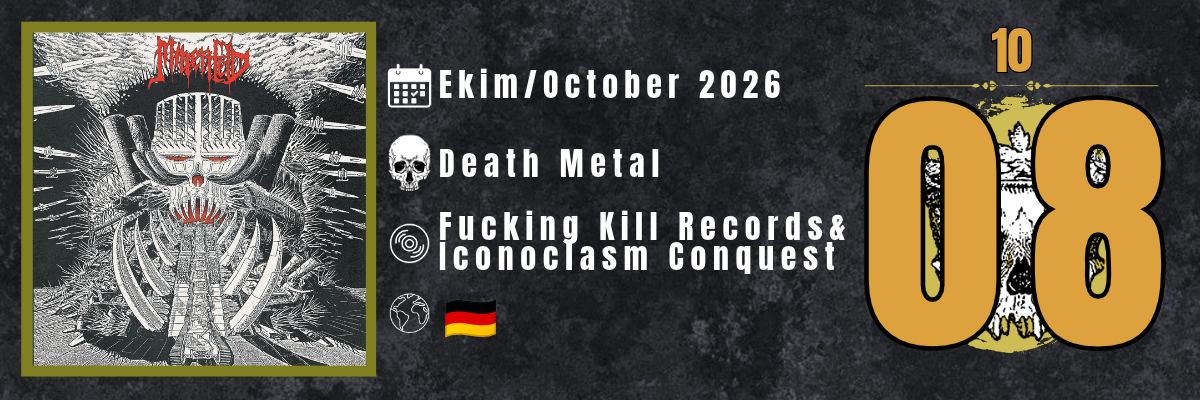
Seven years have passed since Osnabrück-based MINENFELD released their debut album, "The Great Adventure", with the intervening years filled by EPs and split releases. Released on October 16, 2026, "Instruments Of Industrialized Warfare" is the long-awaited follow-up to that debut. Its focus on World War I is directly reflected in the band's musical approach. Rather than portraying war through tales of heroism or military grandeur, the album confronts the mud-filled trenches, relentless bombardments and brutality of an industrial machine that grinds human lives into dust.
There is no question about BOLT THROWER's place among MINENFELD's musical influences. The mid-paced, march-like riffs, lumbering guitar passages and sections driven by an almost military sense of rhythm clearly evoke the legacy of the Coventry legends. However, this influence goes beyond simply reproducing a handful of familiar riffs. The weight generated by the guitars, combined with the drums' constantly shifting pace, prevents the songs from settling into monotonous patterns. Sudden bursts of speed, double-bass passages and occasional eruptions approaching blast-beat territory punctuate the heavier sections, giving the compositions a more pronounced dynamic range. The raw aggression of crust punk and occasional war metal touches also lend this traditional death metal framework a more unruly and hostile character.
Opening track 'Arms Race' offers a fitting introduction to the album's musical world. Beginning with a radio sample, the song unfolds across a landscape shaped by heavy guitars and commanding drum patterns. Its mid-paced, march-like progression is interrupted by brief double-bass bursts, while melodic lead guitar work gives the track room to move beyond sheer speed and heaviness. 'Scourges Of War' similarly relies on a mid-tempo approach, with recurring riffs and occasional accelerations defining its rhythmic character. What matters here is that the band does not treat slower passages merely as waiting points before the next burst of speed. The ability of the heavier riffs to generate tension on their own strengthens the album's overall songwriting.
'303 Brit' is one of the tracks that ventures closer to doom metal territory. Opening with spoken passages, it maintains a slow pace for an extended period, establishing a clear rhythmic expectation. The sudden acceleration that follows, accompanied by sharper guitar work, disrupts that expectation and changes the track's character. The subsequent return to a slower tempo, along with the more prominent bass presence towards the end, gives the different sections of the arrangement their own distinct purpose. The BOLT THROWER influence is particularly apparent here, although it never completely overshadows the track's internal shifts in dynamics. On the other hand, the occasional reliance on riffs that sound a little too familiar also reveals the limits of the band's pursuit of originality.
'Iron Leviathan', one of the album's most memorable moments, launches straight into a faster pace. Sharp guitar riffs and an intensive double-bass attack establish an immediate sense of momentum. Returns to mid-tempo passages, followed by forceful guitar progressions, keep the track's dynamics in constant motion. Its recurring chorus is particularly memorable, offering a hook that stands out within such a stripped-down and uncompromising death metal framework. MINENFELD clearly understand that writing heavy riffs alone is not enough; melodic and rhythmic details capable of giving individual songs a distinct identity matter just as much.
'Hussaria' and 'Inflaming The Fields' bring the album's faster and more aggressive side further into focus. The former combines double-bass attacks with sudden tempo drops, constantly shifting its momentum, while the latter stands out through its faster guitar passages and bursts of blast beats. The accelerations in the first half of 'Inflaming The Fields' are particularly significant, demonstrating that the band is not dependent on mid-tempo structures. The addition of spoken passages alongside the vocals also broadens the track's expressive range. By contrast, 'Kiautschou' and 'Raiding In Silence' maintain the album's overall balance by sticking more closely to their heavier, lumbering rhythmic foundations. As a result, this eight-track release avoids becoming a simple repetition of the same formula under different song titles.
The production also plays an important role in this variety. The mix handled by guitarist Tobias delivers a raw, full-bodied sound that places particular emphasis on distortion and reverb. The decision not to clean up the instruments excessively helps preserve the music's physical weight. At the same time, the balance between rawness and a lack of control is never lost. The dense guitar texture does not completely obscure the movements of the rhythm section. This approach, which reinforces the album's wartime atmosphere, also deliberately distances it from the overly polished production styles frequently encountered in contemporary death metal.
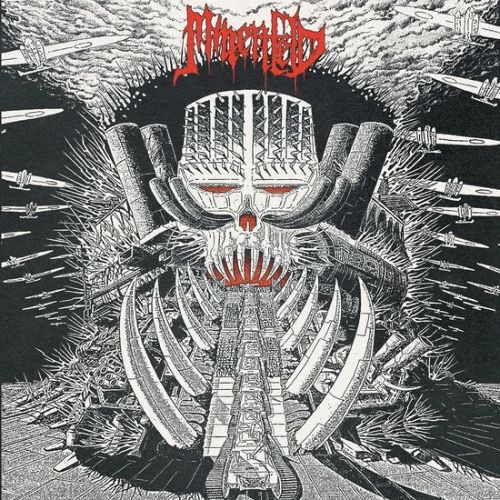
The historical recordings used throughout the album provide the most direct connection between its concept and music. Samples of propaganda speeches and military songs from the World War I era appear at the beginnings of tracks and between musical passages. These are not merely decorative additions intended to create atmosphere for a war-themed album. They introduce a historical dimension to the narrative while also dividing the musical flow into distinct sections. War is therefore not represented solely through the weight of the guitars; the recordings of the period give it a direct sonic context. The bleak visual world established by the album artwork further complements this approach. The band's own statement about drawing attention to the consequences and devastation of war at a time when nationalist rhetoric is once again gaining ground makes it clear that the concept is more than just historical decoration.
Closing with HELLHAMMER's 'The Third Of The Storms', MINENFELD also open another window onto the old-school extreme metal tradition that informs their sound. Including their interpretation of the track alongside the album's original material serves as a reminder that the band's musical influences are not confined to death metal alone. However, the cover's somewhat cleaner production compared to the album's overall rawness creates a slight inconsistency in terms of cohesion.
"Instruments Of Industrialized Warfare" is an old-school death metal record that makes no attempt to conceal its devotion to BOLT THROWER's legacy, occasionally wearing that influence a little too openly. Some riffs come dangerously close to familiar patterns from the genre's past, highlighting an area where MINENFELD still need to develop a more distinctive musical identity. Nevertheless, the shifting tempos, the clear differences in character between individual tracks, the crust punk and war metal touches, and the successful integration of the concept into the music elevate the album beyond a straightforward exercise in nostalgia. The band's real achievement lies in conveying the brutality of industrialised warfare not through musical grandstanding, but through the relentless repetition of heavy riffs and unexpected bursts of speed that capture the merciless nature of that machinery. MINENFELD are not proposing a new language for death metal, but they support their allegiance to the genre's classic era with a solid sense of songwriting.
