
Album Review
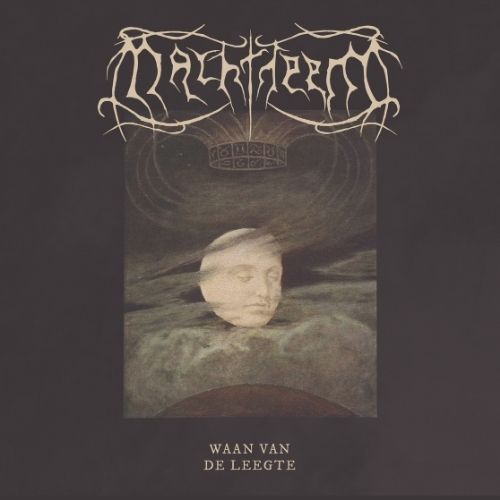
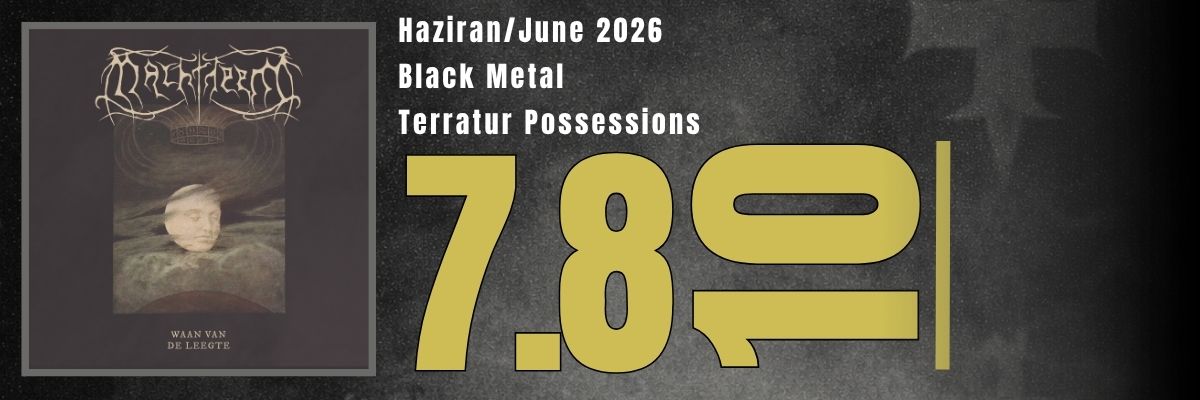
NACHTHEEM - Waan Van De Leegte
NACHTHEEM stands out as an anonymous project positioned within one of the increasingly reconfigured strands of atmospheric black metal in recent years. What began in 2024 with a demo recording quickly expanded through a series of split releases, evolving into a narrative that ultimately takes full-length form with “Waan Van De Leegte.” The band reinterprets early Norwegian and Dutch atmospheric black metal references through a warmer production aesthetic and a more song-oriented structural approach.
On the surface, the album may appear to follow a familiar strain of atmospheric black metal, yet it is a work that must be read through how that familiarity is organized. When riff construction, rhythmic placement, and production choices are considered together, the album operates within a narrow but deliberate transition zone between ambient expansion and a more controlled, song-driven black metal framework.
The guitars are primarily built around mid-tempo, cyclical melodic motifs. Rather than creating aggressive ruptures on a technical level, the riffs aim to establish a hypnotic flow through repetition. This structural repetition produces a pronounced sense of suspended momentum, particularly within the first two to three minutes of each track. NACHTHEEM’s critical decision, however, is to avoid leaving these cycles to dissolve entirely into ambient drift, instead breaking them with acceleration and rhythmic intensification in the third act. In tracks such as “Geen Vuur In Gods Hallen,” this structure is clearly articulated: expansive, fluid melodic lines in the opening sections gradually transform into sharper momentum supported by blast-beat driven passages toward the end. These transitions are not abrupt; the tension is already embedded within the riff itself, only becoming rhythmically exposed in the final stretch.
The drum performance functions less as a force of constant propulsion and more as a controlling framework that contains this structure. Blast beats are frequent but not one-dimensional; they often operate as a dragging current beneath the guitar cycles. In tempo shifts especially, the drums favor gradual intensification over sudden ruptures, which renders the album’s climactic peaks more predictable yet structurally stable. This results in less dynamic variety than in a repeated traversal of the same emotional contour at varying speeds.
The bass guitar, rather than generating a distinct contrapuntal voice in the mix, remains a connective layer filling the midrange. This allows the guitar melodies to remain at the forefront while making the rhythmic depth more dependent on the interaction between drums and guitars. The production’s “warm” and more separated character is crucial here: unlike the more blurred ambient aesthetic of earlier demo material, each instrument is now more clearly delineated. This clarity does not diminish the music’s mystical quality, but it does confine it within a more controlled dramatic structure.
One of the album’s key turning points, “De Ontwaking,” deliberately loosens this controlled framework. The use of acoustic guitar, flute, and ritualistic percussion does not entirely detach the track from its black metal core, but instead shifts it into a ritualistic intermediary space. The key question here is not the presence of these instruments, but whether they actively shape the composition. In NACHTHEEM’s case, the answer is partially dual: they provide atmospheric expansion, yet the underlying logic of progression is still governed by the core acoustic guitar cycle and vocal line. In other words, these elements function more as an added layer of texture than as agents of structural transformation.
The vocal approach draws openly on early Ulver and Borknagar references: clean vocals do not stand in sharp opposition to harsh vocals, but instead function as alternate tonal expressions within the same melodic line. This shifts the album’s dramatic logic away from confrontation and toward stratification. Particularly in sections where clean vocals are reinforced by background choirs, a sense of expanded harmonic space emerges alongside the guitar melodies. However, this expansion rarely redirects the composition into new territory; it amplifies existing melodic ideas rather than transforming them.
Structurally, one of the album’s most contentious aspects is the recurring resolution pattern that appears in the third act of most tracks. Many songs follow a similar trajectory: a cyclical foundation in the first half gives way to acceleration and melodic expansion in the final section, resulting in a familiar dramatic release. While this approach creates cohesion, it reduces internal variation between tracks, as repetition of the same tension-resolution model inevitably weakens its element of surprise.
In this sense, “Waan Van De Leegte” is an album that attempts structural expansion while simultaneously confining itself within a tightly defined formula. The reduction of ambient elements and the adoption of clearer song structures move the band toward a more accessible position; however, this accessibility also comes at the cost of retreating from some of the more exploratory long-form passages. In particular, the more freely flowing atmospheric sections found in earlier split releases are here shortened and more tightly controlled, narrowing the album’s risk profile.
Ultimately, NACHTHEEM does not so much reproduce atmospheric black metal references (Ulver, early Borknagar, early Burzum) as it reorganizes them within a warmer production and a more song-centric framework. This positioning situates the project clearly within the scene: neither fully committed to ambient dissolution nor entirely open to traditional aggressive black metal dynamics, but occupying an in-between form. This intermediate space, however, while occasionally producing aesthetic balance, at other times renders compositional repetition unavoidable.
What the album demands from the listener is not a sequence of peaks or dramatic ruptures, but an acceptance of recurring harmonic motion at varying intensities. As a result, “Waan Van De Leegte” is less an exploratory record than one that stabilizes a specific atmosphere into a controlled framework. NACHTHEEM here expands its sonic identity not outward, but into a more legible and tightly framed form.
OZAN