Album Review
NOIRSUAIRE - The Dragging Poison
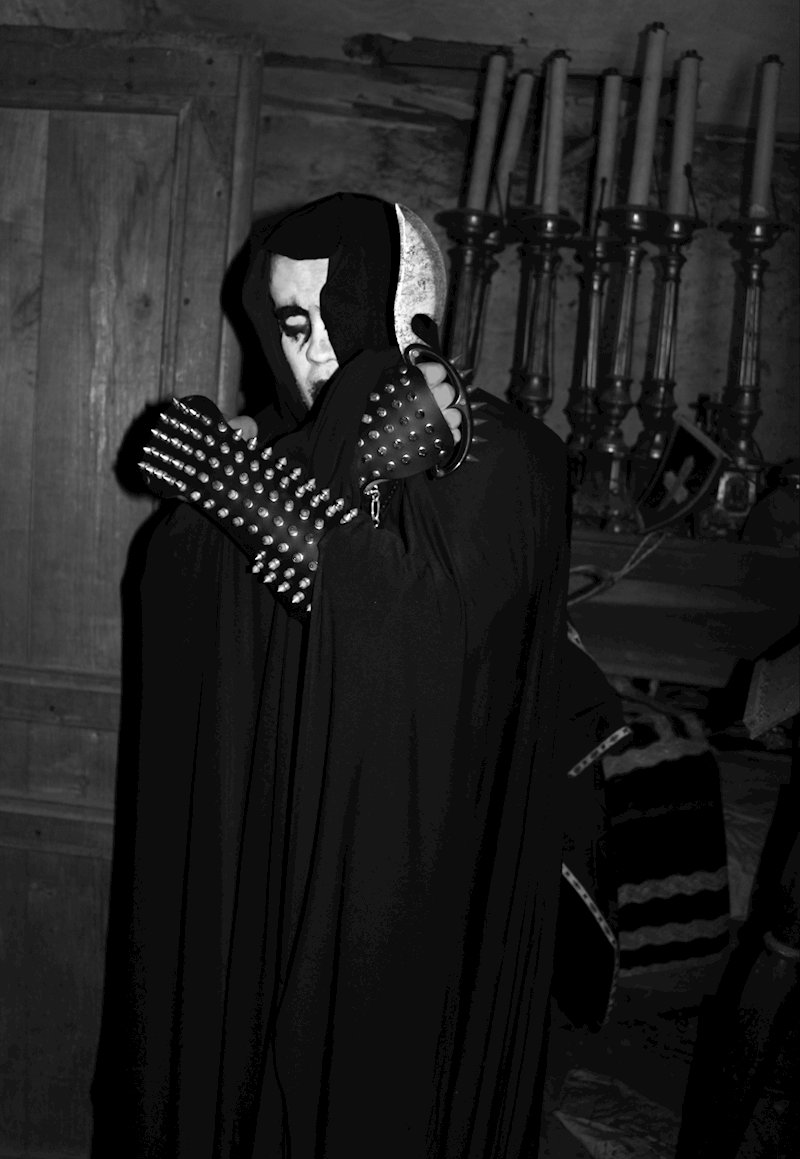
NOIRSUAIRE, a rapidly productive French one-man black metal project since 2022, has built a dense discography shaped in a short time through a demo and several EPs. Emerging from Montségur, the project stands out particularly through its melodic yet aggressive riff writing, rooted in the aesthetics of second-wave black metal. Its core approach is built on merging the influence of the Scandinavian school with the dark, ritualistic vein of the French underground tradition. Rather than lo-fi chaos, NOIRSUAIRE opts for controlled aggression and a relatively clear production, thereby reinterpreting classic reference points while carving out a defined space within contemporary extreme metal. The Dragging Poison, as the first full-length expression of this approach, renders the project’s aesthetic and compositional framework more visible.
The album leans on a discography background that may initially raise suspicions of “haste” due to its production pace. Shaped rapidly since 2022 through several EPs and a demo, this one-man project, even in full-length form, moves less toward expanding its compositional ideas and more toward intensifying the language of second-wave black metal. The dark ambient passage opening the album, followed immediately by the entry of bass guitar, already signals a preference for atmosphere as a “transitional zone” rather than a purely riff-driven narrative; however, this atmosphere does not remain an independent layer for long, quickly merging into a flow of blastbeats and tremolo riffing.
The guitar writing is fundamentally built on the tradition of melodic tremolo riffs. References to DISSECTION and SATYRICON’s Nemesis Divina era are not superficial labels; especially the mid-tempo melodic motifs move through continuously cycling, unresolved chord movements rather than clear harmonic resolution. This transforms the riffs from “complete sentences” into cyclical structures held in a state of constant tension. However, this cyclicality points less to a deliberate minimalism and more to a writing approach where variation is primarily achieved through vocal density and tempo shifts.
The drum performance establishes the album’s most direct physical character. Blastbeat intensity alone is not the defining factor; the main impact comes from the combination of constantly played crash and ride patterns with aggressive accents cutting through the guitar wall. This approach, especially in tracks such as “Enshrouded in Rapid Repugnance,” where sections approach punk-like velocity, reproduces the primal speed aesthetic of black metal within a more controlled framework. Despite the drums establishing such a forward physical presence, the guitars being occasionally pushed back in the mix increases the internal tension of the album while partially blurring riff detail.
The vocal performance becomes the primary element defining the album’s mixing hierarchy. Operating in a mid-to-high register with a heavily raspy, “rasp”-like technique, the vocals create a surface layer that continuously envelops the guitars’ melodic structures. In some tracks, particularly in fast-flowing sections such as “Fogged by the Leaves of Pestilence,” this reduces guitar-vocal interaction from counterpoint into a structure where the vocal becomes the dominant narrative layer. Nevertheless, in tracks like “Possessed by a Malignant Lust,” the riff-centered structure becomes more clearly audible, and here the guitars’ melodic heavy metal-inflected lines briefly render the album’s overall dark intensity into a more legible form.
Apart from the weight established at the opening, the bass guitar mostly assumes a supportive role within the mix, indicating a preference for centering the guitar-drum conflict rather than expanding the low-frequency spectrum. This choice aligns with the production’s “raw but not uncontrolled” approach; the analog chaos emphasized in the label notes translates in practice into a mix architecture that never fully collapses but constantly carries the threat of dissolution.
The album’s structural diversity is built through a limited set of strategies: tempo shifts, short ambient/interlude passages, and melodic riff variations. Interludes such as “Withering Veins” function not only as atmospheric pauses but also as ritualistic segments that break the relentless aggression of the main compositions. However, it is difficult to argue that these sections fundamentally reframe the surrounding material; they mostly create surface-level contrast before returning to the main flow.
On the production side, a notable point is the deliberate imbalance between aggression and clarity. While guitars are occasionally pushed back in the mix, the record never allows itself to dissolve into full lo-fi chaos. This situates the album simultaneously within the harshness of classic French black metal and a more contemporary, controlled production aesthetic. The historical framework constructed through label references to Bekhira, Seigneur Voland, and Marduk functions less as direct reproduction and more as an invocation of stylistic memory.
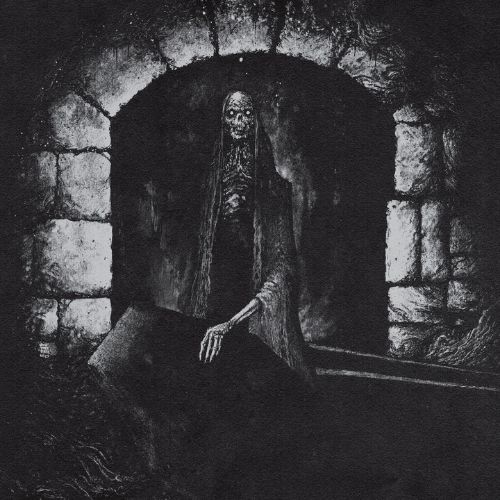
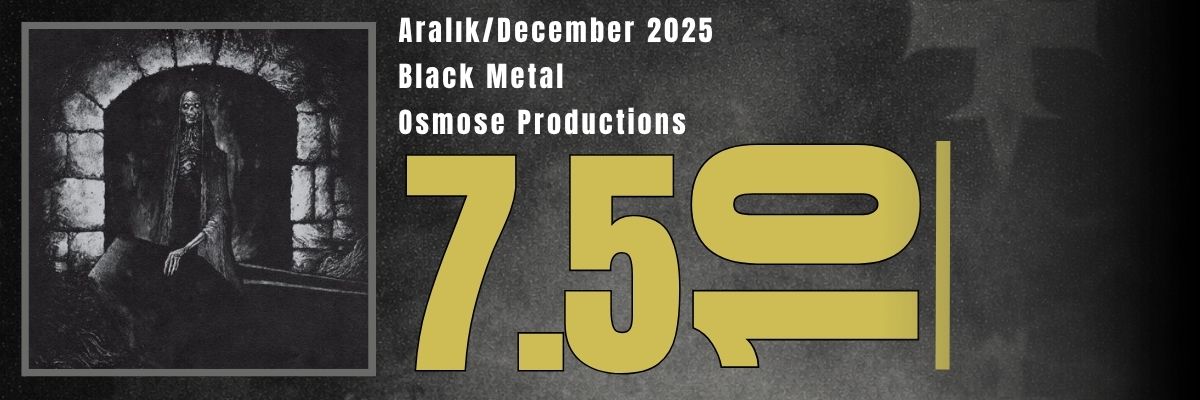
Visually, the cover artwork by David Thiérrée constructs a surface that directly supports the music’s ritualistic and archaic thematic direction. However, rather than extending the musical structure into a broader expansion, this visual density functions as a framing device that positions the album in a more “serious” and ceremonial space. In other words, the visual language does not transform the compositional structure; it stabilizes it.
Overall, The Dragging Poison remains faithful to the language of second-wave black metal while shifting it into a contemporary intensity field through specific production and mixing choices rather than direct imitation. Yet the album’s limitations are also clearly defined here: while the melodic riff concept is strong, it rarely evolves into more radical structural transformations, instead remaining a continuously repeating energy form. Experimental elements or atmospheric disruptions function less as compositional turning points and more as decorative layers surrounding the main aggressive structure.
Ultimately, the album demands a listening approach that follows shifts in intensity and riff cycles rather than a linear narrative progression. Here, NOIRSUAIRE is not positioned against the sterilized clarity of modern black metal production, but instead operates within a grey zone between chaos and control. This positioning does not push the project toward a radical rupture within the scene, but it does offer a consistent framework for rearticulating the melodic strain of French black metal through a contemporary language of aggression.
OZY
https://tinyurl.com/noirsuaire-store
https://osmoseproductions.bandcamp.com/album/the-dragging-poison