
ALBUM REVIEW
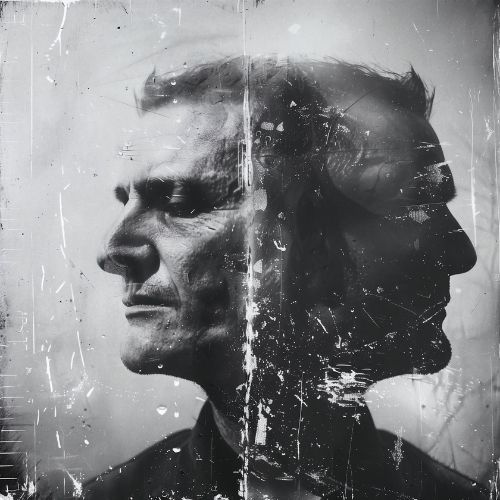
ØLYP - I(m)MORTAL
Post-metal, progressive structures, melancholy, dynamics, orchestration.
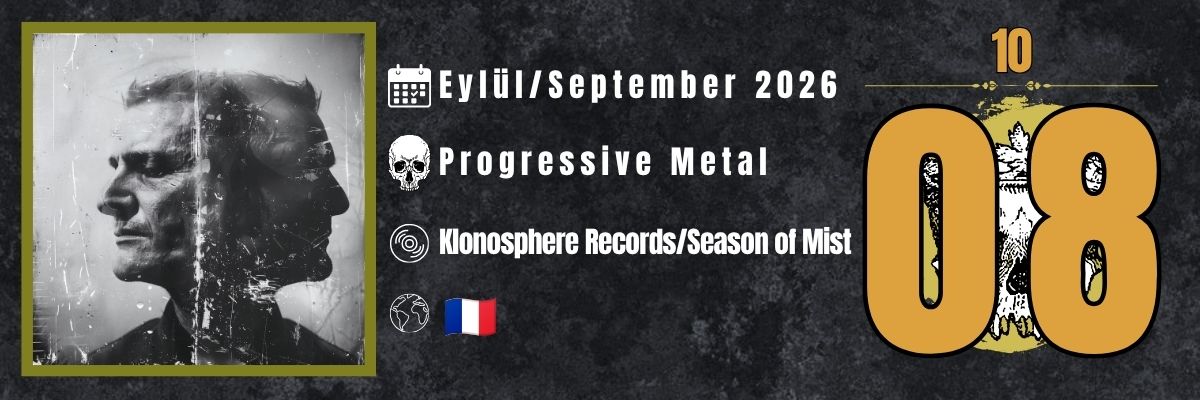
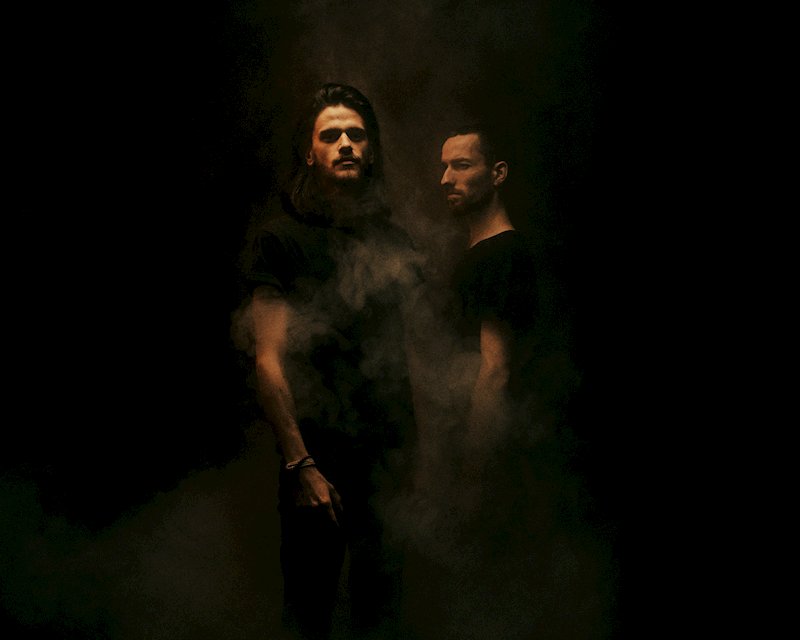
ØLYP, having emerged in the Norwegian fjords before relocating to France, expands the sonic territory a two-piece can produce to a degree that can genuinely challenge the listener’s perception with its debut album, "I(m)MORTAL". With Thibaud Lépicier handling guitar and bass and David Annenkoff on drums, this instrumental outfit combines the expansive atmospheres of post-metal with the rhythmic and compositional mobility of progressive metal, placing humanity’s fractured relationship with nature, the environmental crisis, and the increasingly pronounced rise of individualism at the heart of its music. Yet the album’s thematic weight never overshadows the music itself. On the contrary, its wordless narrative turns these ideas into phrases that move through the tensions within the sound rather than simply explaining them.
Opening track 'The Human Error' reveals the harshest side of this approach. Heavy guitar and bass riffs, reinforced by the pressure of the punchy drums, create a sense of movement that feels as though it is slipping out of control. The repetition of the riffs is not used merely to generate heaviness; together with the drum accents and the track’s dynamics, it establishes a structure that is constantly being pushed forward. '797', which follows, carries a sharper and more technical character. Guitar and bass layers positioned over the drums’ pronounced hits create a clear contrast between the track’s more aggressive sections and its melodic openings. ØLYP does not treat complexity as an end in itself here; rhythmic movement functions as one of the primary tools shaping the track’s tension.
This sense of movement does not recur in a single form throughout the album. 'One’s Tormented Mind Is A Crumbling Universe' initially creates a feeling of confinement through its gradually intensifying drum arrangement, before the tempo and density pull back after the central break. The second section, taking on a heavier and more ceremonial character, evokes a sense of physical exhaustion following the urgency of the first part. This transition is significant because, in ØLYP’s music, dynamism does not simply mean reaching faster or heavier passages. Reducing the intensity is also part of the composition’s dramatic structure.
The album’s more melodic and atmospheric side becomes particularly apparent on the tracks where the strings enter the picture. The string quartet on 'Molden' does not feel like a decorative element added on top of the foundation established by the guitars and rhythm section; it shifts the emotional axis of the track. Similarly, the use of violin, viola, and cello on 'Solace' and 'The Great Denial – Part 1 & 2' expands ØLYP’s post-metal atmosphere into a broader compositional space. The function of the orchestration here is not to soften the weight of the metal, but to widen the distance between heaviness and melancholy. 'The Great Denial – Part 1 & 2', in particular, provides the album’s most comprehensive expression of this approach. Beginning with string motifs reminiscent of a funeral march, the first part establishes the idea of collective denial through a ceremonial atmosphere rather than explaining it directly with words; the opening-up of the melody in the second part then allows the same material to take on a more spacious and liberating character.
ØLYP’s progressive side also becomes important here. The album’s tempo changes and unconventional transitions prevent the music from remaining confined to the darker formulas of post-metal. 'The Great Acceleration' is particularly notable in this regard; built around the core two-piece lineup, its shifting structure points toward a more complex and mobile approach to composition. At the same time, technical display is never allowed to dominate the album as a whole. The exchanges between guitar, bass, and drums remain sufficiently distinct, while the arrangements are often shaped around a melodic or atmospheric idea. This is why the kinship that can be drawn with bands such as THE OCEAN, RUSSIAN CIRCLES, PSYCHONAUT, and NIGHT VERSES becomes meaningful not merely through genre labels, but through the way heavy sections and more open, melodic passages are placed alongside one another within the same compositions.
What is more, the instrumental nature of "I(m)MORTAL" never creates a sense of absence. ØLYP distributes the narrative function that vocals might otherwise carry across the melodic lines of the guitars, rhythmic shifts, and tonal character of the strings. Rather than explaining the album’s themes directly, this approach allows the listener to interpret them through the contrasts within the music. The spoken-word section in 'The Great Denial – Part 1' is an exception in this respect, but the overall narrative still rests firmly on instrumental composition.
The production also supports this sense of spaciousness. While guitar, bass, and drums remain sufficiently distinct, keeping the orchestral passages from disappearing into the mix allows the album’s different layers to be heard without severing their connection to one another. The modern, clean approach does not turn the music into an overly polished progressive metal showcase. What ØLYP needs is not an enormous mass of sound, but for different textures — from heavy riffs and acoustic passages to technical rhythms and string arrangements — to be able to breathe within the same structure.
The emphasis on human mortality in the title "I(m)MORTAL" also corresponds with the album’s musical contrasts. The fragility of humanity’s claim to dominance over nature does not remain merely an environmental message here; it is reflected in the music’s constantly shifting form. Heaviness can recede and give way to a melodic passage, complex rhythms can become simplified, and the melancholy carried by the strings can emerge from between the heavy guitars. Much of the album’s narrative coherence grows out of these transformations.
The sense of discovery that comes with a debut is one of "I(m)MORTAL"’s most valuable qualities. In bringing the weight of post-metal together with the technical mobility of progressive metal, ØLYP does more than simply combine the familiar characteristics of the two genres in an effective style; it attempts to connect rhythm, melody, string arrangements, and dynamic contrasts within the same compositional logic. While the density of its complexity occasionally makes the music’s direction less clear, the album’s identity ultimately emerges from this very controlled mobility. "I(m)MORTAL" represents a compelling ØLYP debut that embeds its environmental and philosophical themes into the structure of the music without reducing them to slogans, while searching for its own balance between intense atmosphere and melancholy, technicality and melodic expression.

https://www.instagram.com/olyp_band
https://www.facebook.com/olyp.band
https://olypmusic.bandcamp.com/album/i-m-mortal
http://www.klonosphere.com
https://www.facebook.com/KLONOSPHEREPR
https://www.instagram.com/klonosphere