Album Review
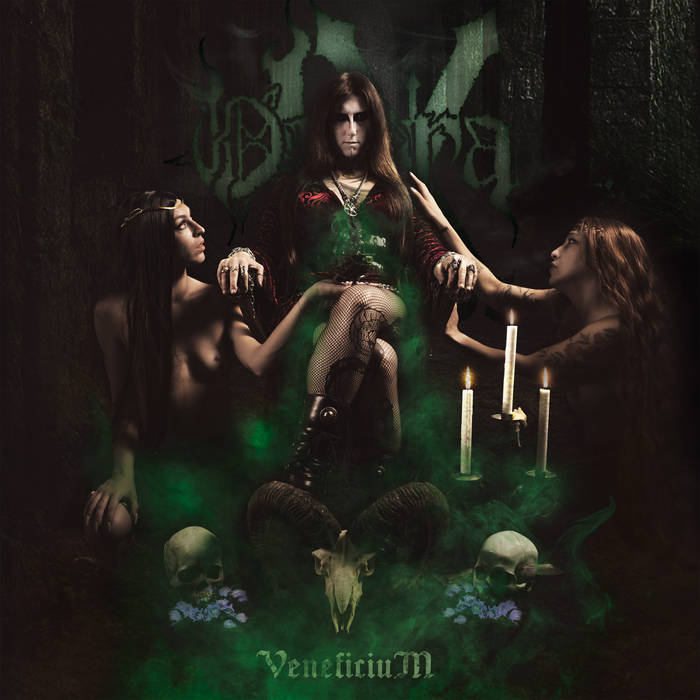
Opera IX - Veneficium
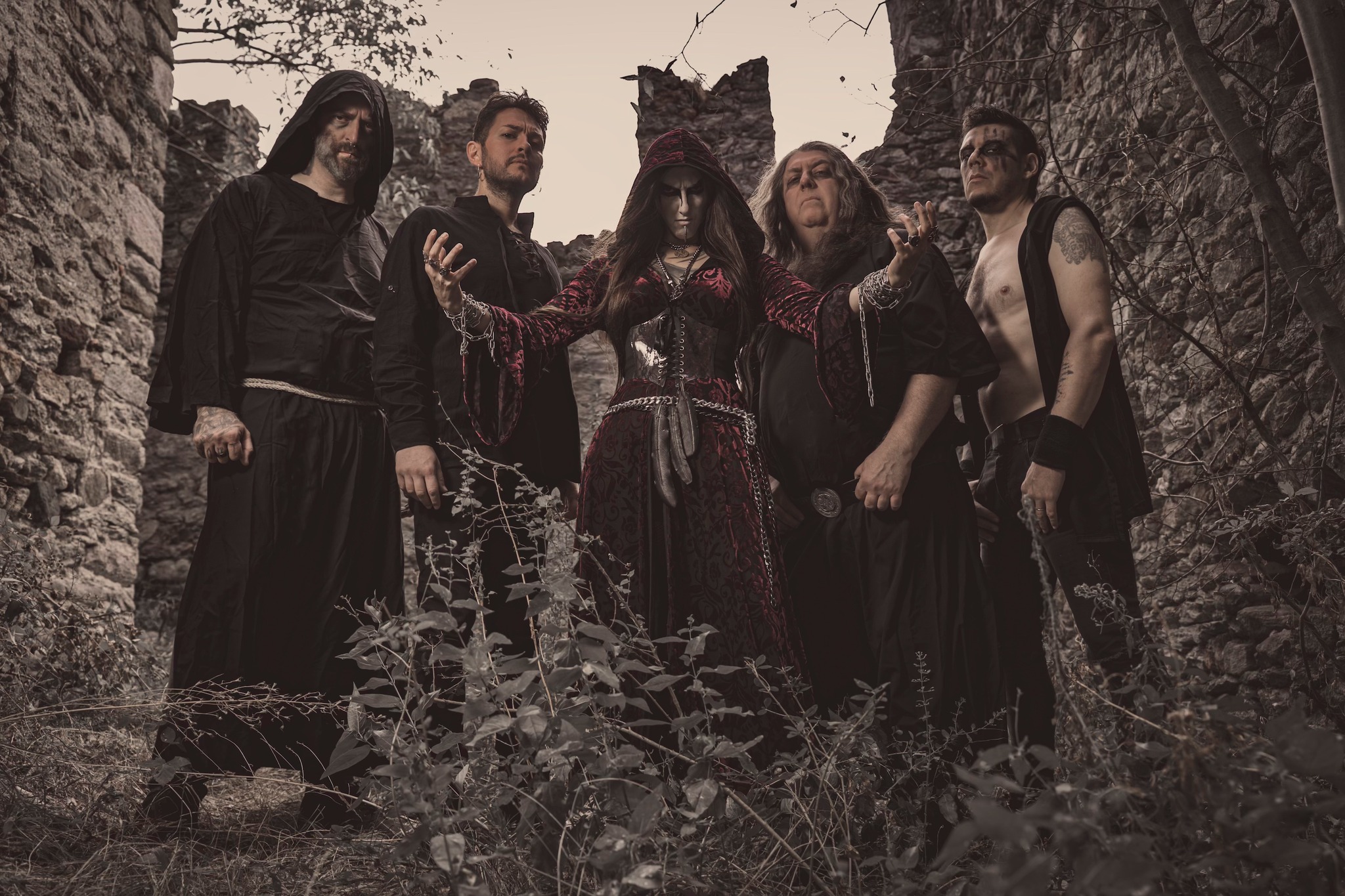
Formed in Biella in 1988, Opera IX developed a singular identity that fused black metal with doom-laden atmospheres and occult thematic frameworks, establishing themselves as one of the earliest and most defining entities within the Italian extreme metal scene. Particularly throughout the “Sacro Culto” and “The Black Opera” era, the band’s ritualistic compositional approach pushed their music beyond a merely riff-driven structure into the realm of long-form atmospheric narration. Especially within the extreme metal scene, being one of the first bands to feature a female vocalist performing with such an abrasive and uncompromising style gave the band a distinctive position through this very extremity. Despite numerous lineup changes, the core vision shaped by guitarist Ossian remained the primary force preserving continuity within the band’s sonic identity. Symphonic layers, theatrical vocal delivery, and slowly unfolding compositions positioned Opera IX in a distinctly isolated corner of the Mediterranean black metal scene. “Veneficium” emerges as a new chapter that can be read as a contemporary consolidation of this long historical trajectory.
From its very first minutes, the album establishes itself not as a collection of individual songs, but as a holistic sonic field in which long-form compositions bleed into one another. The synthesized textures and slowly expanding guitar layers heard in the opening moments suggest a structure that deliberately delays harmonic resolution rather than relying on a conventionally riff-centered black metal framework. The tremolo guitar lines often remain suspended alongside doom-influenced heavy chord blocks instead of moving toward a clearly defined tonal destination; this becomes one of the key mechanics driving the music toward a constant sense of “ritual space.” The album’s compositional approach is built less on clearly recurring riffs that propel the songs forward and more on the gradual accumulation of layers and the slow escalation of dramatic intensity.
At the center of this structure, another element as important as the guitars is the keyboard/synth layer. In most tracks, the orchestral expansions create an independent atmospheric field around the guitar harmonies rather than merely following them. This choice pushes the music into a more cinematic frame while simultaneously functioning as a buffer that softens the harshness of the riffs. However, this buffering effect does not always operate as a compositional necessity; in certain sections, the density of the synths pushes the clarity of the guitar motifs into the background, blurring the dramatic focus of the structure itself.
Within the rhythm section, the transitions between blast beats and mid-tempo doom marches define the album’s fundamental tension. Rather than remaining tied to the constant velocity of traditional black metal, the drums frequently opt for ritualistic tempo ruptures. These breaks prevent the songs from progressing linearly, creating a more cyclical perception of time. The bass guitar often remains buried in the lower layer of the mix; however, particularly during the mid-tempo passages, it functions as a harmonic backbone that thickens the foundation beneath the guitars. This role steers the album toward a denser, more enclosed tonality rather than a conventionally “cold” one.
The vocal performance functions within this structure both as narrator and ritual guide. Dipsas Dianaria’s approach leans less toward traditional black metal shrieks and more toward a declamatory, semi-operatic style. This decision transforms the vocals from a mere layer placed over the riffs into an element actively shaping the form of the compositions. Particularly throughout the elongated transitions, the repetitive vocal motifs create a rhythmic continuity independent of the guitars’ harmonic resolution.
In the album’s early sections, tracks such as “Gratidia” and “Vocatio Mortuorum” clarify the core architecture of this approach: extended openings, slowly unfolding harmonic spaces, and structures that suddenly intensify without fully erupting into linear explosions. In the case of “Vocatio Mortuorum” specifically, the striking aspect lies in how the riffs avoid adhering to a traditional verse/chorus logic even as the blast beat intensity increases; instead, the composition advances through the continuous layering of constantly shifting motifs.
“Saturni Arcanum,” meanwhile, is one of the sections where the guitars employ a sharper and more aggressive tremolo language. There is a rawer expression here that strongly recalls the aesthetics of early Mediterranean black metal. Yet this rawness is balanced by the broad stereo space provided by the modern production. This duality represents a recurring tension throughout the album: a constant oscillation between old-school riff sensibilities and contemporary atmospheric production.
In tracks such as “Saltatio Corvi,” the doom metal influence becomes considerably more pronounced. Here, the riffs move in heavier block-like forms, with the compositions built around weight rather than speed. The most striking intervention within this track is the presence of violin-like instrumentation (or layered strings) moving parallel to the guitar texture without ever fully merging with it. The function of this element raises a critical question: do the strings genuinely expand the riffs, or do they merely provide surface-level dramatization? At this point in the album, the latter feels more dominant, as the strings remain more of a decorative atmospheric layer than a force reshaping the compositional direction itself.
“Hortus Sagae” and the material surrounding it form one of the album’s most balanced segments. Here, the synths, guitars, and vocals operate within a more evenly distributed framework. Particularly through the slow crescendo structures used in the transitions, the tracks elevate their dramatic tension without resorting to artificial climactic bursts. However, this controlled construction occasionally also creates the impression of a composition reluctant to take risks; tension is built effectively, but the breaking points often remain predictable.
From a production standpoint, “Veneficium” consciously attempts to balance clarity and organic texture. The guitars are mixed with a pronounced mid-frequency emphasis, increasing the readability of the riffs. Meanwhile, the keyboards and ambient layers fill the upper spatial range of the mix, creating an atmosphere resembling a “ritual chamber.” The drum production, particularly in the ride and tom usage, leans closer to natural resonance than mechanical sharpness. This choice prevents the album from being perceived as a sterile symphonic metal production.
The closing rendition of “Black Sabbath” functions not merely as a tribute, but also as a gesture pointing toward the album’s historical positioning. While preserving the original track’s tritone-centered riff structure, the band reframes it through darker ritualistic orchestration and vocal arrangements. Yet the critical question here is whether this reinterpretation expands the album’s own compositional language or simply serves as a safe closing gesture. Structurally, the track frames the album’s motifs within a historical reference point rather than pushing them forward.
Within its overall compositional logic, “Veneficium” preserves the ritualistic and epic approach present throughout Opera IX’s earlier discography while reorganizing it through denser symphonic layering. However, this restructuring does not always correspond to a genuine structural transformation. In many sections, the orchestral and atmospheric elements remain a framework surrounding the riff architecture rather than actively reshaping it. As a result, while the album generates a powerful atmosphere in certain moments, it also occasionally leaves the impression that its compositional risks remain somewhat limited.
Ultimately, “Veneficium” is not an album that invites rapid consumption or immediate resolution. Most of the tracks establish cyclical tension fields rather than progressing linearly, and within these spaces the relationship between riff, drums, and synths is continuously redefined. What the album presents is not so much a claim of innovation as it is a denser, more layered version of the existing symphonic black metal language. For that reason, the record functions less as an attempt to expand the boundaries of the genre and more as an exploration of how ritualistic expression can be transformed into a thicker and more immersive texture within those existing boundaries.
OZY