
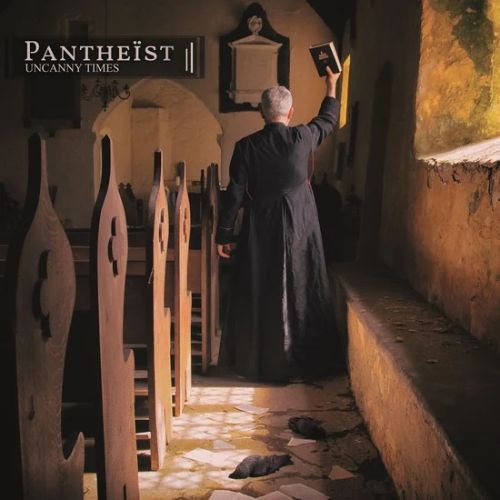
ALBUM REVIEW
PANTHEÏST – Uncanny Times
Funeral doom shaped by classical arrangements.
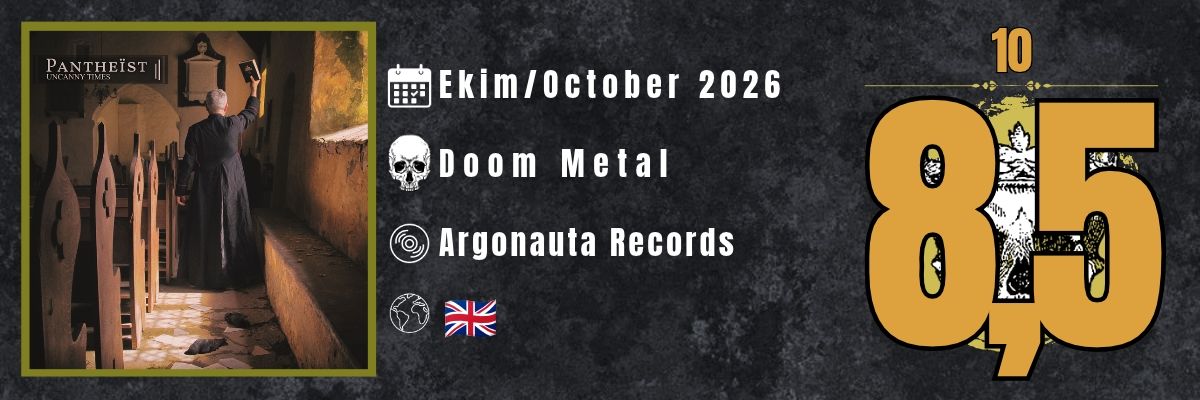
England and doom metal... The country's prolific musical output has given rise to countless legendary bands that have made their mark on, and in many cases shaped, a wide range of rock and metal subgenres. The British metal scene undoubtedly holds an overwhelming advantage in terms of quality when it comes to doom metal, too. And year after year, it continues to deliver one outstanding album after another without showing any signs of slowing down. British outfit PANTHEÏST draw on the solemn, atmospheric language of funeral doom metal while expanding their sound through arrangements rooted in classical music. Throughout their career, Kostas Panagiotou's keyboard work and compositional approach have been central to the band's musical identity. Following 2021's "Closer To God", the EP "Kings Must Die" and the band's 25th-anniversary compilation marked a period in which PANTHEÏST revisited earlier compositions through different interpretations. "Uncanny Times", the first full-length album to emerge from this period, opens up a new expressive dimension, placing Linda Dumitru's soprano vocals firmly at its centre.
Opening track 'The Final Journey' provides an ideal introduction to understanding the significance of this vocal partnership. Its restrained piano and clean guitar opening takes its time, never rushing towards the weight the song will eventually attain. As the low-tuned guitar riffs and measured drum patterns enter the picture, the music settles into funeral doom's slow, deliberate pace. The church organ-like keyboard passages do more than fill out the background; they create a distinct dramatic space around the guitars and vocals. Dumitru's clear, soaring soprano lines stand out against this dark backdrop, while Kostas Panagiotou's deep growls introduce a contrasting weight as the track progresses. The interplay between these two vocal approaches does more than add variety; it broadens the emotional scope of the composition.
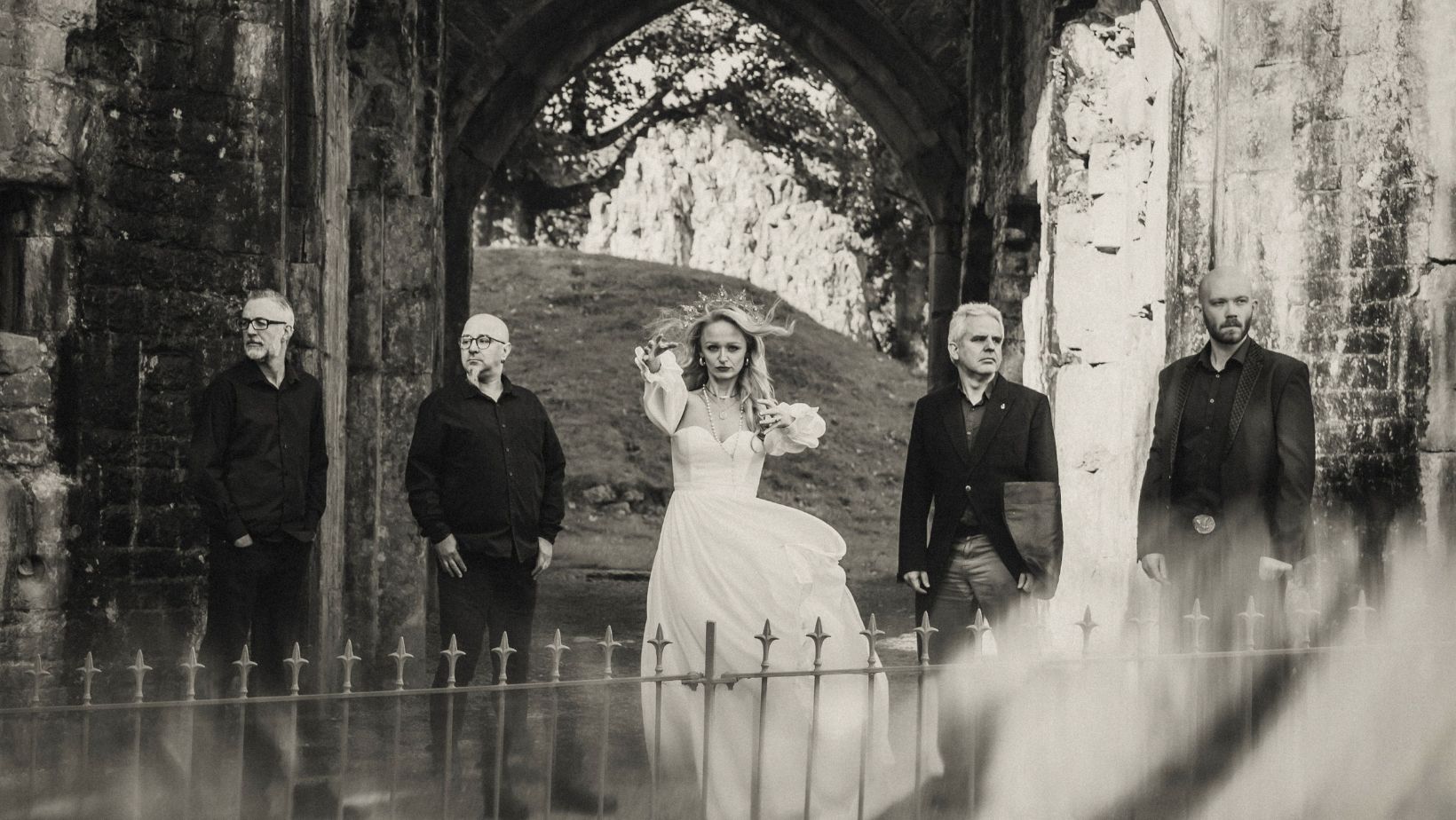
Given that 'The Final Journey' had been waiting around 15 years to be recorded, it is understandable that Dumitru's vocal approach proved decisive in finally bringing it to life. Rather than following the structure of a conventional song, the composition unfolds like a classical piece built around distinct movements, leaving ample room for the soprano vocals. Her ability to maintain such clarity even at the highest notes allows her voice to cut through the dense layers of guitars and organ. The guitar solos, meanwhile, provide melodic counterpoints to the track's dramatic framework. Yet its impact does not rest solely on the vocal performance. The growls and rising instrumentation that emerge after extended passages built around the same rhythmic weight provide some much-needed dynamic shifts.
'Laughing Falcon' brings out the more energetic side of the album. Its opening growls and double-kick patterns show how PANTHEÏST can move towards death-doom while remaining within the broader boundaries of funeral doom. More direct than the other compositions, the track gives Matt Strangis' bass guitar greater room to come forward, particularly in the middle section. Framed by Atanas Kyurkchiev's guitars and the keyboards, this passage is a reminder that the album's slow pace does not rule out other rhythmic possibilities. Panagiotou's more aggressive vocal delivery also demonstrates that the contrast with Dumitru's soprano can be used to create something not only grandiose, but also harsh and menacing. The death-doom touches, which bring to mind PARADISE LOST and early SWALLOW THE SUN, give the track a familiar character, but its role in the album's overall flow is important: it injects some welcome momentum between the longer, heavier compositions.
With 'Kuebiko', keyboards and organ once again take centre stage. Named after the motionless scarecrow figure in Japanese culture, the track revolves around the interplay between the two vocalists, set against a foundation of heavy guitars and church organ. Dumitru begins in a lower register this time before gradually rising, demonstrating that her range extends well beyond high soprano notes. The transitions into Panagiotou's growls add a palpable sense of dramatic tension. The gothic and religious overtones that have long been part of PANTHEÏST's music find a natural expression here. The way classical influences move alongside the metal's heaviness rather than softening it makes the band's aesthetic approach all the more apparent.
Departing from the more conventional song structures elsewhere on the album, 'Entropy' offers a brief respite from the dense interplay of vocals and instrumentation. Running just over three minutes, this instrumental passage creates a musical space of its own through the use of the lyre, santur and other traditional instruments. Its melodic, lighter character helps bring some dynamic variation between the longer compositions. That said, its connection to the surrounding tracks feels somewhat tenuous. An intriguing interlude in its own right, it could have found a more natural place within the album's overall musical framework.
'Ithaca Out Of Sight', meanwhile, is one of the album's most ambitious compositions. Drawing on Homer's Odyssey, the track establishes a distinct character from the outset with its cello arrangements. Luke Clemenger's cello lends a melancholic atmosphere to the restrained opening, accompanied by the organ, while the arrival of acoustic guitar brings out a more intimate and fragile side of the music. The subsequent entrance of heavy guitars and drums carries that calm into the familiar weight of funeral doom. Guest guitarist Jeremy Lewis' solo is an important element, keeping the melodic line from getting lost amid the dense instrumentation. Later in the track, Linda Dumitru's use of acoustic guitar adds yet another colour to the arrangement.
The atmosphere shifts considerably in the final section. With tremolo-picked guitars, blast beats and a harsher vocal delivery entering the mix, PANTHEÏST move beyond funeral doom's slow, ponderous progression and towards blackened doom. This transition creates a striking contrast with the calm established in the earlier sections. The sudden increase in rhythmic intensity delivers one of the album's most effective dynamic shifts. This is where the progressive approach truly comes into its own: rather than simply placing different musical ideas side by side for the sake of variety, the band integrates them into a cohesive whole that reinforces the changing narrative of the composition.
Closing track 'Requiem For Your World' is the album's most expansive composition, approaching the 16-minute mark. Following its piano introduction, organ, heavy guitars and Dumitru's operatic vocals gradually settle into the arrangement. The interplay between Panagiotou's growls and the soprano vocals across different sections carries the track's dramatic structure, while the harmonic effect created when the two voices move together is particularly striking. The combination of psychedelic touches and piano passages with heavy riffs also introduces a number of different transitions. Yet one of the album's most evident shortcomings resurfaces here. Once PANTHEÏST establish an atmosphere, they can hold on to the same musical idea for longer than necessary. Trimming some of the transitions and repetitions could have made the intensity reached in the finale considerably more effective.
This ties directly into the issues with length and pacing that run throughout "Uncanny Times". The long compositions and patient listening demands inherent to funeral doom are not disadvantages in themselves. However, length does not always work in a composition's favour. Particularly in 'Requiem For Your World', and at times in 'The Final Journey', certain passages linger for too long without developing the atmosphere they have established. The dominant presence of keyboards and organ in the mix also leaves the guitars somewhat buried at times. Had Kyurkchiev's impressive riffs and solos been given more room to stand out, the album's instrumental balance could have been considerably stronger. The melodic potential of the guitars is clearly there; the issue is that it does not always receive the prominence it deserves.
Still, it would be reductive to view Linda Dumitru's arrival as nothing more than the addition of a new vocalist to the lineup. Her soprano vocals directly influence PANTHEÏST's compositional approach, reshaping the dramatic framework of their music. Combined with Panagiotou's more traditional keyboard-and-growl-driven approach, they give rise to a form of funeral doom that draws on the arrangements and expressive possibilities of classical music without venturing into symphonic metal territory. That distinction matters. The ambition of "Uncanny Times" is not simply to add operatic vocals to heavy metal in pursuit of a grandiose sound. The distance between soprano and growl becomes one of the fundamental tools through which the album tells its musical story.
The point PANTHEÏST have reached with their new lineup allows the band to revisit more than two decades of musical experience from a contemporary perspective. "Uncanny Times" is far from flawless; its unnecessarily extended passages and the limited presence of guitars in the mix occasionally diminish its impact. Nevertheless, its combination of funeral doom's traditional weight with progressive arrangements, gothic keyboard work and an operatic vocal approach sets it apart from more conventional offerings within the genre. 'The Final Journey' and 'Ithaca Out Of Sight' in particular demonstrate just how compelling this combination can be. With a more economical approach to songwriting, the album could have been considerably stronger, but it still represents an important milestone in PANTHEÏST's artistic development. It serves as a reminder that funeral doom cannot be defined solely by slowness and heaviness; melodic and dramatic expression can occupy a central place in the genre too.

https://www.facebook.com/Pantheistuk
https://www.facebook.com/ArgonautaRecords