Album Review
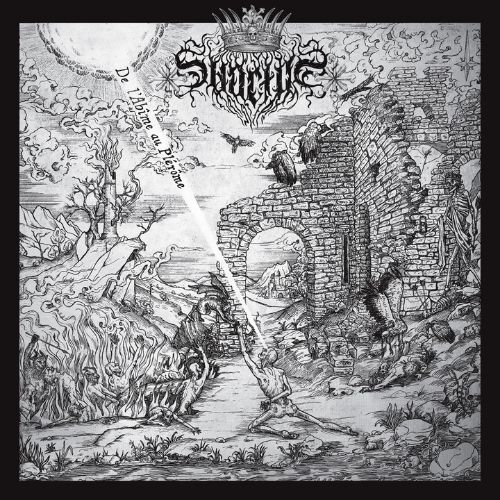
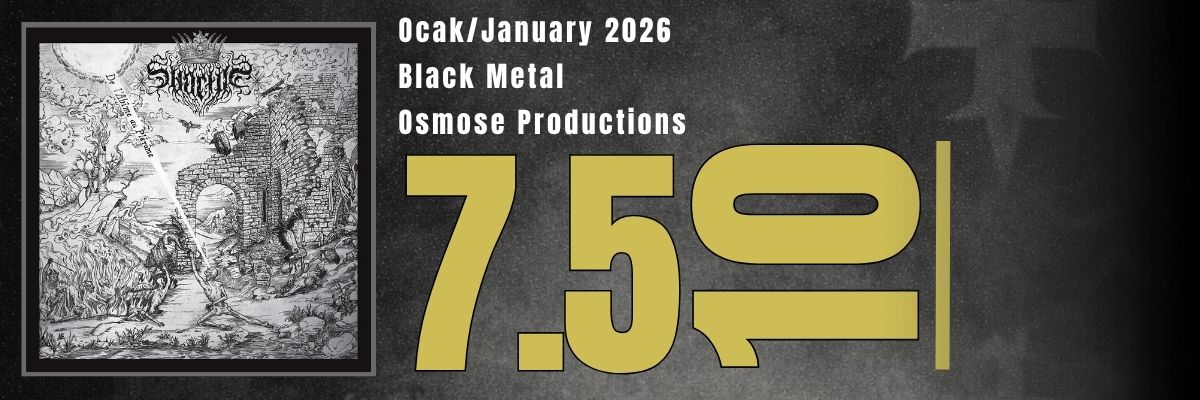
Sanctvs - De l’Abîme au Plérôme
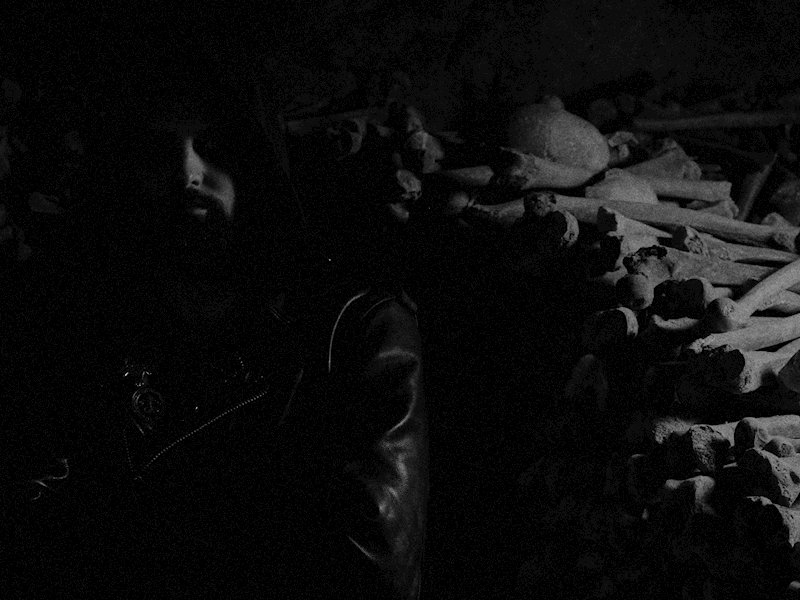
Based in Montréal, Sanctvs represents Xavier Berthiaume’s solo project, shaped as a reading of black metal that operates particularly along the axes of melodic and rhythmic density. Active as a drummer in projects such as Atramentus and Oriflamme, and involved in a more occult framework with Gevurah, Berthiaume directly translates this accumulated experience into a compositional architecture within Sanctvs. The project is built on a guitar aesthetic largely stripped of reverb, focusing less on atmospheric construction and more on a continuously moving interaction between riffs and drums. This approach positions Sanctvs within the contemporary Québec black metal scene in a more “forward-driving” and rhythmically decisive role. “De l’Abîme au Plérôme” can be read both as a continuation of this trajectory and as a more refined expression of it.
With “De l’Abîme au Plérôme,” Sanctvs immediately positions riff organisation as a motor that propels the music forward rather than generating atmosphere. The guitars are largely stripped of any pronounced reverb or sense of spatial expansion; tremolo lines and rapid successive chord repetitions carry a character that is less about “opening space” and more about “narrowing it.” This choice shifts the focus away from traditional expansive atmospheric construction in melodic black metal toward a near-continuous sense of motion. The drums sit at the centre of this structure: blast-driven propulsion, d-beat variations, and a framework occasionally fractured by off-beat accents operate as the primary dynamic layer preventing the guitar riffs from settling into monotony.
The album’s opening track, “Rex Hominem,” establishes this approach clearly. Riffs revolve around a single thematic core, expanded through minor variations, which makes the composition lean more toward a cyclical model of intensification rather than linear development. On the drum side, instead of a constantly uniform blast pattern, a more fluid surface is created through micro-shifts within the measure and changes in strike density. At this point, the guitar–drum relationship produces an equalised “driving momentum,” while the vocals function as a secondary rhythmic layer over this flow: a high-pitched, occasionally cracking scream form that acts as articulation breaking the monotony of the instrumental plane.
Tracks such as “Sacrifié sur l’autel de la rédemption” and “Tabula Rasa” represent the more aggressive edges of this structure. Here, riff writing is sharper and more confrontational, yet it still relies more on articulation shifts than on harmonic diversity. The tonal palette of the guitars is particularly compressed in the midrange, causing the riffs to be perceived not as clear melodic phrases but as continuously repeating blocks of motion. As a result, rather than the epic expanses often associated with melodic black metal, the music generates a tightly compressed field of energy. The drums do not open this compression but rather direct it: the use of fills and brief transitional breaks prevents the pieces from moving in a strictly linear fashion, yet also does not push them toward defined climaxes.
A more distinct melodic rupture appears on “Thrène pour un monde révolu.” Here, the guitars establish more defined melodic lines and a comparatively more readable thematic structure within the tremolo texture. However, even this clarity does not alter the overall logic of flow; the track remains embedded within the same continuously advancing rhythmic motor. Vocals here expand into a wider dynamic range, with a fragile wail-like character embedded within the screams, creating contrast above the instrumental stability. Yet this contrast functions more as coloration than as structural transformation.
The album’s overall production approach is based on a mix where guitars, drums, and vocals are placed at a relatively equal level in the foreground. This eliminates the typical “lead guitar vs. atmospheric background” hierarchy often found in black metal, but it also limits the depth to which compositions can develop around a single focal point. This becomes particularly evident on tracks approaching the closing stretch, such as “Tour d’Ivoire” and “La Lumière de l’infini”: while rhythmic density and melodic repetition continue, the pieces rely on sustaining existing material through variation rather than generating new structural ideas.
One of the most critical balancing points of the album is the role of the drums. Xavier Berthiaume’s technical command from previous projects is clearly audible here: the rhythmic structure is not merely a carrier of tempo, but the primary skeleton defining compositional form. In particular, within-measure shifts, broken accents, and short transitional fills continuously disrupt the linearisation of guitar riffs. This allows the album to maintain a sense of dynamic flow despite relatively simple riff material.
At the same time, this system also creates a structural limitation. Because riff writing largely revolves around similar harmonic movements, the long-term listening experience is anchored in a certain sense of homogeneity. While the drums disrupt this homogeneity, genuinely diverging or structurally redefining moments on the guitar side remain limited. As a result, the album operates on a logic of continuous motion that changes direction only rarely.
The production balance—clean yet not sterile—is also significant: there is a controlled distance between the relatively dry guitar tone and the more naturally resonant drums. This creates a middle ground that avoids both the lo-fi tradition of black metal and a fully polished modern sound. However, in certain sections this balance flattens the character of the riffs, narrowing tonal diversity.
Overall, “De l’Abîme au Plérôme” reconstructs the classic forward-driving aesthetic of melodic black metal through cyclical riff structures and a high-intensity drum engine. The album prioritises continuity of motion over atmospheric construction; however, this continuity often remains within a uniform intensity rather than evolving into structural variety. Still, Berthiaume’s handling of rhythmic architecture stands out as the key element preventing the material from becoming generic.
The album demands a specific mode of listening: rather than expecting major melodic turns or dramatic climaxes, it requires following a continuous flow built on micro-variations and rhythmic shifts. Within this framework, Sanctvs establishes a strong compositional energy profile within its scene, operating with a deliberate restriction of melodic and structural diversity—a choice that ultimately stabilises rather than expands the album’s identity.
OZY
https://osmoseproductions-label.com/sanctvs-de-labime-au-plerome-cd-lp-mc-digital/
https://tinyurl.com/SANCTVS-store
https://osmoseproductions.bandcamp.com/album/de-lab-me-au-pl-r-me