
Album Review
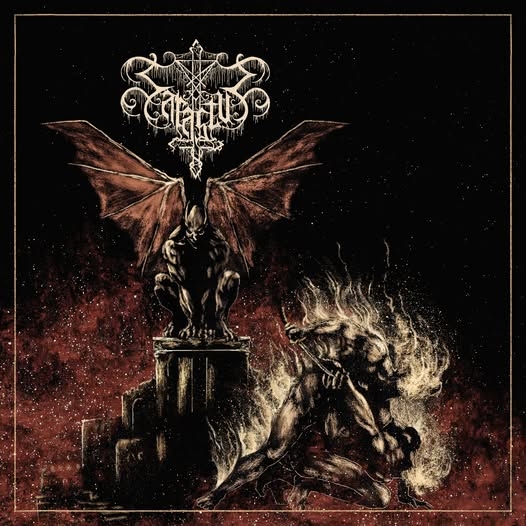
SARASTUS - Agony Eternal
Dominance of Darkness Records
Black Metal
8.5/10
SARASTUS’ third album Agony Eternal cracks open the frozen shell of traditional black metal; what seeps through is a resonance of light, carrying the struggle of an existence tangled within itself. What began in 2014 as Dusk’s one-man project has now mutated into a three-headed beast, fueled by Galgenvot’s theatrical brutality and Anzillu’s mechanized fury.
The true strength of this beast doesn’t lie in technical excess or sheer destruction. It emerges from the way emotion, darkness, and chaos are woven together through carefully constructed compositions. Agony Eternal roams the borders of the genre without ever losing its footing—seductive in its melody, yet firmly rooted in the essence of trve black metal.
Opening track “Gravelust” feels like the recitative of a ritual just beginning. Guitars attack from the very first second, while Galgenvot’s voice resists any conventional “vocal style” definition—at times less a scream and more like an internal war made audible. The sense of destruction it creates is immeasurable. Throughout the track, filthy rhythm guitars move in dialogue with the leads, while melodies claw their way to the surface, each time leaving a different, lasting impact. This is where SARASTUS reveal their true magic: they can evoke intensity, structure—even beauty—without relying on clean production.
Across the album, vocals take on a defining role. In Galgenvot’s delivery, there is not only rage, but a ritualistic, almost ceremonial form of pain. Tracks like “Towards Eternity” make this even more apparent. Slowing the tempo, the song tests the listener not only through aggression, but through patience. The lead guitar drifts across the track—seemingly aimless at first listen, yet ultimately a deliberate unraveling. A dissolution.
Then comes “Where Cruelty Never Ends”—the emotional breaking point of the album. Featuring guest vocals from the late Trevor Strnad, the track gains a weight that is both powerful and deeply human. The theatrical tone here marks one of SARASTUS’ most compelling moments of dramatic expression. The sorrow embedded within the song cuts through the plastic fatigue of modern sound, feeling instead like an inevitable part of existence itself. The clash of vocal layers mirrors an internal reckoning, pulling the listener firmly into its gravity.
“No Horizon” and “Metamorphosis” present different faces of that same reckoning. The former offers a sense of calm collapse through its melodic structure, while the latter is faster, more chaotic—yet never uncontrolled. This is where one of SARASTUS’ greatest strengths lies: even at their most destructive, they never lose compositional coherence. Agony Eternal avoids monotony precisely because of this balance. “From Pride, to Shame, to Misery” stands out as one of the album’s most refined moments, with tremolo passages, layered vocals, and gothic nuances elevating it to something close to a black metal cantata.
The title track “Agony Eternal” is, somewhat surprisingly, one of the album’s most memorable cuts. Melodic and undeniably catchy in the classic sense, it shows how SARASTUS can remain faithful to the genre without turning that fidelity into suffocating nostalgia. Echoes of Dissection, the hazy edge of Sargeist, and shades of Gaerea’s post-black sensibilities linger in the background—never dominating, yet never absent either.
On the production side, there’s a deliberate sense of rawness. Drums sit buried in an uneven mix, guitars blur at times, while vocals dominate the foreground—an intentional aesthetic choice. Through this, SARASTUS tap into black metal’s unsterilized core, the part that still feels alive, breathing, unpredictable. It’s this very approach that sets them apart from countless acts trapped in nostalgia.
Closing track “1644” may carry a historical reference, but musically it speaks entirely to the present: the tension between the will to exist and the inevitability of dissolution. What SARASTUS deliver with Agony Eternal goes beyond a black metal album—it’s an attempt to grasp time as it unravels, a form of melancholy that unsettles the mind while keeping the heart alert. And above it all lingers a single question: if this pain is eternal, why does it sound so beautiful?