
Album Review
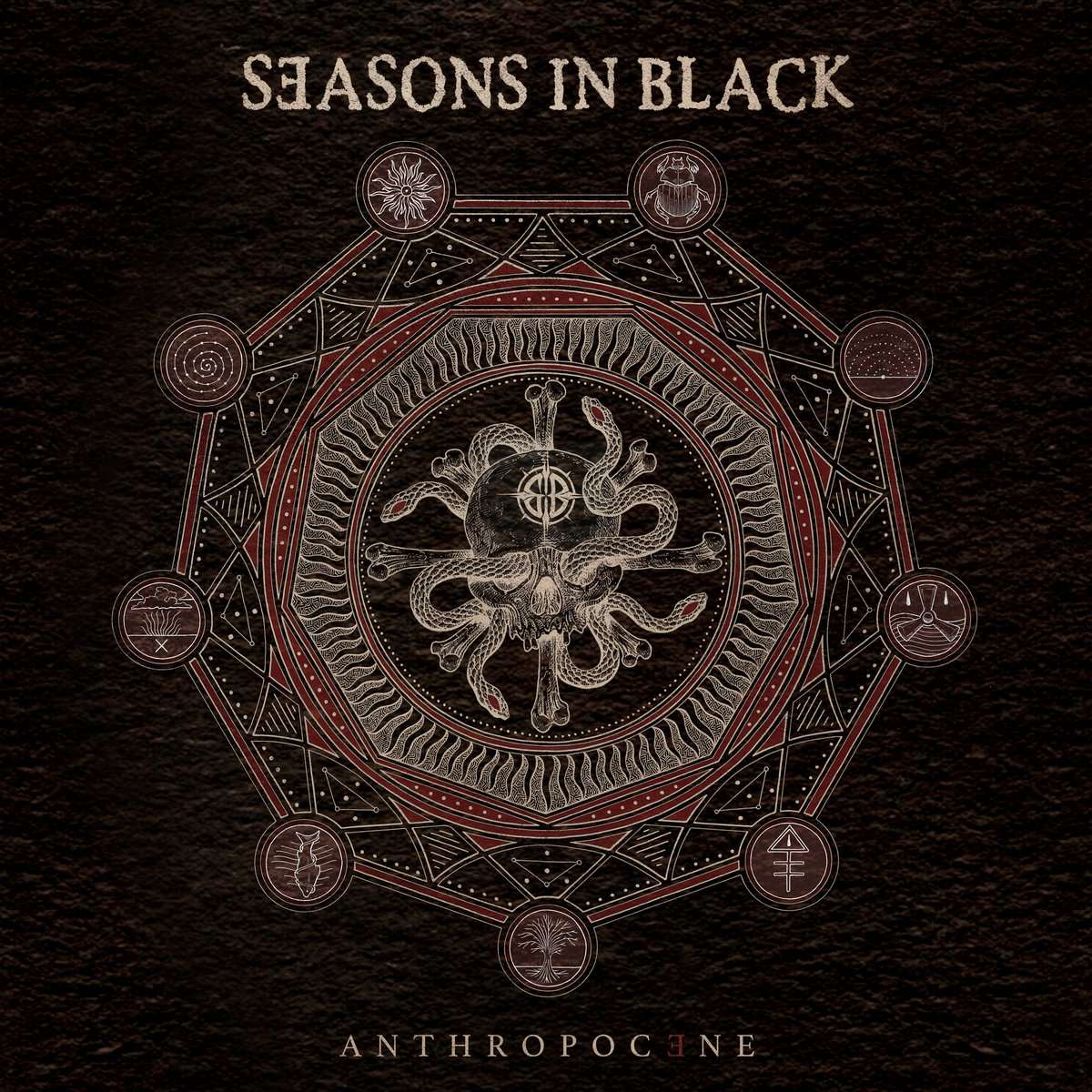
SEASONS IN BLACK - ANTHROPOCENE
Apostasy Records
Death/Black Metal
8.5/10
Every return carries the legacy of a silence. As SEASONS IN BLACK’s comeback album after twelve years, Anthropocene stands before us not merely as a new chapter, but as a gravestone for a buried memory. The album’s title—the age of man—does more than symbolize the accumulated anger, grief, and confrontation forged throughout that silence; it transforms them into an aesthetic darkness. This return evokes not the freshness of spring, but a ritualistic autumn adorned with shadows.
The core vein driving the album is a multilayered identity they describe as “doomcore” (our representative Knell is not alone in this). SEASONS IN BLACK do not deny their black metal roots, but they temper them with a patient weight rather than a shrill aggression. As the opening track, “World Wide Venom” lays this perspective bare: a mid-tempo fury, a restrained rage, and a groove that doesn’t pull you in so much as it drags you down. The song’s skeleton leans into a kind of concrete gray—unconcerned with melodic excess or technical showmanship. Instead, it advances by scraping away the grime of time through its riffs.
SEASONS IN BLACK’s sound is woven not from the apocalyptic proclamations of classic doom, but from a more modern gloom. In this sense, “You Get What You Give” stands as the album’s peak moment: the dramatic yet unexaggerated tone of the female vocals carries a fragile melody, and it is precisely this fragility that gives the track its strength. This is not a “beautiful” beauty, but one that resonates deeply. The track echoes like an inner rebellion against the age of man—not a personal outcry, but a lament for collective exhaustion. The following track, “Seasons In Black,” feels like a distillation of the band itself: stripped-down yet textured, steady yet charged with internal tension.
Another notable element of the album is its connection to the outside world. The Stiltskin cover “Inside,” while technically accomplished, fails to reach the emotional fragility of the original. Although Michael Rhein’s (In Extremo) contribution elevates the track, this reinterpretation does not quite leave a lasting imprint on the listener’s mind. Still, these external contributions do not disrupt the album’s overall cohesion; on the contrary, they diversify its atmosphere. The presence of names like Michelle Darkness (End Of Green), particularly on tracks such as “Forsaken,” lends the album a distinctly gothic sense of closure. This final piece carries an almost cinematic sorrow—not a fall, but a conscious act of abandonment.
The album’s construction and production choices avoid the “muddiness” trap so often encountered in the genre. The tracks retain clarity without sacrificing weight. This balance comes to the forefront especially in songs like “Fatal Fallout” and “Yellow Sky.” The latter, in particular, stands as one of the album’s dramatic high points, oscillating between doom and death metal with a structure that advances like stone being chiseled.
However, despite this cohesion, a noticeable decline emerges in the album’s final three tracks. Songs like “Hell Again” reveal a sense of rhythmic habit, a lack of surprise, and a repetition of the same dramatic pathway. While this occasionally dilutes the spell Anthropocene casts, it does not erase it. Because this album does not aim to present a flawless structure, but rather to extract a dark aesthetic from within its imperfections.
SEASONS IN BLACK’s third album feels less like a rebirth and more like the final stage of a pregnancy carried out in darkness. A collective lament for the hell humanity has created for itself. It offers neither an epic narrative nor a promise of hope. Instead, it raises an honest voice from within the darkness: this age is not ours, but an echo summoned by our own destruction. Anthropocene is the album of that echo.