Album Review
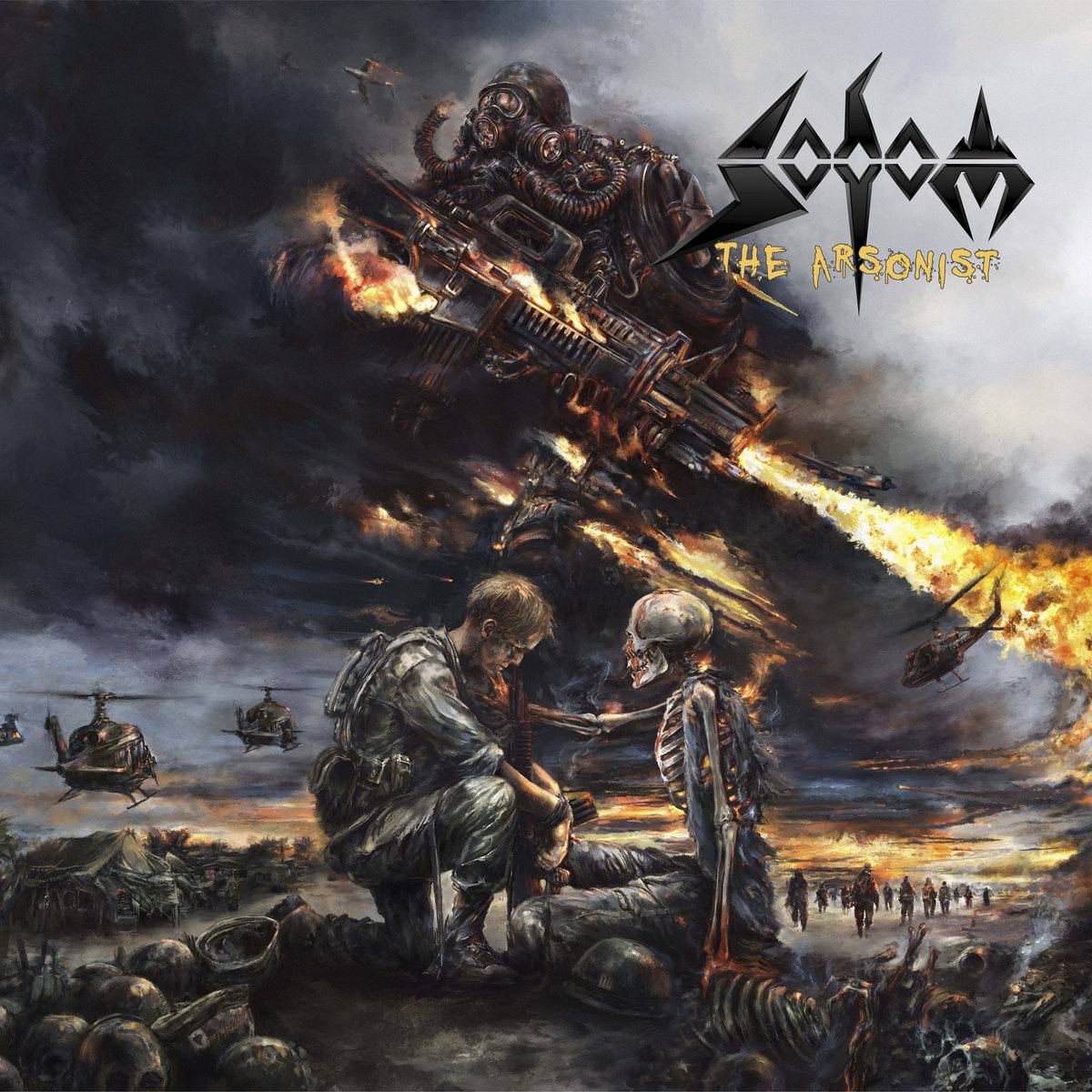
SODOM - THE ARSONIST
Steamhammer Thrash Metal 9/10
Some bands, no matter how long their careers stretch or how revolutionary their legacy within a genre may be, still manage to give you that same feeling you had when you first discovered them—the sense that “my favorite band just dropped a new record.” The Arsonist is exactly that kind of album. It doesn’t bury itself in the past; it feeds on it. What Sodom delivers here feels less like a reckless outburst and more like a calculated act of destruction—a cold, methodical blueprint for chaos. This time, the devastation doesn’t come from blind rage, but from precision and intent. Every hit, every riff, every line… deliberate, honest, and never unfocused. Because Sodom no longer moves like a soldier pulling the trigger—they operate like a general orchestrating the entire assault.
The album opens with a mournful, almost menacing intro—far darker than what you’d typically expect from a thrash record. Then “Battle of Harvest Moon” storms in, tearing that darkness apart with fire while saluting the old Teutonic spirit. It’s not just the classic riffing that stands out, but also the dramatic male choirs and the carefully crafted tempo shifts. This interplay defines the album’s core identity: not just an explosion of anger, but a sustained, looming threat that refuses to dissipate.
The production approach feels like a manifesto in itself. Tom Angelripper’s “No plastic!” philosophy—his commitment to an analog ethos—brings back a sense of authenticity long lost in the digital age. You can hear it in the grain of the tape, the unpolished bite of the guitars, and the drums stripped of any artificial gloss. Sodom isn’t just saying old-school thrash never died—they’re reminding you it was simply pushed aside, deliberately overlooked. The Arsonist stands as a powerful testament that this kind of honesty can still endure.
On the vocal front, Angelripper doesn’t hide his age—but he doesn’t let it define him either. He may not reach the same highs as before, but his delivery here is more controlled, more grounded, and far better aligned with the material. The result is a tighter, more confident performance. Compared to the breakneck speed of Genesis XIX, the pacing here feels slightly restrained—but that restraint works in the album’s favor. It sharpens the impact rather than dulling it. Tracks like “Trigger Discipline” prove how deadly that control can be—like a sniper who knows exactly when to pull the trigger.
Thematically, Sodom remains rooted in its familiar darkness. Songs like “Taphephobia” dig into the most primal forms of the fear of death, while “Sane Insanity” captures the final convulsions of a mind trying—and failing—to make sense of chaos. Then there’s “Witchhunter,” arguably the most human and emotionally raw moment on the album. Dedicated to their late drummer Chris Witchhunter, who passed away in 2008, the track carries a genuine sense of loss while reconnecting with the band’s punk roots. The line “Loved by friends who worshipped him / Hated by those who can’t begrudge” cuts through the noise, offering a stark reminder of how a person is remembered beyond the myth.
Towards the end, “Obliteration of the Aeons” and the closing track “Return to God in Parts” shift the band’s destructive force into a different gear. These songs move with a doom-laden weight, wrapped in thick, crushing riffs, proving that Sodom doesn’t need speed alone to sound devastating. Especially “Return to God in Parts” stands out—with its dynamic rhythmic transitions and dramatic structure, it ranks among the band’s most epic compositions in recent years.
And behind all of this—just as important as the sound itself—is the use of silence. The Arsonist isn’t suffocatingly dense. It breathes. It lets you feel that breath… and then cuts it off just as you’re about to take it in. That’s not just a production choice—it’s the result of decades of experience, of musicians who helped shape thrash metal itself. There’s something almost instinctive, almost divine in how that control manifests. At this stage, Sodom isn’t just interested in destruction—they’re showing you how an assault is executed.
In the end, The Arsonist is an album that understands its past without worshipping it—one that stays relevant without chasing modernity. Here, Sodom lands a crushing blow to the wave of plastic, hollow attempts at old-school thrash we’ve seen in recent years. This 13-track war diary, wandering through the darker corners of human nature, leaves a mark with every listen. And if there’s still something left of you beneath the ashes—Sodom will burn that too.