Album Review
The Ominous Cirçle - Cloven Tongues of Fire
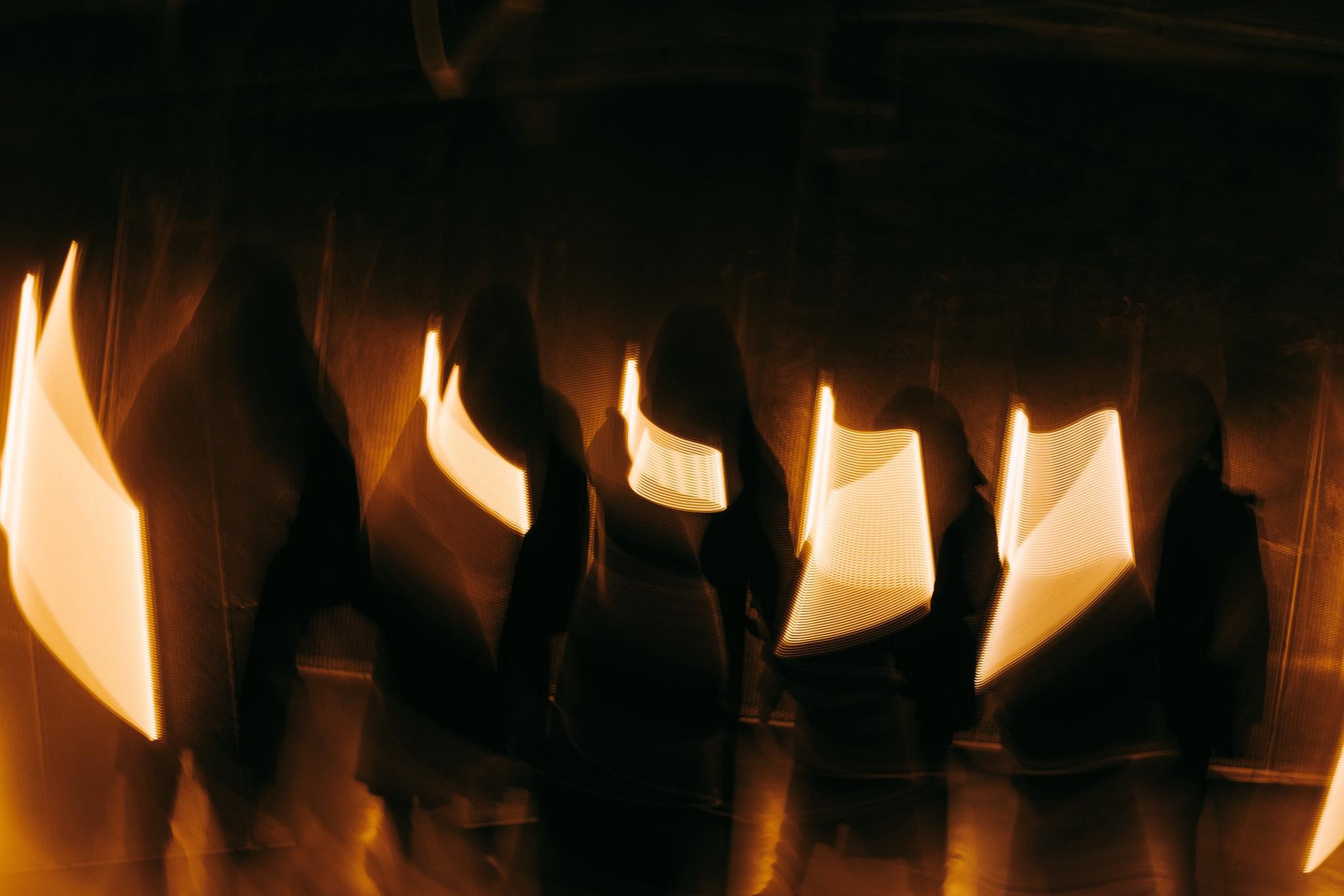
Based in Porto, The Ominous Circle first drew attention with their 2017 release “Appalling Ascension,” which blurred the boundaries between death and black metal through a dense, layered riff architecture. The group is known for assembling members from various Portuguese extreme metal projects, already establishing a fully formed compositional language on their debut. After a long silence, “Cloven Tongues of Fire” builds on that foundation by introducing more controlled doom tension alongside sharper bursts of blackened death metal intensity. Rather than increasing tempo, the band adopts an approach centered on reorganizing density. As a result, The Ominous Circle occupy a position in contemporary extreme metal that speaks less through speed and more through pressure and structure.
“Cloven Tongues of Fire” constructs its riff architecture not as a fixed center, but as a layered system of tension. The guitars largely combine low-tuned, mid-to-slow tempo tremolo patterns with block-like chordal accents that carry a sense of mass. Transitions between these two approaches do not rely on clear cadences, but instead emerge through sustained resonance and harmonic collision, leaving the tracks in a constant suspended state rather than a resolved tonal movement. The album’s core compositional idea becomes clear here: instead of riff progression, it is built on accumulation of density and its fragmentation through sudden solos and tempo ruptures.
“Lowest Immanations” is the first central piece that clearly defines this approach. Its brief, reverb-based introduction diverges from traditional long-form death/black metal openings by functioning less as atmosphere-building and more as a direct establishment of tension. The subsequent guitar flow moves through slow riff sequences anchored to a steady groove, yet this sense of groove never provides rhythmic relief; it remains under constant pressure. The drum performance operates in a dual capacity: it elevates intensity through mid-tempo blast segments, while in doom-oriented passages it minimizes hi-hat and tom activity, allowing the guitars to thicken into a blurred mass. This creates a persistent sense of compression within the track’s foundation.
The most notable shift in character emerges in the use of lead guitar. Solos are not treated as decorative layers, but as structural rupture points that reorganize existing riff blocks. In particular, within “Through Tunnels Ablaze,” solo passages open with a melodic ascent before collapsing into a sharper, higher-frequency distortion character that redefines the track’s rhythmic center. These transitions depart from the “solo as virtuosity showcase” logic commonly found in death metal; here, the solo functions as a tool that governs the compositional density curve.
The bass guitar is clearly present in the mix, yet rather than forming an independent melodic line, it operates as a frequency foundation that thickens the guitar wall. Especially in faster passages, its low-end reinforcement pushes the blackened death metal character into a more pressurized sonic field. This results in an overall sound that feels not only aggressive, but physically compressed.
Within the vocal layer, two primary techniques alternate continuously: low-register guttural death metal vocals and higher, rasping black metal shrieks. There is no strict division of roles between these approaches; rapid shifts occur even over the same riff structures. This turns the vocals into a constantly shifting texture rather than a rhythmic anchor. In tracks such as “Writhing, Upturning, Succumbing,” this approach is pushed further, with the vocal timbre occasionally dissolving into an almost unrecognizable distortion field. This choice shifts the focus away from narrative darkness and instead turns the human voice itself into a disintegrating surface within the mix.
The drum writing maintains a dual-character structure throughout the album: controlled blast beat sections on one side, and doom-tempo marches on the other. However, what matters is not the speed changes themselves, but the way they transition. Tempo shifts rarely occur as abrupt cuts; instead, they unfold through gradual layer deconstruction. This results in a form that is not episodic, but continuously flowing while internally deforming.
The doom component plays a critical role here. Used more intermittently on the debut, it now becomes the primary mechanism for generating tension. Doom sections function not merely as slowdowns, but as pre-engineered buildups for imminent bursts of intensity. This structure ensures that black/death explosions are perceived not as sudden eruptions, but as the breaking point of a pre-compressed sonic field.
Short interludes placed between tracks, particularly “Thus Beckons the Abyss” and “In Ira Flammae Devoratur Qui Salvatur,” operate less as traditional ambient transitions and more as negative spaces that interrupt rhythmic continuity. However, their compositional impact remains limited; rather than expanding atmosphere, they function as buffering zones that recalibrate intensity between main compositions.
On the production side, the mix is clearly built around a deliberate low-frequency emphasis. Guitars and bass merge within the mid-low range to form a homogeneous mass, while the upper frequencies are largely reserved for solos and vocal peaks. This choice prioritizes collective sonic blockage over individual instrumental clarity. In some passages, however, this density restricts the readability of riff articulation, slightly flattening internal motion.
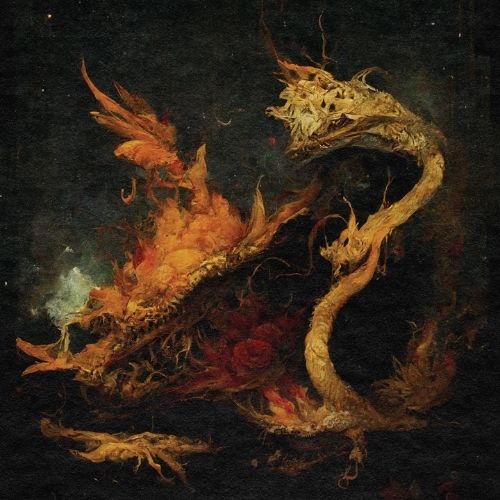
On an aesthetic level, both the album title and its visual language directly reflect the “flame + collapse” dichotomy present in the music. However, this visual severity carries a broader expressive claim than what the sound itself consistently sustains. The sonic reality of the album operates less as a continuous fire metaphor and more as a controlled pressure system, creating a subtle misalignment between visual intent and musical behavior.
Overall, “Cloven Tongues of Fire” does not treat the boundary between death and black metal as a stylistic fusion, but as a shifting spectrum of intensity. Yet in certain sections, particularly mid-album compositions, limited riff variation restricts the horizontal expansion of this spectrum. Despite this, structural interventions through lead guitar work and doom-based tension architecture push the record beyond simple variation, into a compositional space defined by density engineering.
The album demands an active mode of listening, as its consistently dense surface can obscure internal transitions beneath a relatively homogeneous block of sound. In this sense, “Cloven Tongues of Fire” positions its claim within contemporary extreme metal not through isolated innovations, but through the compression and redirection of an established death/black metal language. However, this redirection does not always open genuinely new compositional territory; at times it remains confined to a repetition of existing forms under increased pressure.
OZY
https://osmoseproductions-label.com/the-ominous-circle-cloven-tongues-of-fire/
https://tinyurl.com/the-ominous-circle-store
https://osmoseproductions.bandcamp.com/album/cloven-tongues-of-fire