
ALBUM REVIEW
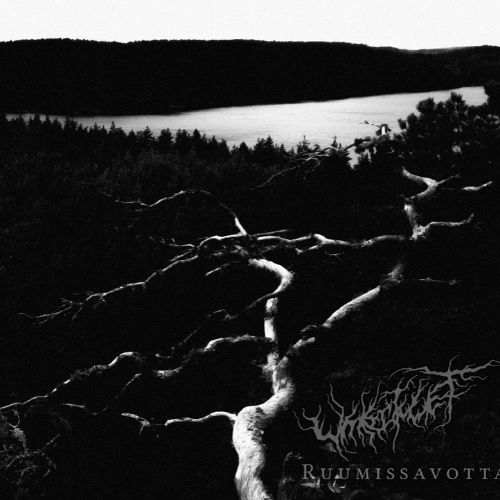
UHRITULET – Ruumissavotta
Melodic darkness meets punk-driven aggression.

UHRITULET continue along the musical path established on their debut, bringing together the melodic side of Finnish black metal and the harsher, punk-inflected approach of the German school. V.P., the man behind the project, handles most of the creative process himself, from songwriting and vocals to guitars, drums and mixing, with T.T. contributing bass guitar. Following the 2023 self-titled debut, "Ruumissavotta" takes shape through a more defined production and some different vocal choices. What ultimately distinguishes the album, however, is less these changes than the combination of slow-paced riffs, repetitive rhythmic patterns and occasional glimpses of Finnish folk melodies.
The dirty, razor-sharp guitar tone shaped by fuzz effects does not completely overshadow the melodic side of the compositions. On the contrary, the clarity of the riffs and the prominence of the guitar melodies make the album's raw black metal approach more accessible. V.P.'s compositions generally operate at mid-to-slow tempos, relying more on the weight generated by rhythmic repetition than on bursts of speed. The drums' unshowy, natural and consistent approach reinforces this direction. Blast beats, meanwhile, are not a constant fixture but rather serve to raise the intensity at specific points. In this respect, aggression in UHRITULET's music is built not simply on speed, but also on the rhythmic character of the riffs and the way they are repeated.
The opening title track, 'Ruumissavotta', is a clear example of this approach. Its slowly unfolding guitars and cold melodic lines take on a different character when clean vocals enter midway through the song. The transition between V.P.'s sharp screams and the more ceremonial, melodic vocal delivery reminiscent of Finnish folk traditions adds an unconventional dimension to UHRITULET's musical identity. This particular approach brings Isengard's folk-influenced black metal to mind. The presence of clean vocals is not inherently problematic; the real issue is that, in certain passages, they soften the music excessively rather than reinforcing its dark character. This imbalance, which emerges at various points throughout the album, shows that V.P.'s vocal choices are not always equally effective.
'Piru & Tietäjä' is one of the tracks where the guitar riffs take on a more energetic and memorable character. Its use of groove clearly demonstrates how UHRITULET incorporates punk and rock 'n' roll influences into its black metal framework. A similar sense of dynamism can be found in 'Pedon Ruumis'. With its more straightforward approach, the track provides some much-needed movement amid the album's slower passages. 'Väärä profeetta', meanwhile, stands out through its dark guitar melody, effective dynamic balance and compelling vocal performance. The unsettling atmosphere established by the opening guitar line is maintained throughout the song. One of the most convincing examples of UHRITULET's melodic songwriting, it demonstrates that the band does not have to rely solely on straightforward riff repetition.
Nevertheless, not all the compositions reach the same level. Although 'Synninpäästö' attempts to create a different atmosphere through its slower pace and more sparse arrangement, the approach never develops into a sufficiently compelling composition. The passages combining screams with deeper, fuller clean vocals are interesting, but the melodic and rhythmic ideas remain underdeveloped overall. Particularly as the tempo drops, the resulting gaps occasionally create musical stagnation rather than tension. This weakness, felt in the middle section of the album, suggests that UHRITULET does not always manage to maintain a clear distinction between minimalist songwriting and monotony.
In contrast, 'Verestä' offers a more effective structure, driven by its march-like rhythmic progression and the accelerating drum performance towards the end. The transition from its slow, deliberate movement into blast beats demonstrates how tempo changes can be incorporated into a composition in a purposeful way. The instrumental 'Freezing Winds Over The Hills of Kolkku' is another departure from the album's other tracks. With vocals entirely absent, the melodic guitar work is given more room to breathe. Its melodic approach, with echoes of classic heavy metal and rock 'n' roll, suggests that UHRITULET's musical influences extend beyond black metal. However, the contribution of these melodic excursions to the album's overall aesthetic is not always beyond question. Some of the guitar solos, in particular, interrupt the atmosphere established by the compositions rather than enhancing it. Given that technical showmanship carries no inherent value within a raw and direct black metal framework, these passages could have been put to more effective compositional use.
Production-wise, the album moves somewhat away from the raw character of its predecessor, offering a sound in which the individual instruments are more clearly distinguishable. The heavily overdriven guitar tone remains intact, while the riffs and melodic details have gained greater definition. The natural sound of the drums also supports the music's organic character. This clearer approach does not diminish the album's dark atmosphere; instead, it allows its melodic and rhythmic elements to stand apart more distinctly. However, the improvement in production is not enough to compensate for the inconsistencies in the songwriting. The bonus track 'Liekin Takaa (demo)' is a case in point. With its rawer recording, it stands apart from the main album while demonstrating that UHRITULET's unpolished, metallic character can be equally effective in a less refined sonic setting.
"Ruumissavotta" is a clearly defined release that brings together the melodic and folk-oriented side of Finnish black metal with the punk-inflected aggression of the German school. This combination of influences will feel familiar to fans of bands such as HORNA and AJATTARA, keeping UHRITULET firmly within the genre's traditional boundaries. The question here is how successfully these existing influences can be translated into compelling compositions. The effective riffs, memorable melodies and rhythmic momentum V.P. manages to deliver at various points produce encouraging results in this regard. On the other hand, the underdeveloped structures of certain tracks and the inconsistent impact of the clean vocals undermine the album's overall cohesion. UHRITULET's straightforward, traditional and uncompromising approach to black metal has value in its own right, but turning that approach into a strong album requires consistent songwriting, with the incorporation of elements beyond black metal capable of taking the sound several steps further. "Ruumissavotta" comes close to achieving this at times, but fails to realise its ideas with equal success across every track.
