ALBUM REVIEW
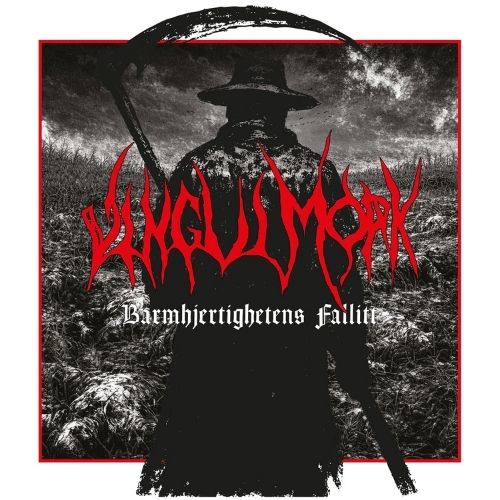
VINGULMORK - Barmhjertighetens Fallitt
Cold riffs, melody, aggression and imbalance
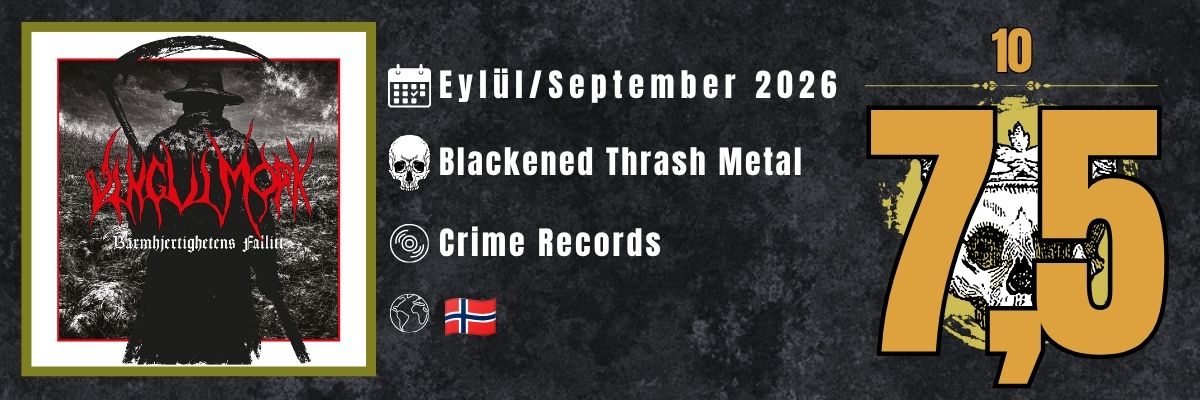
One of the most interesting things about an album from a band returning after seven years of silence is that it doesn’t necessarily need a major change of direction to reintroduce itself. The Oslo-based band’s second full-length retains the cold guitar character of Norwegian black metal while drawing on the sharpness of thrash metal in its riff writing, the weight of death metal in certain passages, and the broader harmonic palette of melodic black metal. The combination may sound familiar at first, but what matters is how consistently VINGULMORK can carry this material across an album lasting close to forty-seven minutes.
'Ørkesløs' is a fitting starting point in this respect. The guitars come straight to the fore, the drums constantly drive the song forward, and the vocals are embedded within its aggressive framework rather than sitting above the music as a separate layer. What matters, though, is that speed is not the only defining factor. The melodic lines woven between the riffs immediately reveal how VINGULMORK combines the traditional coldness of black metal with the more pronounced rhythmic movement of thrash metal. 'Skam' maintains a similar balance; the aggression remains intact, but because the tempo is not kept at a single level, the song never turns into a black metal exercise in perpetual acceleration.
The album’s melodic side becomes more pronounced on 'Sitring'. The way the track hardens after its more restrained opening shows that VINGULMORK understand how to use contrast. The melodies here do not soften the music’s harshness; they give it direction. That distinction matters, because "Barmhjertighetens Fallitt" does not position melody against the aggressive character of black metal. It treats the two as different facets of the same riff-driven approach. The guitars’ sharp, dry character is therefore one of the album’s defining elements. Atmosphere does not carry the songs on its own; because the riffs themselves are sufficiently dynamic, the atmosphere never feels like an ornamental layer added on top of the music.
That said, the band’s compositional approach is not equally convincing throughout. In some songs, ideas are piled on top of one another too quickly. When there is not enough room to breathe between riffs, melodic turns, and structural changes, the natural flow of a song suffers. The memorable side of melodic black metal in particular presents an opportunity here that is never fully realized. The riffs themselves are strong, but some of the hooks feel insufficiently stripped down to remain memorable outside the context of the individual songs. VINGULMORK’s problem is not a lack of ideas; at times, it is their difficulty in deciding which of those ideas should sit at the center of a song.
'Krigserklæring' and 'Svart Time' represent the more balanced side of the album in this regard. The guitars have more room to move, particularly on these two tracks, and the thrash influence comes through more naturally beneath the black metal texture. 'Svart Time' also benefits from its longer structure, giving the band more space to bring different influences together within a single composition. The cold harmonic language of Norwegian black metal remains intact, while the rhythmic character of the riffs brings the song closer to a more direct form of metal. The production plays an important role here as well: the sound is heavy and direct without being overly polished. The guitars remain prominent enough for the melodic details to come through, while Jostein Stensrud Køhn’s raspy vocals retain their harshness without completely obscuring the instrumentation.
The shorter tracks, meanwhile, are a more debatable choice. Short passages such as 'Avmakt', 'Fallitt', and 'Nådestøt' function as interruptions between the main tracks. Taken individually, each serves the album’s atmosphere, but within a twelve-track sequence, the placement of so many brief pauses occasionally disrupts the sense of flow. Especially in an album whose compositions already contain numerous ideas and shifts in direction, moving the listener into another section before they have fully settled into the musical idea a song has developed can diminish the impact of the material. The issue is not the existence of short tracks themselves, but the fact that their relationship with the album’s overall flow is not equally effective at every point.
'Alarm', by contrast, works precisely because of its directness despite being short. The track is built around speed and riffs without trying to carry more ideas than it needs to. 'Mannen og kråka', meanwhile, reveals another possibility within the album. Its more melodic and varied structure shows that the band cannot be defined solely through aggression. VINGULMORK gains a more distinct character here by allowing melodic development more room instead of continually making the riffs heavier. It is no coincidence that one of the album’s most striking moments emerges from this approach: VINGULMORK’s potential for differentiation lies less in adding more effects or more complicated structures than in developing the melodic ideas they already have with a little more patience.
With 'Trolldom', the music returns to a darker and heavier path, while 'Brann' closes the album by bringing its core elements together. The coldness of black metal, the movement of thrash metal, and the pressure created by heavier riffs meet within the same framework. This variety is one of the album’s major strengths. VINGULMORK does not completely succumb to the monotonous atmospheric tendencies often associated with melodic black metal; by varying tempo, riff character, and melodic density, they are able to create clear distinctions between the tracks.
Still, the line between variety and fragmentation becomes thin at times throughout the album. As some of the criticism suggests, VINGULMORK’s compositional ability sometimes seems to be ahead of the ideas they put forward, while certain arrangements prevent those ideas from reaching their most effective form. The same is true from a genre perspective. A melodic, riff-driven approach that can be associated with references such as DISSECTION, AT THE GATES, and DISMEMBER is combined with melodic tendencies that recall the more grandiose side of VREID, THYRFING, or early Viking metal. Yet these references do not, by themselves, place the album in a distinctly individual position. What VINGULMORK currently possesses more clearly is their way of bringing these influences together; it is not yet possible to say that they have built a fully individual compositional language on top of them.
For that reason, what makes "Barmhjertighetens Fallitt" worthwhile is not a claim to innovation, but the way it keeps familiar tools of the genre alive. The album does not substitute atmosphere for musicianship; the guitar riffs genuinely sit at the center of the compositions. At the same time, it does not use melody as decoration against the harshness of black metal. The problem is that it cannot establish the same degree of balance between these two approaches in every song. At its best, VINGULMORK makes melodic memorability work alongside speed and aggression; in its weaker moments, the songs move on to the next idea before they have fully absorbed the ones they already contain.
After a seven-year hiatus, this album therefore feels less like a "comeback statement" than an effort to rearrange the musical tools the band already possesses. "Barmhjertighetens Fallitt" does not claim to redraw the boundaries of Norwegian black metal; instead, it uses the transitions between black metal, thrash, and death metal within a riff-driven songwriting approach. The key question for VINGULMORK’s next step emerges here as well: turning the harshness and melody they already possess into a stronger identity not by adding more ideas, but by deciding which ideas truly deserve to remain. Because the pieces of that identity are already audible on "Barmhjertighetens Fallitt"; they simply have not yet coalesced into a fully unified form.
