
Album Review
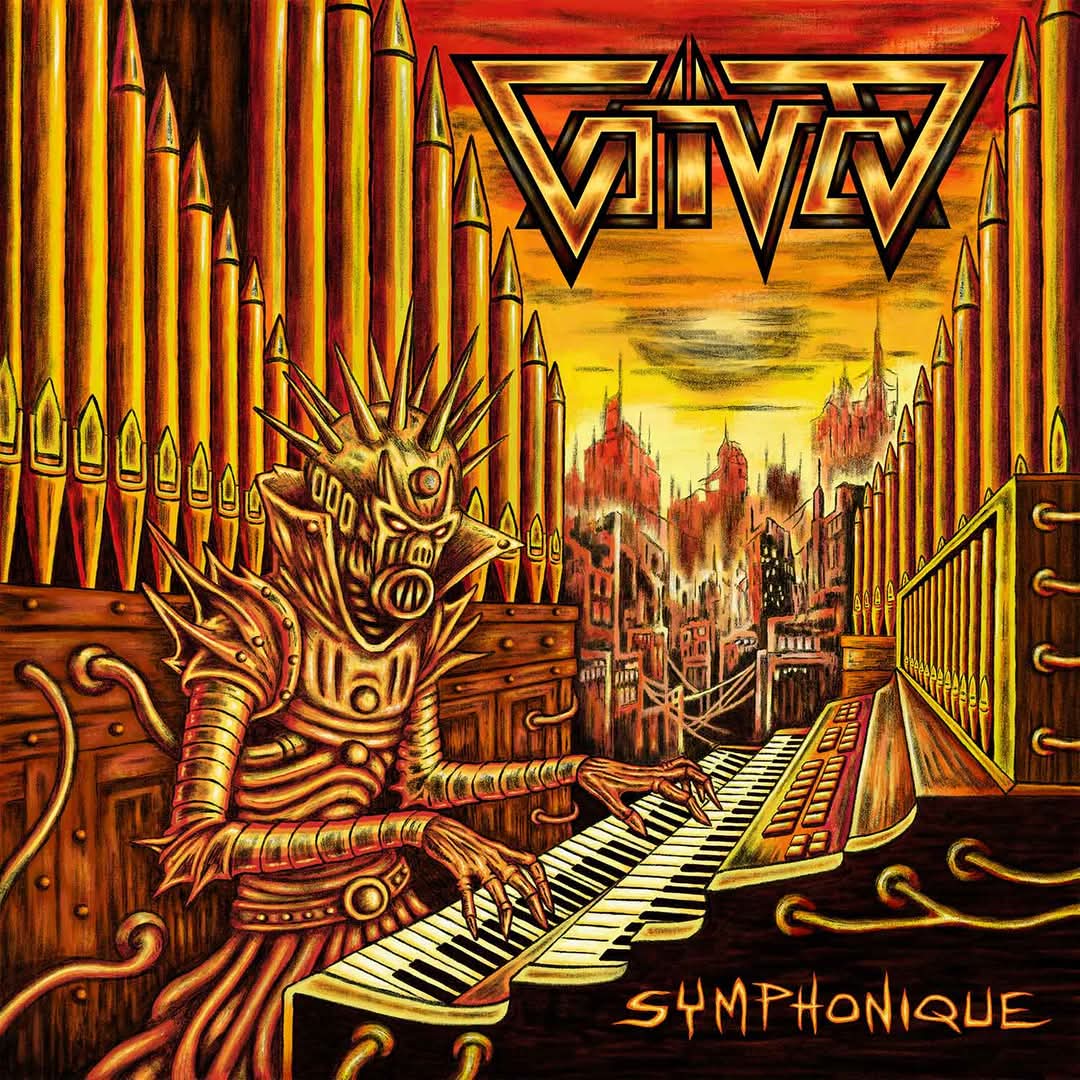
VOIVOD - Symphonique
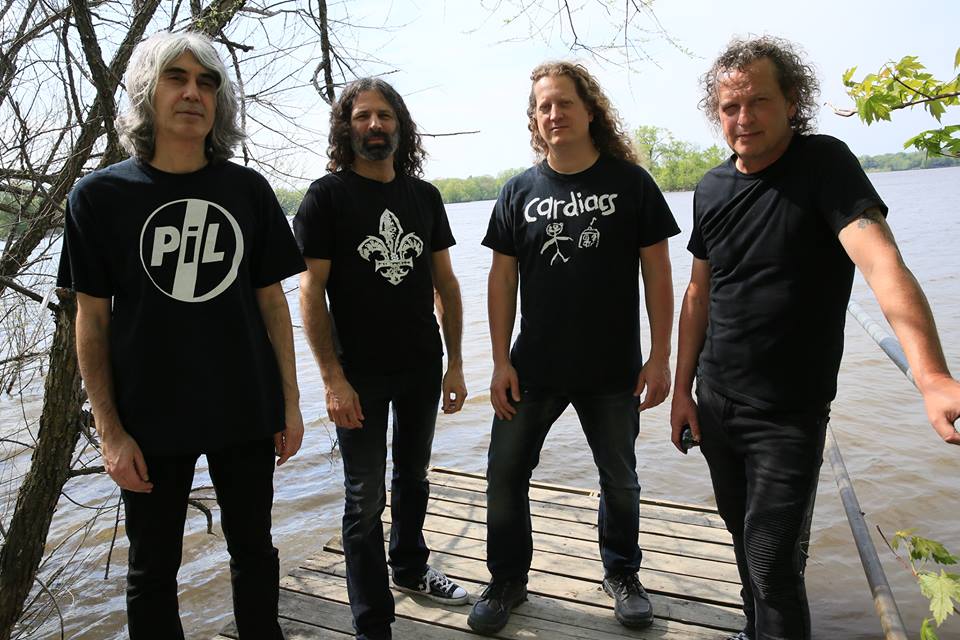
VOIVOD have been positioned as one of the most distinctive bands since the early 1980s, continuously redefining the boundaries of thrash/progressive metal through technical complexity, atonal guitar writing, and sci-fi–themed concepts. The Canadian outfit carved out a singular language within extreme metal by dismantling the logic of the “classic riff” and replacing it with non-linear compositional structures. “Symphonique” stands as the most recent intersection of this long-running experimental trajectory with symphonic orchestration.
At first glance, the album appears to be a “best-of with orchestra” project, yet musically it is built on a far more complex tension line: the inherently fragmented, atonal, and directionally unstable riff architecture of tech-thrash is, rather than being expanded, continuously reframed through the addition of the Quebec Symphony Orchestra. What becomes decisive here is not “amplification,” but rather how stable—or how destabilized—the existing material becomes when layered with orchestral textures.
The structural framework built around tracks like “Experiment” clearly exposes VOIVOD’s characteristic guitar writing: low-to-mid register fractured, non-linear riff sequences and abrupt chordal shifts are, instead of becoming more “legible” through orchestration, pushed further into a denser field of ambiguity. The orchestra functions here not as a supporting element following the riffs, but as a secondary harmonic layer that expands this atonal structure—particularly through woodwinds and strings. However, this layer does not always reconstruct the composition; at times it merely occupies the frequency spectrum as a decorative surface.
On tracks such as “The End of Dormancy” and “Cosmic Drama,” this relationship becomes more problematic. While the drum–guitar interplay retains VOIVOD’s signature sense of “controlled chaos,” the orchestral sections fail to fully integrate into the rhythmic framework, resulting in compositions split between two separate temporal perceptions. Instead of increasing dramatic intensity, this creates structural friction in certain passages. Especially in fast-shifting riff segments, the orchestra either trails behind or forms an independently functioning harmonic surface, producing a fragmented listening experience rather than a unified compositional whole.
By contrast, pieces with clearer motifs such as “Forgotten in Space” and “Tribal Convictions” push the orchestral arrangement into a more functional role. Here, string sections double the riff contours while woodwinds fill transitional spaces, sharpening the already angular guitar lines. Particularly in mid-tempo passages, the bass guitar’s role as a harmonic backbone becomes more pronounced, marking the first moments where the interaction between orchestra and band feels genuinely “unified.”
In terms of vocals, Snake’s narrative position gains a more theatrical dimension under orchestral density, yet this theatricality operates less as a structural transformation and more as an overlaying narrative layer. In other words, the vocal performance does not function as a central organizing force for the orchestra, but remains another unstable element within an already fragmented structure.
From a production standpoint, the recording offers a clean and highly separated mix for both band and orchestra. However, this transparency does not always work in favor of the material; in dense orchestral passages, a clear frequency competition emerges between the midrange aggression of the guitars and the wide harmonic field of the strings. This tension sometimes sharpens VOIVOD’s characteristic dissonant riff identity, while at other points it slightly dilutes the rhythmic aggression of the guitars.
One of the album’s key structural pivots is the Pink Floyd cover “Astronomy Domine.” Here, the orchestra integrates most naturally into VOIVOD’s already spatial and sci-fi–driven aesthetic. Due to the more modular and simplified riff structure, the orchestration for the first time becomes a supporting framework rather than a disruptive layer. Compared to the more fragmented orchestral approach across the set, this track produces a noticeably more “organic” sense of cohesion.
Overall, “Symphonique” does not so much reinterpret VOIVOD’s catalogue as turn it into a field of constant interaction between two systems (metal band + symphonic ensemble). This interaction does not consistently produce integration; some tracks gain additional depth through orchestration, while others remain suspended in an intermediate zone where two compositional logics operate simultaneously without fully locking into each other.
For this reason, when consumed as a passive “metal meets orchestra” experience, the album often generates sustained tension and at times a sense of fatigue. Yet within VOIVOD’s broader discography, this instability can also be understood as a natural extension of their long-standing atonal and anti-linear writing approach.
Ultimately, “Symphonique” is positioned not as a softening of VOIVOD’s music through orchestration, but as a refracting of it across different frequency planes. Whether this fracture consistently drives the compositions forward is debatable; however, it remains clear throughout the record that the band has never aimed to render its identity more “accessible.”
OZAN