
Album Review
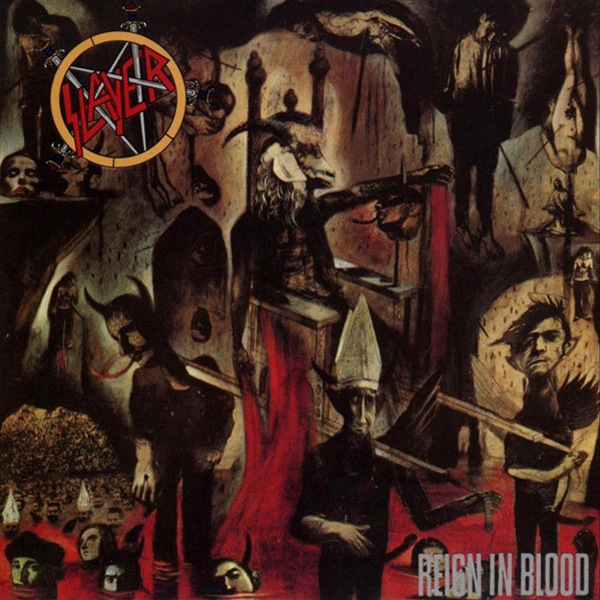
Slayer - Reign in Blood
Reign in Blood, when released in 1986, redrew the boundaries not only of the thrash metal scene but of every parameter that defined extreme music itself. Looking back today, even 40 years later, it is still not perceived merely as a “fast thrash album,” but as a rupture point that pushed the physical and psychological thresholds of the genre. This record is not just a peak sitting at the center of Slayer’s discography; it is a statement of velocity and intensity that revealed what thrash metal could ultimately become.
The most striking characteristic of the album is the disproportion between its runtime and the impact it generates. Running close to twenty-nine minutes, Slayer constructs a language of almost uninterrupted assault. Dave Lombardo’s drum performance elevates the concept of speed in thrash metal to a level of “sustainable chaos”; this is not simply about playing fast, but about a controlled form of destruction that opens the door to new techniques alongside velocity itself — a machine-gun-like barrage that reshapes the idea of rhythmic violence. Kerry King and Jeff Hanneman’s riff language, meanwhile, represents a deliberate break from classical metal harmony: instead of melodic expansion, they opt for a sharp, almost mechanical form of aggression.
Within the context of 1986, the significance of this album becomes fully apparent. Thrash metal had already taken shape through bands like Metallica, Megadeth, and Anthrax; however, when compared to more compositional and expansive works such as Master of Puppets, Slayer’s approach was radically minimal and direct. Reign in Blood proved that thrash metal did not need to become “more complex,” but rather “more intense.” This distinction was not merely stylistic, but ideological: compressing music instead of expanding it.
Rick Rubin’s production approach was another fundamental factor shaping this brutality. The album’s sound design is not sterile; on the contrary, it is almost uncomfortably bare and forward-facing. This choice directly challenged the dominant production aesthetics of 1980s metal. At the time, such a “clean yet aggressive” mix did not soothe the listener — it forced immediate confrontation. The opening of “Angel of Death” functions not simply as a track that begins the album, but as a threshold that declares its entire aesthetic intent. It is, in effect, a declaration of war.
Today, the reason Reign in Blood remains a reference point is not its technical speed, but its structural density. In modern death metal and blackened thrash scenes, speed is no longer exceptional; however, what this album introduced is not speed itself, but the dramaturgy of speed. There is almost no sense of transition between tracks; each piece feels like a new wave of assault layered atop the devastation left by the previous one — a relentless offensive that never lets up. This approach directly influenced the early formation of death metal as well as the aesthetics of grindcore.
From Slayer’s perspective, Reign in Blood is the moment that permanently fixed the band’s identity. Although later albums experimented with broader structures, the group was always defined through the image of “absolute intensity” forged here. The aggression in Slayer’s sound — both live and in recordings — became not an aesthetic choice, but an inevitability starting with this record.
40 years on, the continued relevance of Reign in Blood does not stem from nostalgia or its status as a “classic,” but from its establishment of a balance that extreme music has still not surpassed: the razor-thin line between control and chaos. It never dissolves into technical exhibitionism, nor does it collapse into uncontrolled noise. In this in-between space lies the purest and most dangerous form of thrash metal.
Listening to the album today is not simply revisiting an era; it is confronting a standard that extreme music is still trying to escape. With Reign in Blood, Slayer reached a form within thrash metal that feels perpetually unattainable. For anyone who entered metal through this record and for every young band trying to reach its shadow, it still represents an ideal that is both enviable and unreachable. Four decades later, it is still experienced with the same urgency — and still delivers the same devastation.
OZY