Interview
Blaster: “The Dark and Futuristic Map of Cyber Speed Thrash”
Blaster stands out as a band that moves along the edges of the underground thrash metal scene, drawing its roots from the aggressive spirit of the ’80s and ’90s while reshaping it through a futuristic, science-fiction-infused narrative. Their self-defined approach of “Cyber Speed Thrash” is not merely a stylistic label; it points to a creative space where riffs, memory, and imagination merge into a single sonic alloy.
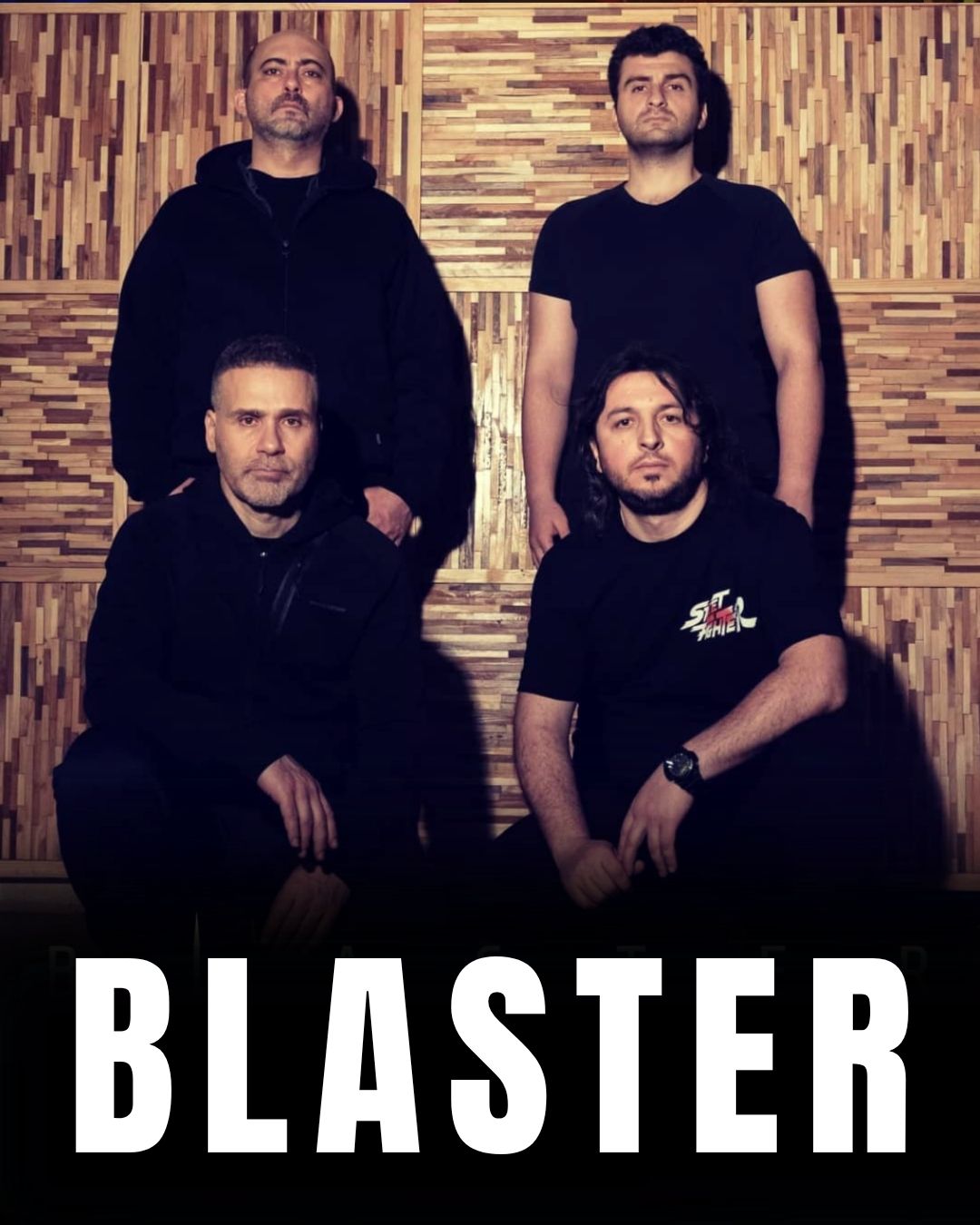
In this interview, we follow Blaster’s journey from their formation to the present day, exploring the motivations behind their choice to remain in the underground, their musical influences, and their philosophy of creation, told directly through Tuğrul’s perspective. From the aggression of old-school thrash to the technical possibilities of modern metal, from the idea of collective production to the balance between stage and studio, this conversation offers an inside look into the band’s universe.
PitStop: Looking at the traces Blaster has left across the internet, one gets the impression of a band that never quite wanted to become fully visible, yet also refused to disappear completely. Do you think what has kept Blaster alive over the years was ambition, anger, or a reflex that has turned into habit?
Tuğrul: The Blaster project basically goes back to my high school years. Back then, I used to record the metal compositions I was writing onto cassette tapes, and later on, with the computer I got at university, I started making demo recordings. Through that process and meeting people involved in this kind of music, it became a journey of finding musicians like myself… You know how you listen to foreign bands and get influenced by them; alongside that, when I was listening to albums from Turkey in the late ’90s like Nekropsi – Mi Kubbesi, Pentagram – Trail Blazer, Cenotaph – Puked Genital Purulency, Kronik – Endless War, Suicide – Spiritual Mess, Ascraeus – Red, and many others, I realized this thing is being done here too, so I should focus more on composing. That’s when I started making a lot of recordings. At university, after working with Tolga, Emre, and Burak, everyone went their own way in their careers. In the following years, I kept making music with my university classmate Gürdal and Goremaster… and with that lineup we recorded an album called Blastology. This recording is a live, organic one; it’s like a progressive speed metal version of Death’s Individual album with acoustic guitars.
In terms of visibility, we’ve sort of chosen to remain in the underground. It’s not so much a deliberate stance as it is that we drifted between focusing on the “kitchen” side of things versus being on stage, and I guess we spent a bit too much time in the studio. But the good news is we’ve produced a huge amount of music waiting to be released—there are several albums’ worth of recordings that are known within the underground scene among solid friends—and many songs are already finished. Even right now, when I listen to them, they feel like a modern and old-school synthesis, with a bit of a progressive edge… Progressive music always keeps production up to date.
The thing that keeps the band alive is the joy we get from making music. In essence, can we write beautiful, impactful music like the songs we listen to? Record, listen, and if you like it, send it to people and platforms whose taste you trust… it’s a collective form of production, really. Then when we get into the studio, we add new tribal grooves on top… guitar, bass, drums, and vocals entering a kind of cage fight and eventually finding harmony.
PitStop: Your music carries the aggression of old-school thrash metal, but it doesn’t lean entirely on nostalgia. During the writing process, when riffs emerge, does old-school thrash dominate, or can we hear the accumulation of years reflected in Blaster’s modern sound?
Tuğrul: Old-school thrash is definitely the foundation of the building, yes. What you first listen to and love always stays with you in your music. But when we say old-school, even our earliest compositions had riff structures in the vein of Destruction & Annihilator, so we never sounded purely traditional. There’s also a bit of digital texture in the recordings, which already sets it apart. But if you look at modern metal—Djent riffs, pop clean vocals followed by brutals—we’ll still come across as more “old-school,” of course.
While focusing on making good music, we also embed the styles we love into our sound. We are musicians, and both Gürdal and I are music educators as well—we were in the same class at university. When we were up all night playing guitar and metal, I would wake him up with Slayer – Hell Awaits… he, on the other hand, was more into innovative records like Death – Individual Thought Patterns, Cynic & Pestilence, and he pushed me to become a better musician by saying, “look, there are new things here, we should improve ourselves.”
Because we admire non-cliché, creative drummers in this kind of music, we reached out to Goremaster, who played on Cenotaph’s Puked album and Suicide – Spiritual Mess, and we worked and made music together. We even recorded one of our albums, Blastology, at Studio Raven in Ankara. Soon we might mix it and release it as a double album together with new songs. Since we come from an educational background professionally, we also stay connected to what younger audiences listen to. When you see so many very young virtuosos today, it brings the importance of writing music with soul even more to the foreground. The most important thing is soul—originality and the musician. Unfortunately, there are not many of those left; in most areas of art today it’s the same—too much focus on cosmetics and surface-level shine, while soulful songs are rare. But I still believe in our music. Technically speaking, Blaster’s music is also difficult to perform. We are not at the “write the simplest riff and make it the most effective” stage yet—instrumental mastery matters.
PitStop: From your song titles to your overall atmosphere, there is a constant sense of tension and collapse. Is interpreting thrash metal through such an aggressive lens an essential part of Blaster?
Tuğrul: Those concepts are a metal classic :) Metal crowds are like the orcs of Middle-earth, and their worlds are chaotic, complex, and pessimistic. We’re now focusing on writing more mature lyrics. You see many artists writing about themselves—their experiences, their traumas—and those who know them well can decode those messages. For example, Dave Mustaine in “In My Darkest Hour” makes references to Cliff Burton, expressing how even in his darkest moment, he couldn’t stop himself from being kicked out of Metallica, and he blends that with a kind of emotional narrative that can also feel like it’s written for a lover. Many songs become stories of destruction like this. In our roots, there is also a concept of migration from a place of origin into a modern world, combined with futuristic themes… stories of transformation from childhood into the future. In our newer lyrics, there are also ideas about humanity pulling itself together and reaching a better place collectively—there is a shift from the individual to the universe… lyrics matter a lot.
PitStop: Looking at your early-2000s website, there is a very raw and unfiltered underground spirit. Do you think it has become harder to preserve that kind of sincerity in today’s social media landscape?
Tuğrul: Social media, if used well, can be beneficial in terms of promotion in every way. Despite everything, sincerity is also a form of stance that requires craftsmanship and “discipline.” In the end, you are inevitably a role model to someone. Since we are musicians who love bands like Death & Slayer, we naturally feel close to their organic and sincere presence. That natural attitude is a visual style we appreciate. As it says on Death albums: focus on the music…
PitStop: Blaster’s sound has been positioned under the speed thrash label since we first got to know you. It’s difficult for a musician to categorize their own music, but how would you describe Blaster’s sound?
Tuğrul: On a 10-track second demo CD we had, the term “Cyber Speed Thrash” was written inside. The futuristic melodies and digital sound on top of speed metal tracks made me define it that way. I’d say Blaster’s sound is fundamentally speed thrash-based, but based on listener feedback, we also carry different influences… science fiction, ’80s anime, and Anatolian motifs. So for traditional thrash listeners, our structures are more complex and intricate, and our songs are also a bit longer. Inside Blaster there are intros reminiscent of ’80s futuristic anime, Death-style bass and drum compositions, fast and melodic guitar solos, and Slayer & Kreator influences. But when you listen closely, you realize we add much more on top of these. Compared to the classic albums of those bands, the experimental records they made when they were pushing their own boundaries in the ’90s influenced me a lot. For example, when people mention Kreator, everyone says Extreme Aggression, but I say 1995’s Cause for Conflict. Let me share something interesting: during the pandemic, I worked on revisiting tracks and doing guitar & drum sessions with Joe Cangelosi, who played drums on my favorite Kreator album Cause for Conflict. Those session videos are available on Joe’s and my Facebook and Instagram pages. Joe’s experimental drumming on that album, and also his work on Whiplash’s Insult to Injury, has been a huge inspiration for me. We’ve also long been considering writing a few songs together… another Turkish & USA collaboration after Nevermore.
PitStop: In the underground metal scene, producing music for years sometimes becomes more about endurance than music itself. What kept you on the path of continuing to create within Blaster?
Tuğrul: The main motivation for making music is essentially not finding enough of the music you love out there, and instead building the songs you enjoy listening to yourself. Everyone needs something to express themselves with. If you’re satisfied with that form of expression, you want to continue it. The difficult part is this: the best songs have already been made—when you live in a world where Master of Puppets or Angel of Death exist, how do you still write original and great metal songs? Not everyone has to think like this, but I do care about it.
Looking at today, you can see that this level of discipline is still necessary in production. Everyone has their own motivation for making art; ours is to keep the music we love alive.
PitStop: You recently released a new single called “Brothers.” This not only signals that the band is still alive, but also rekindled hopes for a new album among listeners. Is there a new album coming in the near future?
Tuğrul: Actually, before “Brothers” we released another single called “No Jihad No Crusade,” but it was blocked on YouTube (violent content). It’s a harsh track in the old Blaster style—you might have seen it before it was taken down… As for “Brothers,” yes, it’s our first track on Spotify. We used a lot of new elements in it—acoustic guitars, epic vocals we hadn’t tried before… there is a chorus now, and I’m paying more attention to that. In the past, guitars were primary and vocals secondary; I’m trying to change that hierarchy. Regarding an album, there is a lot of unreleased material. In today’s world, releasing singles one by one might actually be a good idea—we can release them frequently. We’ve recorded a lot of great music. There is a full-length album waiting, and it will also include guest musicians who previously played with Death and Kreator, whom I met during the pandemic.
PitStop: In your past, there are great works like “Mind Disease” and “Chaotic Noise.” Looking back, what do you think were the misfortunes surrounding these recordings? And has the idea of reintroducing them with new mastering ever come up?
Tuğrul: Yes, there are good songs there. In addition to new album material, releasing these as bonus tracks could be a good idea. In “Chaotic Noise” there was a track called “Speed Till Death.” I think it was on Metal Archives or Encyclopaedia Metallum; one of the moderators once wrote that it was one of the best instrumental speed metal tracks of the last 10 years. To prevent those songs from being lost, a remaster could definitely be done—it would be great. Good idea.
PitStop: When will your fans next be able to see Blaster live?
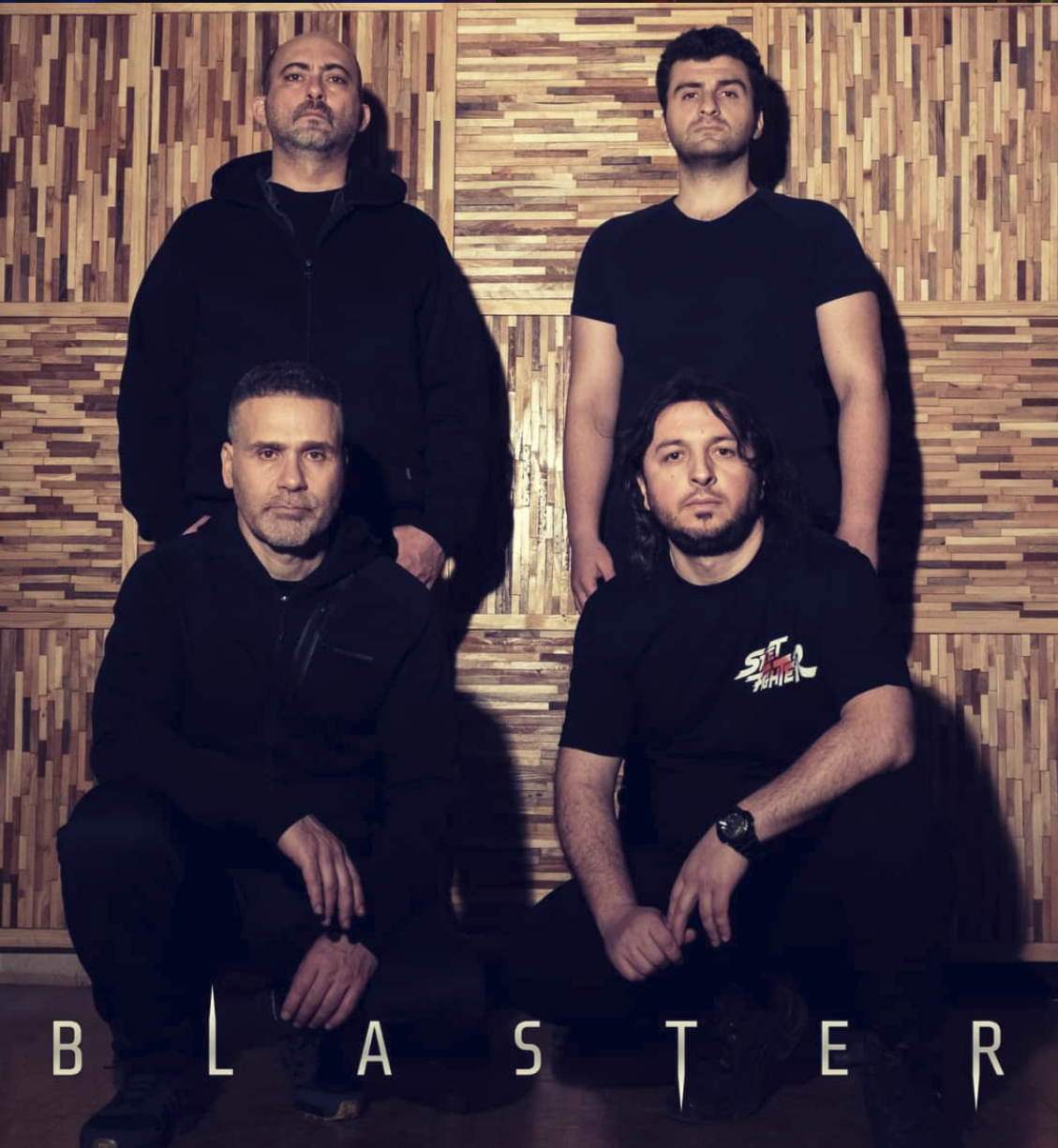
Tuğrul: Two members of Blaster are already active musicians in Suicide, so they already play together frequently (Cem & Gürdal). The two guitarists (Tuğrul & Mete) also live in the same city. After a long time, we last came together at Heavy Stage Fest and performed our songs in their Blastology versions, and it was a great performance—those pieces are more complex and harder to play than the newer material. We are quite serious musicians by nature, so when we come together, we get very solid studio performances.
PitStop: If you had to turn Blaster’s entire history into a single place—like a street, building, bar, battlefield, or ruin—what would it be like?
Tuğrul: That’s a great question. When I listen to some of our songs, I see a battlefield scene in my mind. For example, in the blastbeats of “Brothers,” we are four futuristic warriors standing on top of an ancient pyramid, with aliens attacking from every direction… there you go, that’s the place :) In some sections of some songs, I imagine a war machine—like a fighter jet. Many parts of our music remind me of the intros of cartoons I watched as a child. You know, where kids get into a robot and it transforms into a giant warrior. I feel those moments in our intros… I guess a four-member band is like a Voltron with four lions, and the fifth lion is the listeners :)
https://www.instagram.com/blastermetal/
https://www.facebook.com/blastermetal?