INTERVIEW
Dragonborn Interview
Mythology, songwriting, and their cinematic live approach.
Hello to the whole team, and thank you for accepting our interview request. If you’re ready, let’s jump straight into the questions.
No Mercy appears to carry a much darker and more uncompromising character compared to your previous work. Was this shift a deliberate creative choice, or did it emerge naturally from the story you are currently telling within the Dragonborn universe and the Ironbound Lands?
First of all, greetings to the Pit Stop Extreme Metal team and its readers. As Dragonborn, thank you for hosting us and giving us the opportunity to talk about No Mercy.
For us, No Mercy marks an important threshold where Dragonborn steps into a more merciless era. This tone was both a conscious creative decision and a natural outcome of where the story has reached within the Ironbound Lands.
On this EP, betrayal, broken loyalty, shattered trust, and the sense of paying a price come much more to the forefront. That’s why the music is shaped with sharper riffs, darker melodies, and a denser atmosphere. No Mercy is the point where justice takes on a colder, heavier, and more ruthless language.
Your songs unfold within a fully unified fantasy universe. When did you realize that individual stories were no longer enough and that you wanted to build a larger mythology instead?
I realized this when the songs started connecting with each other. At first, each track had its own atmosphere, its own battlefield, and its own emotion. Over time, the same characters, the same oaths, the same sense of betrayal, and the same war spirit began to reappear across different songs.
This kind of connection is already inherent in epic metal. Riffs, melodies, and lyrics need to feel like part of a larger world. We also have a storybook we’ve been writing for a long time, waiting to be published, and many events in Dragonborn are drawn from that story.
From there, the narrative expanded into the Ironbound Lands. Every new song started adding a new character, a new war, a new fracture, and a new line of fate to this universe.
Dragonborn doesn’t come across as just a band making music, but rather as a project building its own mythology and narrative. How did the core idea of this universe first come about?
At the core of this universe is a story I’ve been writing for years, complete with its own characters and plot structure. The Ironbound Lands is a vast world that has found its voice through our songs. The wars, kingdoms, ancient oaths, betrayals, and the fractures experienced by its characters naturally found their place within the music.
For us, epic metal always demands a larger narrative. A riff shouldn’t just sound powerful; it should open a door, reveal a battlefield, and make you feel a character’s fate. That’s the feeling we wanted to amplify.
At the center of the Ironbound Lands are power, loyalty, betrayal, loss, and rising again. Dragons, execution grounds, oath-breaking commanders, fallen kingdoms, and lost heroes allow us to express these themes through larger symbols.
Are the characters, places, and events in your songs all part of a single connected whole? Is there a chronological storyline listeners can follow?
Yes, the characters, places, and events in our songs move forward as interconnected parts within the Ironbound Lands. Each track has its own atmosphere, but all of them represent different chapters of a larger story.
There is a chronological flow the listener can follow. Instead of presenting it as a straight historical narrative, we structure it like different scenes of an epic. This way, each track works on its own as a strong atmosphere, while together they reveal traces of a much larger war and mythology.
What sources of inspiration shaped this universe? Did you draw from fantasy literature, tabletop RPGs, video games, or history?
I’ve drawn from many different sources while building this universe. Fantasy literature, ancient epics, medieval history, mythologies, role-playing games, and cinematic video games have all been important elements shaping the atmosphere of the Ironbound Lands.
Norse mythology, in particular, has had a strong influence on me. The layered world structure of Yggdrasil, the inevitability of Ragnarök, the sanctity of ancient oaths, warrior honor, runic symbols, and ice-bound primordial forces are all very close to the spirit of the story we are telling.
On the history side, the rise and fall of kingdoms, struggles for the throne, wars, and tests of loyalty have deeply influenced us. In Dragonborn, we merge all these influences with our own narrative language.
What is the central theme you want to explore in your universe? Do you focus on concepts like heroism, downfall, war, hope, or human nature?
The central theme of the Ironbound Lands is the decisions made in times of crisis. When war begins, who draws their sword, who remains loyal to their oath, who surrenders to fear, and who chooses betrayal—this is the core of the story for us.
Heroism in this universe is measured not by grand words but by actions. A commander refusing to retreat on the battlefield, a people rising again after their castles have fallen, or a character continuing forward despite loss—that is the form of heroism we want to portray.
Downfall is equally important. In the Ironbound Lands, kingdoms shatter through armies, poor decisions, broken oaths, internal betrayal, and the hunger for power. That’s why the sense of consequence is just as central as war itself.
Are there any details you feel listeners might have missed so far, but which are important for understanding the story?
Yes, there is a detail hidden within Execution that will gain greater significance later: Sereth’s fate.
Sereth was one of the commanders on the ice dragon side in the Ironbound Lands. Once bound by ancient oaths, he betrayed his cause and sold it to the fire dragon Pyraeth. This betrayal became a major fracture that affected the direction of the war, the trust between commanders, and the future of the Ironbound Lands.
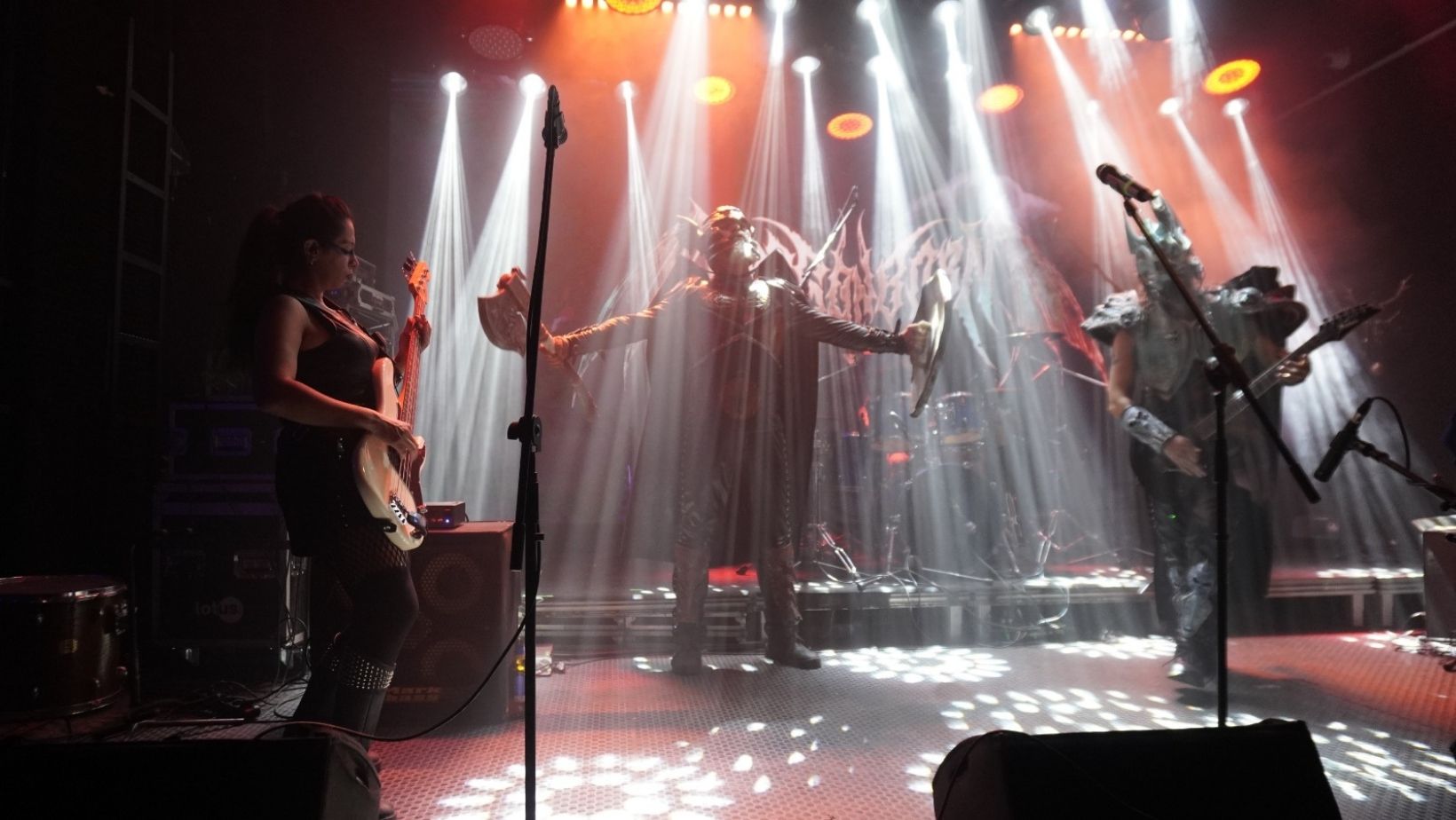
In the Execution stage show, we brought this moment of decision directly in front of the audience. After the song ended, we asked the audience to decide Sereth’s fate. At that moment, the crowd called for execution, like Commander Aeron. However, the council of commanders chose mercy instead, granting Sereth one final chance. On stage, justice, anger, mercy, and the weight of consequence all existed at the same time. Sereth, however, cannot bear the mercy given to him and returns to confront Aeron once again through his betrayals.
Do you plan to expand this universe beyond albums into formats like comics, novels, tabletop RPG books, or visual storytelling?
Yes, we very much want to expand this universe into different formats in the future. The characters, maps, history, wars, and internal dynamics of the Ironbound Lands have grown into a vast narrative space.
Because of the story we mentioned earlier, a novel is a natural next step for us. Beyond that, comics, visual storytelling, character dossiers, maps, and stage productions are all strong directions for expanding the Dragonborn universe.
The idea of a tabletop RPG is also very exciting, because the Ironbound Lands is a world that can be shaped by the decisions of different characters. For now, music is at the center, but in the long term we want to grow music, story, visual world, and stage narrative as parts of the same universe.
Tracks like Warhorns For Liars, Execution, and Revenge Of Pagan Storms create a very dark and conflict-driven atmosphere. In these kinds of stories, are you more drawn to the epic events themselves, or to their psychological impact on people?
What draws us most is the fracture created within characters by large-scale events. Warhorns For Liars, Execution, and Revenge Of Pagan Storms are built around powerful scenes like war, betrayal, execution, and revenge. But the weight of these scenes comes from the decisions characters make in those moments.
Warhorns For Liars captures a moment where trust is broken. Execution moves along the sharp line between justice, anger, and mercy. Revenge Of Pagan Storms tells the story of suppressed power and the resurgence of ancient beliefs.
In the Ironbound Lands, every major event carries a price. The epic side sets the stage, but the psychological side gives it real weight.
Your music combines melodic death metal, black metal darkness, heavy metal harmonies, and orchestral arrangements. When composing, do the stories and visual imagery come first, or do the musical ideas lead?
The songwriting process often begins with hearing the track in our heads first. We shape where the piece will go, what emotion it will carry, and what kind of scene it will open up, mentally at first. Then we turn it into something tangible with guitars or in the studio.
In this process, music and visual imagery constantly feed each other. Sometimes a riff makes me see an ice-covered mountain, a castle rising through the mist, or an army marching with war horns. Other times, a scene from the story appears first, and the music is born from it.
Heavy riffs carry the weight of war, melodic guitars emphasize the fate of characters, and orchestral arrangements expand the darkness and cinematic atmosphere.
Guitar work is one of Dragonborn’s defining traits. You combine classic epic metal-style harmonies with very aggressive and heavy riffing. How do you balance memorability and aggression?
When writing riffs, the most important thing is to find a melodic core within the heaviness. It has to be strong and aggressive, but also carry a harmony or motif that stays in the listener’s mind.
We love classical heavy metal and epic metal harmonies. Combining that heroic, grand feeling with the sharper, more aggressive side of melodic death metal is what defines Dragonborn’s guitar identity.
Usually, we first focus on the core emotion of the track. In some sections, the rhythm guitar’s impact takes the lead; in others, dual-guitar harmonies or melodic transitions elevate the song. That’s where the balance is created: aggression gives the track power, melody makes that power memorable.
You’ve worked with musicians from very different backgrounds such as Jonny Maudling, Kevin Talley, and Emanuele Rastelli. Was the goal to consciously incorporate their individual styles, or was it mainly about bringing the Dragonborn vision to life as strongly as possible?
The priority has always been to realize the Dragonborn vision in the strongest possible way. But there is another important aspect to working with these names. Jonny Maudling, Kevin Talley, and Emanuele Rastelli are people we have known for a long time, trust musically, and respect as individuals.
So these collaborations were shaped less as technical contributions and more as trust-based musical partnerships. Kevin Talley brought a tight, powerful energy to the drums. Jonny Maudling deepened the cinematic side of the music through orchestral arrangements. Emanuele Rastelli strengthened the foundation of the tracks with his bass work, making them more solid and alive.
Orchestral and keyboard arrangements in Dragonborn don’t just function as decoration; they often act as elements that actively move the story forward. How intertwined are composition and storytelling for you?
Composition and storytelling are deeply intertwined for us. Orchestral and keyboard arrangements often serve as the elements that open the scene, expand the atmosphere, and draw the listener into the event.
If a guitar riff carries the heaviness of the song, orchestration gives a sense of the scale of the world it takes place in. Keyboards sometimes open the door to a dark passage, sometimes amplify the shadow of an approaching war, and sometimes make the tension within characters more visible.
Working with Jonny Maudling has been very valuable for us in this regard. Jonny spent years with Bal-Sagoth doing highly distinctive work in epic metal and understands the narrative power of this music extremely well. His perspective added serious depth to the atmosphere of the tracks. He will continue working with us on recordings.
Fantasy is often seen as an escape from reality. Yet your lyrics deal with war, loyalty, loss of power, and social collapse—very human themes. Do you see the Ironbound Lands as a reflection of real human experience?
Absolutely. For us, fantasy is one of the most powerful ways to express real emotions through larger symbols. A dragon, a kingdom, a battlefield, or an ancient oath may look like fantasy imagery, but behind them are deeply human matters.
In the Ironbound Lands, war is not only fought with swords; it is also a world where loyalty is tested and trust is broken. Sometimes the deepest wound does not come from an enemy, but from someone you thought was walking beside you. That feeling is central to our story.
The Ironbound Lands works as a mirror reflecting human decisions, flaws, courage, and the act of paying a price, while also being a fantasy world.
Ash Before Dawn and the instrumental When Steel Forgot Fire function almost like cinematic scenes within the EP. How important are these atmospheric transitions for the overall cohesion of a release?
These tracks act as the entry and exit gates of No Mercy. Ash Before Dawn prepares the listener for our dark atmosphere from the very first moment. With ash, pre-war silence, and the sense of an approaching reckoning, it opens the EP’s spirit. That’s why we also use it as our stage intro in concerts—it feels like a ritual of beginning.
When Steel Forgot Fire carries the sense of closure. It conveys the weight left after war, the exhaustion of steel, and the darkness leading into what comes next. Its placement at the end of No Mercy was very intentional. We also close concerts with it, bringing the curtain down with the same cinematic feeling.
In Dragonborn, these atmospheric sections function like moments where the entire narrative takes a breath. They connect one track to another while shaping the emotional flow of the EP and live shows.
Dragonborn feels less like a traditional band and more like a long-term creative universe. As this mythology grows, there is always the risk that the story could overshadow the music. How do you ensure the songs still connect emotionally with listeners who are not familiar with the lore?
That balance is very important for us. In Dragonborn, the story builds a large world, but the listener’s first contact is always through the music. The impact of a riff, a chorus, or a melody must reach the heart and ear first. The lore comes later as a second layer that deepens that experience.
Even if a listener knows nothing about the Ironbound Lands, they should still feel the anger in Execution, the call to war in Warhorns For Liars, or the sense of rise in Revenge Of Pagan Storms. A listener who does know the story, on the other hand, can see the characters, symbols, and interconnected events within a larger picture.
That’s why we focus first on the core of the song when composing. A strong riff, a memorable melody, the right vocal approach, and an energy that works live—these are the foundation. The music opens the door; the universe expands behind it.
Looking at today’s epic, fantasy, and symphonic metal scene, some bands lean heavily into nostalgia while others take a more modern approach. Where do you position Dragonborn within this landscape?
We see Dragonborn as standing in a place where the spirit of the past is told through the language of the present. Classic heavy metal harmonies, epic metal’s grand narrative style, and melodic death metal’s aggression form the foundation of our sound. We value those roots deeply, because the true power of the genre comes from them.
At the same time, modern production, cinematic atmosphere, strong visual identity, and stage storytelling are very important to us. We want to meet listeners with powerful songs and invite them into an immersive atmosphere.
We position Dragonborn as a band that combines the traditional metal spirit with a modern narrative and production approach. Our goal is to reshape the epic feeling of the past through the darkness, energy, and visual language of today.
Your music carries a strong cinematic quality. Does this mean your stage production also needs to be large and spectacular, or can Dragonborn create the same impact in a small club setting?
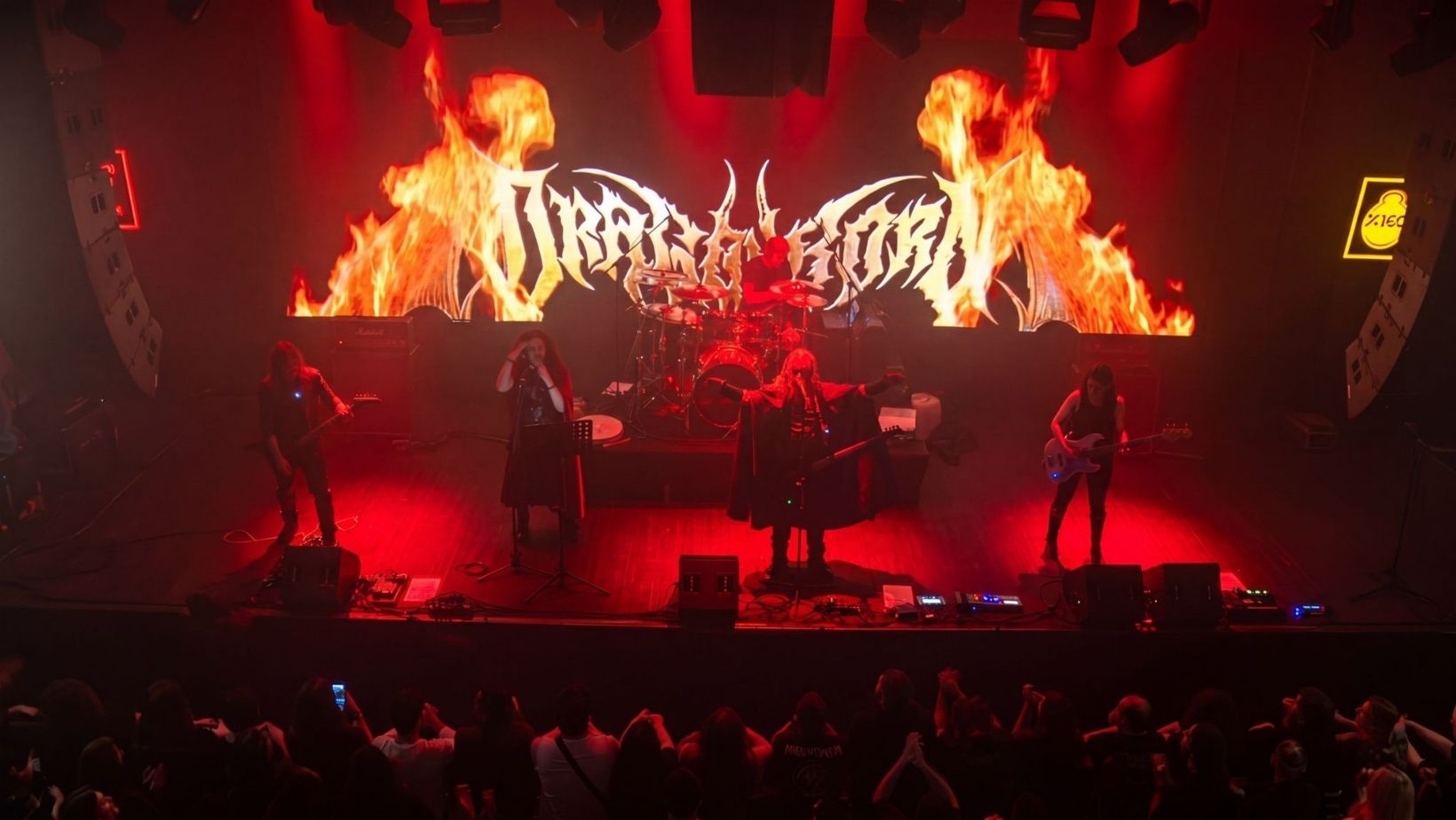
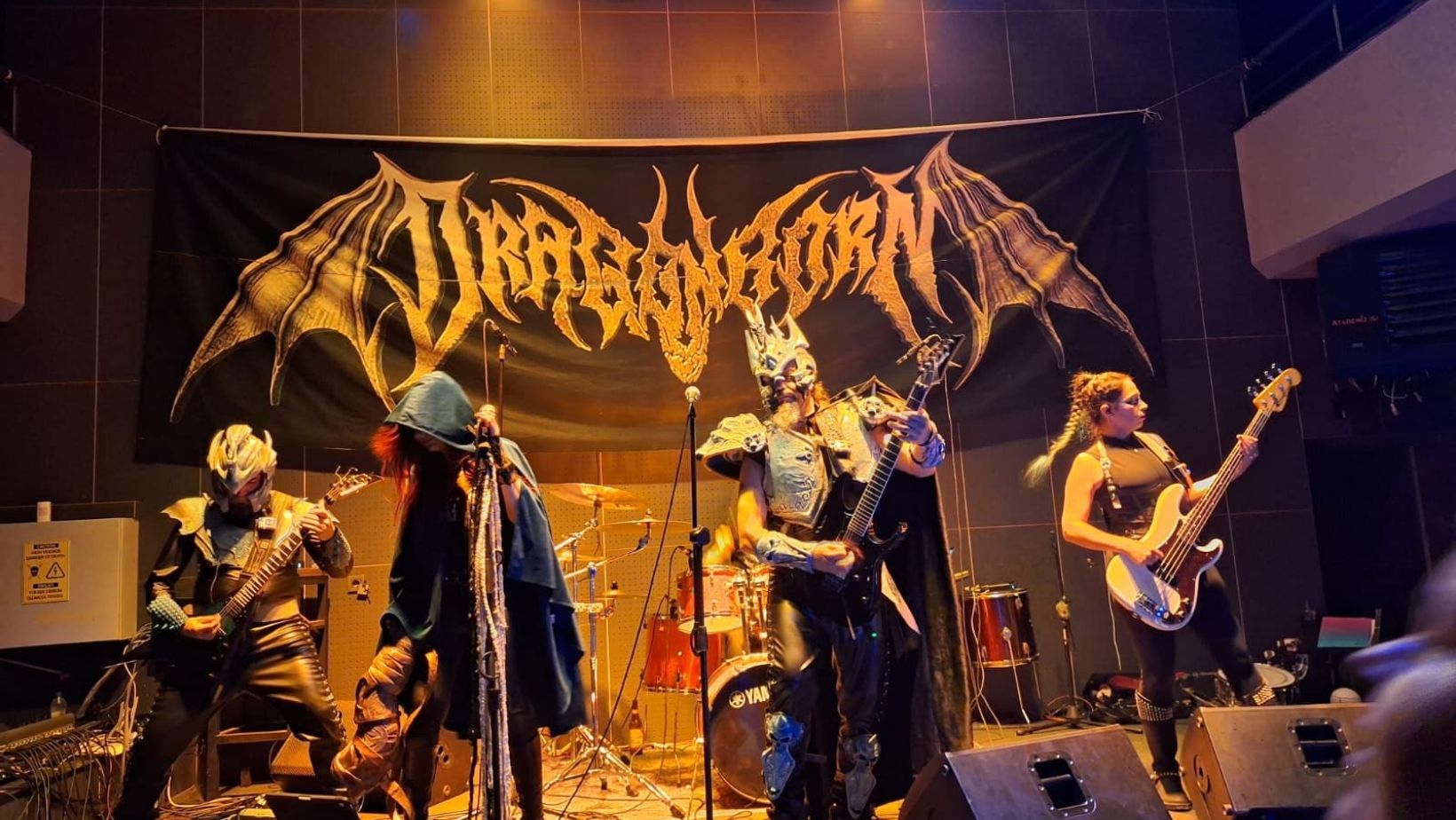
Dragonborn’s music naturally favors large atmospheres. Lighting, intros, costumes, visual flow, and stage show elements all strengthen this world. On bigger stages, this cinematic side breathes more fully and delivers a more immersive experience.
But the real strength comes from the energy, discipline, and conviction on stage. Even in a small club setting, the same spirit can be created with the right intro, lighting, performance, and connection with the audience.
What matters to us is turning every stage into a Dragonborn space within its own limits. Whether on a festival stage or in a small club, we want the audience to feel the same thing: not just attending a concert, but stepping into a dark, epic world.
Your universe seems to grow with every release. Are there still characters or storylines you planned from the beginning that listeners have not yet encountered?
Yes, there are many characters and storylines within the Ironbound Lands that listeners have not yet encountered. What we have shared so far is only the visible part of a much larger saga.
Some characters have appeared only as traces, names, or shadows. Over time, their pasts, their decisions, and their impact on the war will become clearer.
In particular, the ancient tension between fire and ice dragons, the council of commanders, and the new wounds opened by Sereth’s betrayal will lead to much larger consequences in the future. Every new song will open another region of the Ironbound Lands and another line of fate.
You recently announced a tour. What role does this tour play in the current phase of Dragonborn? Do you see it as a traditional album tour, or more as part of the broader No Mercy era? And beyond this tour, do you already have concrete plans for festivals or selected special shows in 2026–2027 with your current lineup and new material?
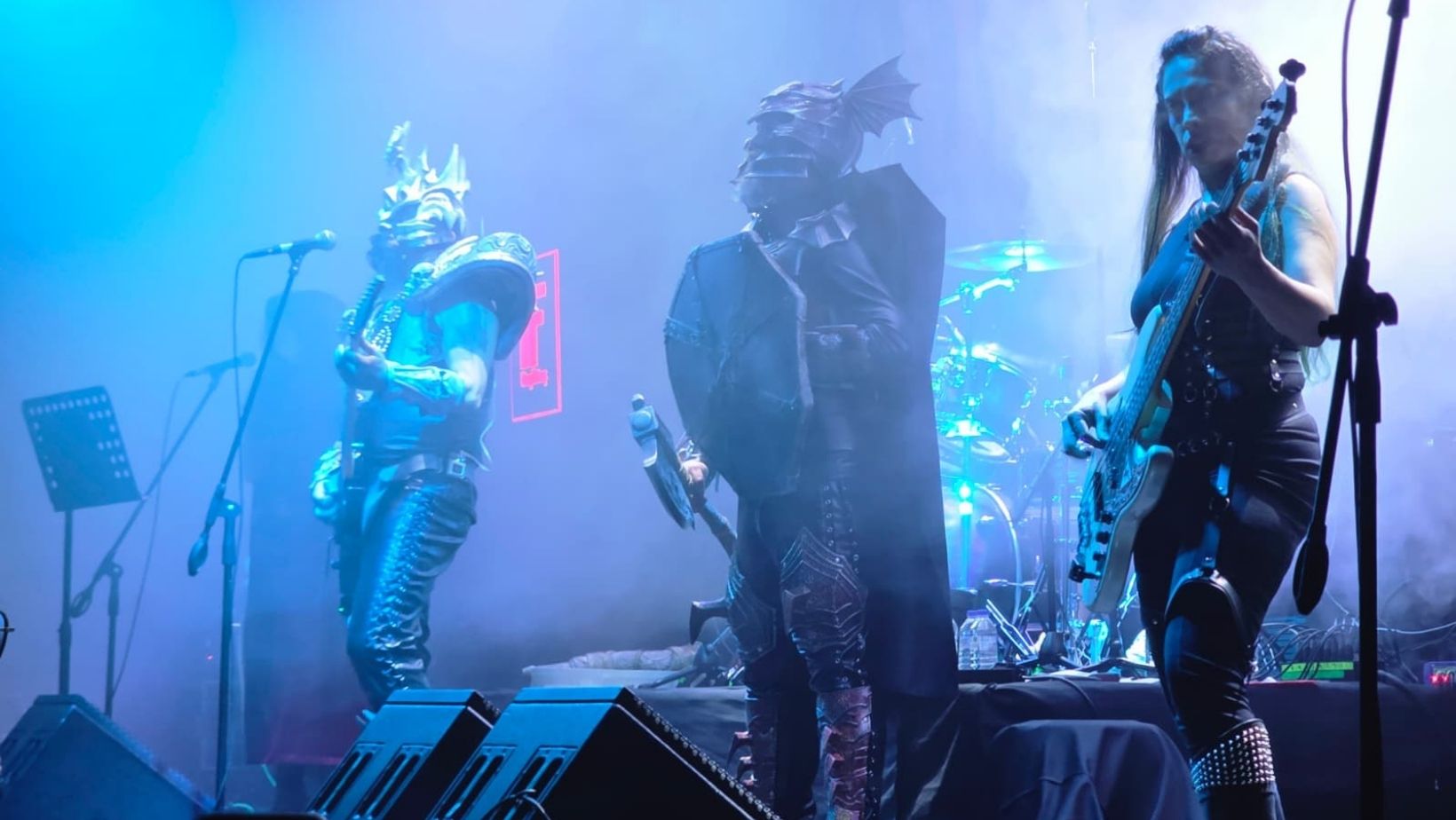
For us, this tour is a very important threshold where the No Mercy era finds its true identity on stage. We transformed the dark atmosphere we created in the studio into a more visual, theatrical, and direct live experience.
Costumes, in particular, are a key element of this period. We want every character on stage to look like they have stepped directly out of the Ironbound Lands. With lights, intros, stage presence, and costumes, the audience should feel like they are inside a dark film scene.
Sharing the stage with Sirenia in Istanbul and then touring Turkey with Kaira was a very important step that strengthened the identity of the current lineup. For 2026–2027, we have goals regarding festivals and selected special shows. We will announce confirmed dates when the time comes.
You had the chance to share the stage with international bands like Sirenia and Kaira. What were the most important lessons you took from those shows? Did performing alongside these names change your approach to live performance or stage discipline?
Sharing the stage with Sirenia and Kaira was a very important milestone for us. These shows gave us the experience of performing alongside international acts and allowed us to view the stage with a more professional perspective.
When you share the stage with larger bands, you see very clearly how important every detail is. Timing, equipment preparation, soundcheck discipline, stage entrance, intro usage, costumes, set flow, and stage presence all become part of the performance itself.
Today, Dragonborn’s stage approach has a clearer goal: to unify music, costumes, intros, lighting, story atmosphere, and performance energy into a single whole. These shows were one of the strongest steps toward that goal.
You also had the chance to observe large-scale productions both backstage and on stage. Were there any concrete things you felt you should adopt in your own career?
Yes, especially on the sound and lighting side, we saw more clearly how decisive production really is. Stage performance, costumes, energy, and musical preparation are already things we care deeply about. In larger productions, we saw how much more powerful these elements become when supported by professional sound and lighting design.
In Dragonborn’s music, guitars, vocals, orchestration, and backing layers all work together. That makes it critical that every element is heard correctly on stage. Lighting is also a key narrative tool, carrying the dark atmosphere, the red and cold tones, and the intro and outro moments.
After these shows, our most concrete goal became aligning stage production—especially sound and lighting—with the cinematic character of our music. Because in our world, how the performance sounds and looks to the audience is just as important as the performance itself.
Comparing Dragonborn’s current live performance to a few years ago, where do you feel the impact of these international shows most strongly?
We feel it most strongly in how much our perspective has expanded. Sharing the stage with Sirenia and Kaira showed us more clearly how a performance should stand. Today, we don’t just go on stage to play songs—we build a complete Dragonborn atmosphere with costumes, intros, lighting, presence, and energy.
These shows also influenced how we write music. When composing new material, we now think about how it will sound in the studio and how it will rise on stage at the same time. Which sections connect with the audience, which transitions create stronger impact, which choruses hit harder live—these have become natural parts of the songwriting process.
Compared to a few years ago, Dragonborn today is a more conscious, more disciplined band with a clearer stage identity. The biggest thing these international shows gave us is this: aligning music, performance, and visual world toward a single goal.
What is Dragonborn’s roadmap for the near future? Do you already have plans for new material or a larger album after No Mercy?
After No Mercy, we are preparing for a larger visual and musical phase. First of all, two music video concepts are on the table. One will be for Valexus, Lord of Ice. Valexus has a very strong identity as an ice dragon, and we want to present this track through a more cinematic, darker, and visually striking narrative.
The second will be for Ash Before Dawn. This is a very important piece for us, used as our live intro. We are envisioning it as a storytelling-style piece—almost like an opening film that brings even listeners unfamiliar with our lore directly into the universe. We want the audience to feel the atmosphere of the Ironbound Lands, the shadow of war, the fate of the characters, and the dark gateway of the No Mercy era before the concert even begins.
After that, we plan to enter a new recording phase. Whether this material becomes a full album or an EP will depend on how the songs develop. At the same time, we are working on both domestic and international touring plans. The goal for the near future is clear: stronger videos, new recordings, and a more powerful Dragonborn experience on bigger stages.
https://dragonbornofficial.com/