ALBUM REVIEW
Abandon Agony – Endbringer
Swedish melodic death metal tradition and modern metalcore influences.
Greetings everyone
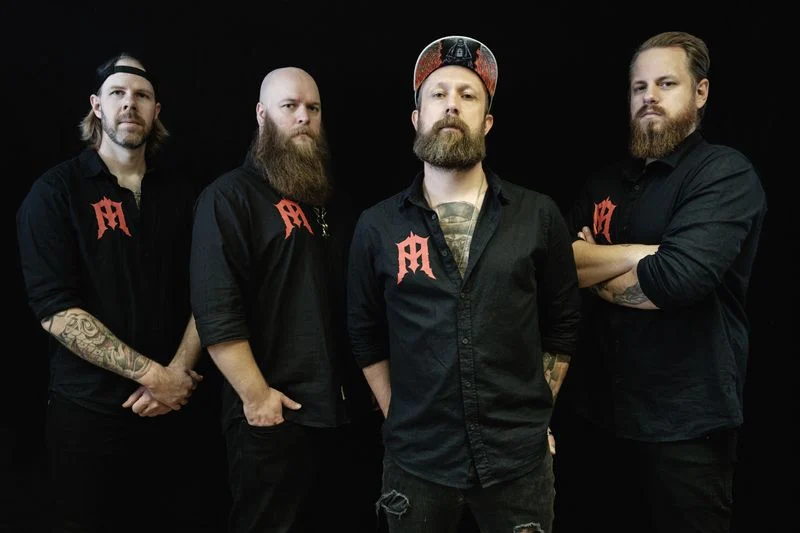
The band Abandon Agony, whose review we’re covering today, was formed in 2023 in Trollhättan, Sweden, and features Johan Hedström on vocals, Tobias Järvelä on guitar, Jonathan Wagerland on bass, and Robin Toresson on drums. Vocalist Johan Hedström, guitarist Tobias Järvelä, and bassist Jonathan Wagerland are far from strangers to each other. These three names also played together in the Swedish gothic/post-punk/darkwave outfit Memoria. The four tracks included on this album were previously released as an EP under the name Dark Matter.
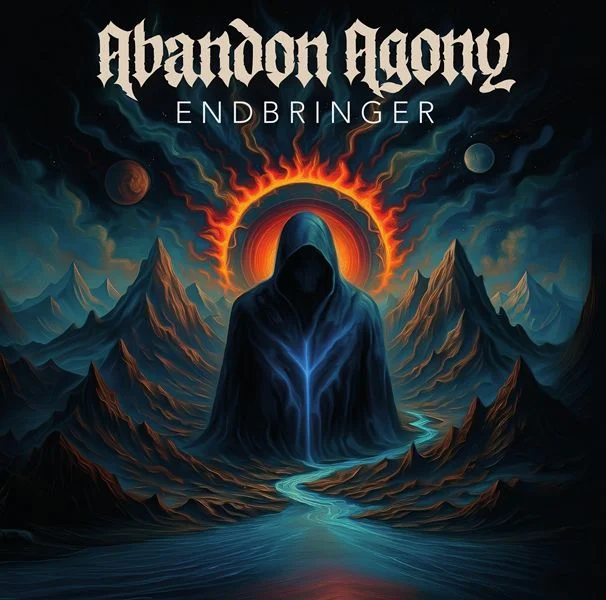
The album was recorded at Eternal Studios, with mixing and mastering handled by Robin Leijon. The cover artwork belongs to one of the well-known names in the metal world, Giannis Nakos. Eternal Studios does not exactly host mainstream bands; it is a studio we know from melancholic works such as Sorrowful Land and Edenian. As for Giannis Nakos, you may recognize his work from album covers for Suffocation, Evergrey, Kamelot, Vomitory, and Keep of Kalessin.
After noting that the album’s overall themes revolve around Nature-Cosmos, Social, and Universal tensions, and that its title translates to “The One Who Brings the Apocalypse,” let’s move on to how the album actually sounds…
Since I personally enjoy track-by-track impressions in the reviews I read, I followed that approach here as well.
The opening track Truth comes in with a very punchy start, and thanks to its clean production it flows effortlessly. I also think the guitar solo should not be overlooked. If you’re hearing the band for the first time, you might think they lean slightly toward technical death metal, but they actually sit on that fine line between technical death and melodic death metal.
With the second track, we immediately find ourselves in classic Swedish melodeath territory. The drum writing makes you feel like everything is moving faster than it actually is. The synth layers in the background support this as well, but in a very controlled way—you never get that “what is this cheesy gyy gyy sound?” reaction.
The third track, Blind Intentions, is one of the album’s bridge songs. It opens with the melancholic guitars of late-’90s Swedish melodic death metal, before suddenly throwing you into the high-tempo, aggressive drum bursts and dynamic guitar work of modern metalcore. This fluidity between genres keeps the album’s momentum from ever dropping.
The album’s most talked-about track, Entropy, featuring a guest appearance by Liv Jagrell, felt like a rather short piece to me. The back-and-forth vocal duel style didn’t really blow me away. The decision to keep the track so short wastes its potential. It ends too abruptly to leave a lasting impression on the listener and falls short of delivering that expected “wow” effect.
After the chaotic and somewhat unsatisfying modern atmosphere of Entropy, Sunrise shines like a beam of hope right in the middle of the album’s dark apocalyptic tone. As its name suggests, the track shifts the album’s overall mood toward a more epic direction.
Right after that, Lunar Storm immediately grabs me with its epic opening. Its atmosphere throws you right into the middle of a cosmic storm, fully restoring the striking momentum the album had begun to lose. And I’m pretty sure the sudden stop-start section at the end will make you go, “What the hell just happened?” haha.
Rise From The Ashes follows a similar pace, embracing you a bit more with riffs. The solo arriving at 2:53 is also very well placed—it catches you in a surprisingly emotional moment.
The album’s eighth track, Writing On The Wall, feels like a straight-up Amon Amarth copy. The guitar patterns alone make that clear.
The next track, Polar Shift, opens in a way that feels like you’re walking down the street humming to yourself, before suddenly encountering a monster that grabs you right off that path. The pace rapidly escalates, and that creature keeps speaking without giving you even the slightest chance to look back or to the sides. Then you’re dropped into a clean, refreshing space where you can finally enjoy the solo.
The final track, My Redemption, truly leaves a lasting taste with a magnificent closing. It even made me go back and listen to it for the third time.
After going through the emotional core of each track, let’s turn to the overall feeling the album creates.
While listening to the band, you can pick up elements of Trivium, Kalmah, and Dark Tranquillity, but most of all Amon Amarth. “This album takes me back to the late ’90s, then pulls me into a modern metalcore scene.” They’ve built a strong bridge between the two. The metalcore elements never fall into boredom. You don’t get tired of melody or repetitive pacing because there is an epic quality throughout—melodies are scattered everywhere, yet the metalcore-driven speed keeps pulling you forward. You might even find yourself thinking, “I wish Amon Amarth made music like this.”
Vocalist Johan Hedström, rather than the classic Göteborg melodeath screams, delivers deep, resonant, Viking-warrior-like brutals reminiscent of Amon Amarth. He never lets the listener relax for a second. This choice adds tremendous weight and epicness to the modern backbone of the songs. I also didn’t miss the absence of clean vocals—in fact, I quite enjoyed it.
At a time when modern bands either avoid or simplify guitar solos, Abandon Agony stands out by placing elite-level solos in nearly every track. Tobias Järvelä’s craftsmanship proves that these songs are not just raw heaviness, but are built on serious musicianship.
If, like me, you’re a fan of ’90s melodic death metal, you should definitely give this album a listen…
TAHİR