ALBUM REVIEW
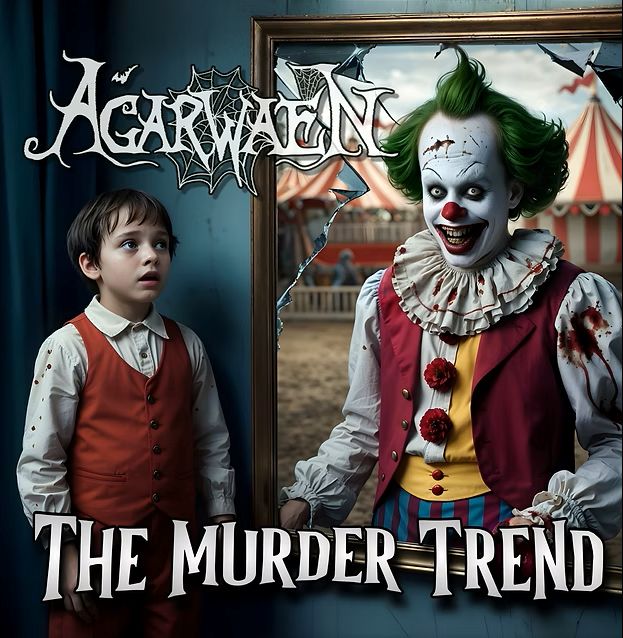
AGARWAEN - The Murder Trend
Dark Mind Circus
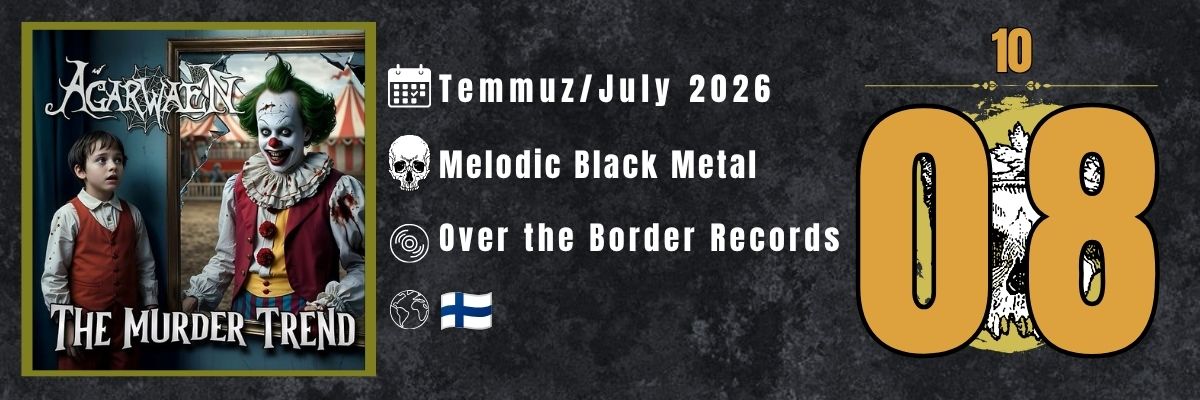
AGARWAEN are a Finnish band that stand out by merging different extremes of metal into a single narrative universe while consciously challenging genre boundaries. With "The Murder Trend", the band brings together Melodic Death Metal, Black Metal, Industrial elements, and theatrical atmospheres within an ambitious concept album built around the dark story of Anton Nieto. By incorporating horror cinema aesthetics, progressive compositional approaches, and an intense stage persona into their music, AGARWAEN further develop their own distinctive approach, which they define as “Asylum Metal”.
The album takes a concept that initially sounds like the script of a horror movie and directly translates it into its musical structure, deliberately blurring genre boundaries along the way. The Finnish band’s third studio album combines Melodic Death Metal, Black Metal, Groove Metal, Industrial influences, progressive arrangements, folk touches, and grotesque circus aesthetics within a single narrative framework. However, the album’s true ambition is not simply placing different genres side by side; it is transforming all these elements into parts of one musical organism that tells the story of Anton Nieto’s psychological collapse.
AGARWAEN describe this approach as “Asylum Metal”. While the term may be striking from a marketing perspective, it finds its true meaning throughout "The Murder Trend" not only in the album’s stylistic diversity but also in its compositional logic. The record does not unfold as a collection of unrelated songs in the traditional sense; instead, each track functions as a structural chapter representing a different stage of the story. As a result, the sudden shifts in direction, genre transitions, and theatrical elements often become more than atmospheric additions — they serve as tools that reinforce the psychological transformation at the heart of the narrative.
The opening track "False Arrival" does not begin with a traditional riff, but with cinematic sound design. Samples reminiscent of a film atmosphere, electronic textures, and dark keyboard layers establish a setting from the very first minutes of the album. This brief introduction functions less as a standalone composition and more as a curtain rising that places the listener inside the world of the record. "Bad Beginning", which follows, reveals AGARWAEN’s core musical identity more clearly.
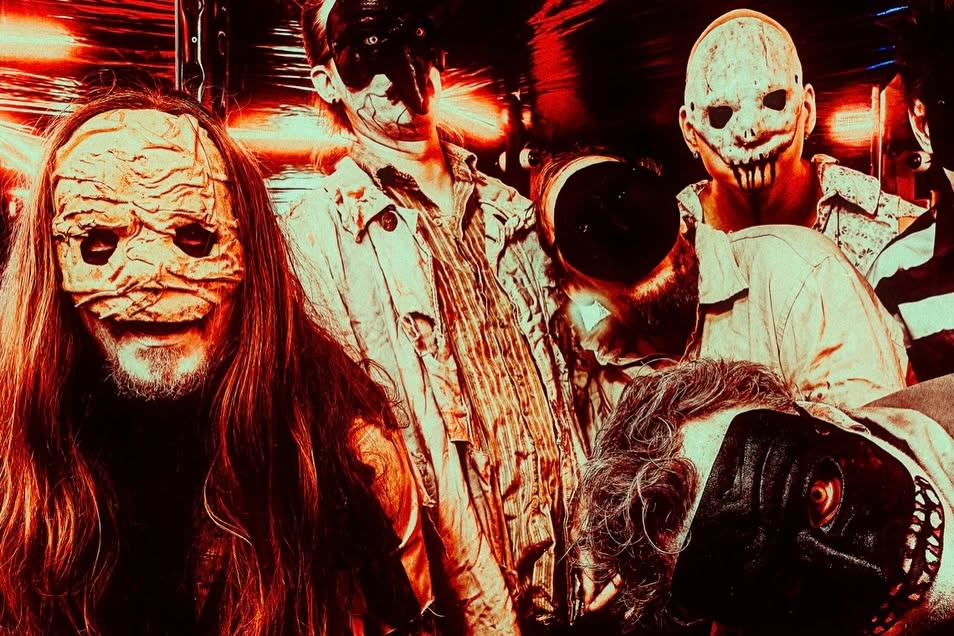
Pete Bay and Crazy Gustav’s guitar work forms one of the album’s central pillars here. Instead of relying on an extreme metal approach built entirely around speed, the duo focuses on riff structures with strong rhythmic foundations, sharp accents, and effective use of space. Heavy chords, controlled pauses, and groove-oriented sections combine with the drum patterns to give the songs a physical weight. Dr. Wolfram’s bass, meanwhile, is not merely a supporting element following the guitars; especially in the slower passages, it fills the low end and intensifies the tension within the compositions.
Anthony “Vryko” Hodju’s vocals are one of the album’s most defining elements. Rather than following a conventional extreme metal vocal approach, Hodju delivers a performance closer to character acting. He constantly shifts between deep growls, high-pitched screams, spoken passages, melodic lines, and theatrical expressions. This variety is not used merely as a technical showcase; it becomes the primary narrative device for musically representing Anton’s changing psychological state. Especially on "Bad Beginning" and the tracks that follow, the vocals move beyond the role of narrator and become the character itself.
"God Complex" reveals one of the album’s more accessible sides. Its more melodic guitar work and memorable chorus structure create a brief sense of balance. However, AGARWAEN do not remain in this melodic space for long; dissonant guitar movements, harsh vocal eruptions, and more aggressive rhythmic sections disrupt the apparent order on the surface. This is where one of the band’s greatest strengths becomes apparent: they use contrasts not merely for aesthetic effect, but to reflect character development.
With "Orphan Son", the Black Metal influences become more prominent. Blast beats, faster guitar passages, and sharper vocal attacks push the track into a darker territory. However, AGARWAEN are not simply repeating the genre’s established elements here. The Eastern-influenced melodic touches introduced into the track create an unexpected contrast within its aggressive framework. This choice does not remain a superficial exotic element; by integrating these melodic movements into the main riff structures, the band adds another layer to the song’s identity.
One of the album’s most intriguing moments comes with "La Colección". Beginning with acoustic guitars, the track initially appears to move toward a calmer and more personal space, but this atmosphere quickly begins to unravel. Here, the band creates a different narrative dimension through heavy guitar riffs, theatrical vocals, and rhythmic ideas reminiscent of circus music. The use of percussion, unexpected accent shifts, and exaggerated vocal characters place the track somewhere between dark comedy and psychological tension.
However, this approach also reveals one of the album’s broader weaknesses. Although AGARWAEN’s abundance of ideas is often impressive, not every idea feels equally necessary from a musical standpoint. "La Colección" largely carries its extended structure successfully, yet certain theatrical repetitions slow down its momentum. While attempting to translate every detail of the story into music, the band occasionally limits the natural movement of the song format.
"Circo de la Muerte" stands as one of the strongest summaries of the album’s overall approach. The track places a cheerful circus melody against heavy guitars and dark vocals. This contrast lies at the heart of AGARWAEN’s aesthetic identity. Szilard de la Costa’s drumming plays an important role here; rather than relying solely on standard metal rhythms, he uses percussive accents and rhythmic shifts to ensure that the song remains both dynamic and threatening.
At this point, the band’s approach to drums deserves particular attention. De la Costa is one of the key elements carrying the album’s constantly shifting atmosphere. He moves across a wide spectrum, from blast beats and groove sections to folkloric rhythms and heavy metal-driven patterns. On an album as densely arranged as "The Murder Trend", the real achievement is not creating chaos, but controlling it. AGARWAEN’s rhythm section succeeds in doing exactly that.
"The Hunt" is one of the moments where the band introduces a different colour outside their usual extreme metal framework. The use of accordion here is not simply an atmospheric decoration; it becomes a central element of the track’s dramatic structure. The instrument creates a folkloric identity while also strengthening the ritualistic feeling of the composition. This approach differs from the common modern metal tendency of adding unusual instruments for novelty, because the accordion genuinely influences the arrangement logic of the song.
Teemu Aalto’s production handles one of the album’s most difficult challenges: keeping numerous different elements together within the same sonic space without allowing them to clash. The guitars remain powerful and dense, the bass retains its presence, and the drums maintain their clarity even during the most complex sections. Svante Forsbäck’s mastering also provides a balanced approach that preserves the album’s dynamic contrasts rather than flattening them completely.
"Clowny Business" and "Aenimus" represent the album’s more experimental side. The former contrasts grotesque and seemingly playful motifs with aggressive bursts, while the latter moves toward a darker and more intense structure. The extended horror atmosphere and chainsaw effects featured in "Aenimus" serve the concept effectively, but they do not always retain the same impact during repeated listens. At this point, it becomes clear that AGARWAEN consciously blur the boundary between cinema and music; however, there are moments where the visual narrative appears to take precedence over the musical structure.
The album’s centerpiece, "The Murder Trend", brings the band’s entire approach together within a single composition. Running beyond fifteen minutes, the track gradually develops through samples, spoken passages, and atmospheric textures. Pete Bay’s melodic lines merge with Crazy Gustav’s heavy rhythm guitars, while Dr. Wolfram’s bass maintains the track’s fundamental weight. Szilard de la Costa provides structural balance throughout the constantly shifting sections.
The most striking aspect of the track is how it transforms Anton’s personal story into a social phenomenon. The concept of the mask and murder moves beyond individual trauma and becomes a movement that is imitated by others. This expansion of the narrative is also reflected in the music; personal and introspective sections gradually give way to larger, more chaotic arrangements.
In terms of visual identity and concept, AGARWAEN approach the album not merely as a recording, but as a completed narrative object. Fictional documents, investigation reports, and a psychological case-file aesthetic support the horror themes carried by the music. However, the success of this visual approach lies not only in the details of the story but also in its relationship with the music itself. "The Murder Trend" largely maintains this connection; the visual world and the sonic structure complement one another.
AGARWAEN’s greatest advantage is that, despite combining multiple genres, they avoid creating a faceless mixture. The elements of Melodic Death Metal, Black Metal, Industrial, and Groove Metal are not used merely as reference points; they become tools representing different stages of the character’s development. At the same time, the album’s length and the tendency to extend certain theatrical passages create a structure that demands patience during repeated listens.
"The Murder Trend" is not an extreme metal album designed for effortless consumption. It asks listeners not only to follow the riffs but also to understand how the songs connect and where each musical decision exists within the larger concept. AGARWAEN attempt to create their own space within contemporary extreme metal not simply through genre fusion, but by turning music, narrative, and visual identity into a single system. The album’s greatest strength and weakness come from the same place: the band never leaves its vision unfinished, but at times this commitment comes at the expense of musical economy.
OZAN
https://agarwaen.bandcamp.com/