
ALBUM REVIEW
MANNVEIRA – Vesöld
Dark atmospheres, shifting rhythms, uneven songwriting.
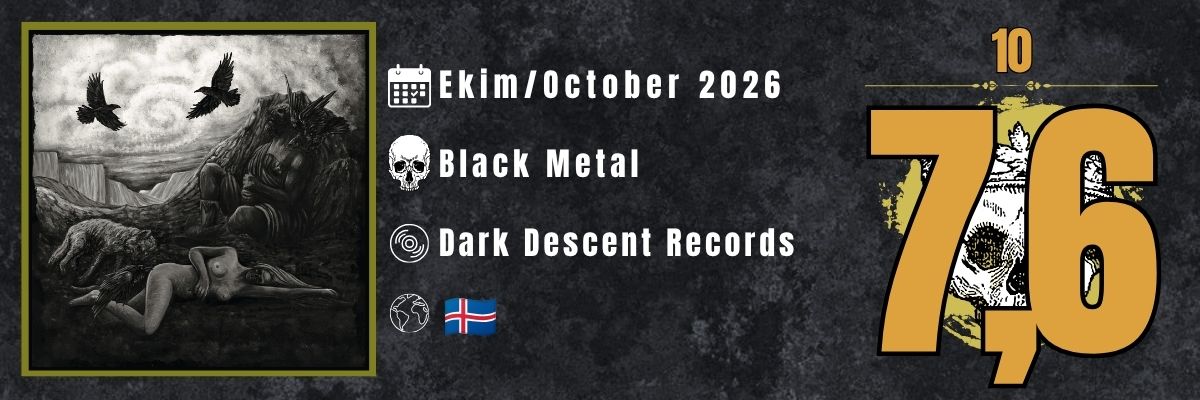
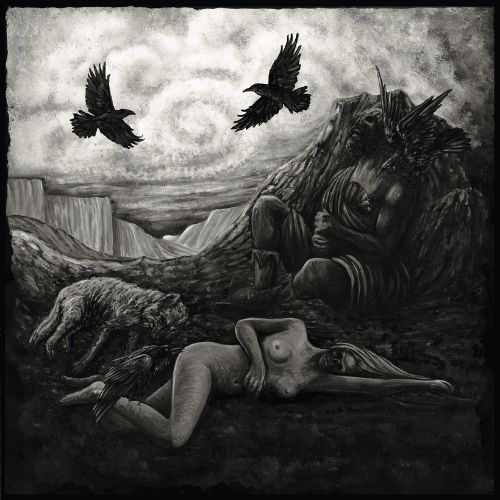
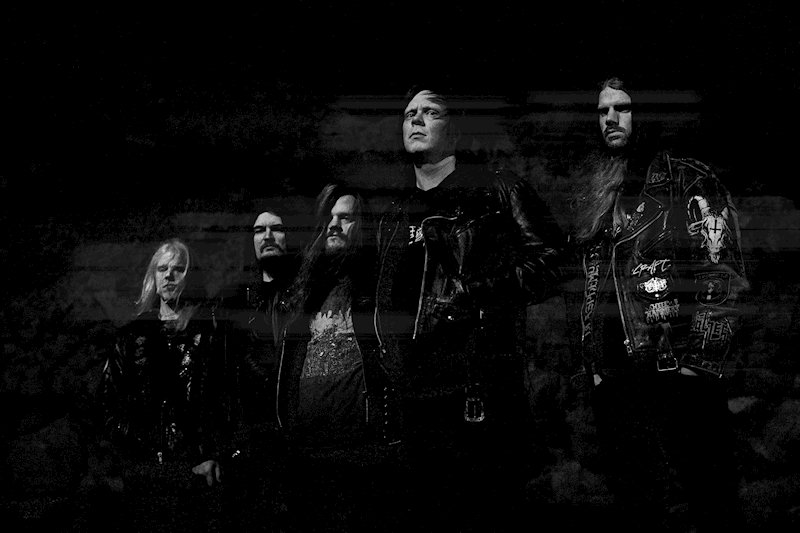
MANNVEIRA continue to uphold Reykjavík’s distinctive approach to songwriting with “Vesöld”, their second full-length album, released after a five-year hiatus. The record revisits the bleak atmosphere of their debut, “Vítahringur”, through more mobile rhythms and more pronounced melodic lines. Spanning seven tracks and approximately 36 minutes, the album retains the harshness of traditional black metal while drawing on dissonant guitar harmonies and shifting rhythmic accents. The result demonstrates that unsettling intensity can be achieved without relying entirely on the genre’s familiar emphasis on speed and aggression.
Opening track ‘Lygar himinsins’ provides a good starting point for understanding the album’s rhythmic character. The guitars’ sharp riffs, which occasionally follow a melodic trajectory, combine with the drums’ more animated, off-kilter accents to give the track both fluidity and a persistent sense of tension. Illugi Kristinsson’s hoarse, abrasive screams rise above this arrangement, while his vocals convey a sense of desperation that extends beyond sheer aggression. What matters here is how the rhythmic arrangements continually reshape the dissonance generated by the guitars.
On ‘Þrot’, the bass guitar assumes a more prominent role. Its pronounced lines establish a separate foundation for the guitars’ winding melodic movements, while the increase in tempo as the track progresses pushes the arrangement towards greater unease. One of the most effective aspects of MANNVEIRA’s songwriting is the way the instruments expand one another’s room for movement rather than simply repeating the same ideas in different forms. The relationship between the harmonic tension created by the two guitars and the rhythmic character of the bass prevents the music from settling for atmosphere alone.
Third track ‘Af bergi brotin’ offers one of the clearest examples of this expanded musical space. Its wider dynamic range allows the pressure established in the preceding tracks to ease, bringing melodic details into sharper focus. Although the cold melodies of the tremolo-picked guitars draw on familiar black metal conventions, MANNVEIRA never turns them into instantly memorable choruses or resolves them into clear-cut melodic conclusions. Rather than clarifying the track’s direction, these melodies deepen its already unsettled harmonic structure from another angle.
The album’s rhythmic approach involves more than simply alternating between fast and slow passages. The drums’ measured progression makes the guitars’ complex movements easier to follow, while the mid-paced sections occasionally lend the music a heavier character that approaches Doom Metal. This distinguishes MANNVEIRA from the more explosive, relentlessly fast manifestations of Icelandic black metal. Instead of constantly escalating the intensity, the band relies on rhythmic movement and tension between the instruments. In return, the music gains a sense of internal coherence, particularly in passages where the melodic transitions come to the fore.
However, this controlled approach reaches its limits in the middle of the album. ‘Stormur’ and ‘Aumingi’ largely continue the rhythmic and atmospheric framework established by the preceding tracks. Considered individually, the sharpness of the guitars, the force of the vocals and the measured drumming remain effective, but the succession of passages operating at similar levels of intensity weakens the distinction between the songs. ‘Stormur’ is particularly limited in its development of new rhythmic directions, recycling some ideas heard earlier in the album through its melodic progression. The problem is not that the music slows down or becomes more melodic, but that these choices fail to produce sufficiently different results within the compositions.
‘Bölvunin’, by contrast, adopts a harsher approach to break this inertia. Its commanding opening riff provides a strong backbone for the rest of the track, while Kristinsson’s vocals settle more forcefully into the arrangement. This intensification in the album’s closing stretch relies directly on the weight of the riffs, departing from the melodic meandering that characterises the earlier songs. It also reveals that MANNVEIRA do not need to rely solely on harmonic dissonance and cold melodies to create atmosphere.
Closer ‘Rottur’ stands apart from the rest of the album. Shorter, more energetic and more overtly influenced by punk, the track demonstrates the band’s ability to draw on rhythmic possibilities beyond the confines of black metal. Its energy leaves behind the compositional similarities that occasionally emerge between the preceding songs, while placing Kristinsson’s vocal approach in a different context. The impact of ‘Rottur’ lies not merely in its unexpected arrival at the end of the record, but also in how it shows that the controlled aggression heard elsewhere can be expressed in a more direct and energetic form. Rather than completing MANNVEIRA’s existing musical identity, the track points towards a possibility the band has yet to explore fully.
From a production standpoint, “Vesöld” strikes a balance that allows the instruments to remain distinct without sacrificing their harshness. The guitars’ midrange-focused character and pronounced high frequencies combine with the bass lines that come to the fore in certain passages, while the drums maintain a clear sense of rhythmic direction within the arrangement. Nevertheless, the album’s consistent sonic character across all seven tracks, while supporting its atmospheric coherence, also makes the differences between compositions less pronounced. Variations in dynamic range partially compensate for this. The contrast between the broader dynamics of ‘Af bergi brotin’ and the more compressed progression of ‘Stormur’ is particularly effective in reinforcing the impact of the track sequencing. The album’s relative monotony, therefore, cannot be explained by the production alone; the more decisive factor is that some compositions linger too long within similar rhythmic and melodic patterns.
Throughout “Vesöld”, MANNVEIRA uphold the Icelandic black metal tradition of dissonant harmonies, distorted melodies and oppressive atmospheres. Bringing these elements together with more structured rhythms and clearly defined melodic transitions makes the band’s musical identity easier to grasp. Even so, the balance between atmospheric consistency and compositional variety is not equally successful across every track. The album’s most effective moments emerge not when the band attempts to move beyond its familiar approach, but when it reshapes its existing material through different rhythmic and dynamic relationships. “Vesöld” is therefore less an attempt to forge a new path for Icelandic black metal than a search for a distinct voice within its established aesthetic. It offers compelling musical details but would benefit from bolder compositional shifts. If MANNVEIRA avoid such lengthy gaps as five years between releases and spend more time working together, they could realise their potential to produce records that leave a far more profound mark on the black metal scene.

https://mannveira.bandcamp.com/music
https://www.facebook.com/mannveira
https://www.instagram.com/mannveira