
ALBUM REVIEW
Aetere – Théogonie
Doom, Drone Textures & Atmospheric Weight
Aetere offers an approach that seeks to redefine the very idea of heaviness in doom metal, stripping it away from traditional riff structures and instead reconstructing it through low-frequency synthetic textures and expansive drone fields. “Théogonie”, as the first full-length expression of this exploration, establishes a compositional logic that places atmosphere at its core rather than form. However, the extent to which this atmosphere evolves into a structural transformation forms the album’s central tension.
With “Théogonie”, Aetere deliberately moves away from the classic riff architecture of doom metal, constructing a framework where weight is shifted away from guitar writing toward low-frequency synthetic layers and continuously unfolding drone expanses. The opening track “Ténébrisme” clearly declares this approach: in a composition where electric guitar and physical bass do not assume a dominant structural role, the harmonic framework is carried by a densely compressed synthesizer drone. A constantly oscillating sub-bass in the low end and recessed, reverb-drenched minimal percussion establish not so much rhythmic drive as a spatial pulse. This choice removes the riff-centric weight typically associated with doom metal entirely, replacing it with a “static field of tension” operating through a sense of continuity.
The atmosphere established by this opening track becomes a recurring production logic throughout the album: guitars and bass are either fully withdrawn or merged with synth layers into a single homogeneous mass. When combined with a mix heavily saturated in the low-mid range, this produces an ever-expanding tonal fog rather than a structure where individual instruments can be clearly followed. The fact that drums are pushed back with a digital sense of stability in many passages, and that kick drums in particular lose their transient impact, turns rhythmic energy from a driving force into a mere directional indicator. While this approach supports the thickened shoegaze aesthetic expected under the doomgaze label, it also deliberately weakens the traditional dynamic contrast mechanisms of metal.
With “Galea,” the album moves away from the more abstract structure of the opening track toward a more defined rhythmic framework. The kick drum being brought forward and the addition of a more pronounced low-frequency emphasis briefly ground the composition. However, this stabilization is once again dissolved by the placement of the vocals within the mix. Ethereal female vocals function less as a narrative line and more as a timbral layer integrated into the guitar and synth textures. At this point, the album’s key production decision becomes clear: the vocal is not a center of semantic weight, but a component of atmosphere.
“Cilice” intensifies this approach further, shifting into a drone-based expansion zone. The dense drone foundation constantly present beneath the track completely replaces the idea of the riff; what becomes notable here, however, are the compositional consequences of this shift. In traditional doom metal, the riff is the mechanism of repetition and variation that guides the track. In “Cilice,” with that mechanism removed, the structure instead evolves through a process of “density transformation.” This may appear to enhance the sense of drama, yet it simultaneously creates an ambiguity in direction. As spatial breadth increases, it becomes debatable how much of the compositional intent is a deliberate construction of tension versus a preference for remaining within a fixed texture.
At the midpoint of the album, “Thanatos” succeeds in establishing a more distinct form of contrast within this fog-like structure. Here, a guitar line approaching a classic funeral doom aesthetic emerges in melodic form, working alongside a subdued vocal layer to generate a clearer sense of dramatic tension. Yet even this effect is never fully released within the track’s overall framework; instead, the continuously present background drone and the low-resolution character of the mix keep even these melodic moments partially obscured. This reinforces one of the album’s strongest qualities: the ability to operate within constrained contrast.
“Innocence,” as the longest track, constructs a more ritualistic framework. The psychedelic, almost ceremonial keyboard textures at the opening temporarily shift the piece into a more organic space. The spoken-word vocal approach here expands the rhythmic surface of the sound rather than producing semantic meaning. However, as the track progresses, this structure dissolves once again into the album’s overarching aesthetic principle: a continuously evaporating form, an atmosphere in motion rather than a fixed narrative. The decision to retain the drum machine as a “terrestrial” reference point is significant here, as it ensures that even within this dense fog, a rhythmic grounding is never entirely lost—only its function is transformed.
The closing track “Eudaimona” operates as an attempt to re-stabilize the constructed world. A more defined rhythmic motion, a tighter bass presence, and a slightly increased tempo present a more skeletal version of the album’s opening state. Yet the intention here is not a dramatic climax, but rather a reaffirmation of the established system. This choice makes clear that the album avoids linear culmination in favor of a circular structural logic. The gradual dissolution of low-frequency distortion toward the end also reminds the listener that even the sub-bass presence—one of the album’s primary structural pillars—is ultimately transient.
The production identity of the album occupies a tense space within the current boundaries of doom metal. The withdrawal of guitar-centered riff writing and the elevation of synthetic drone as a primary building block challenges conventional definitions of heaviness within the genre. However, this approach does not always translate into equally functional outcomes. In particular, the persistent low-mid saturation of the mix makes separation difficult in certain tracks (notably “Galea”), allowing textural density to override structural variation. In contrast, moments such as “Thanatos” and “Innocence” transform this density into a genuinely functional space of compositional endurance.
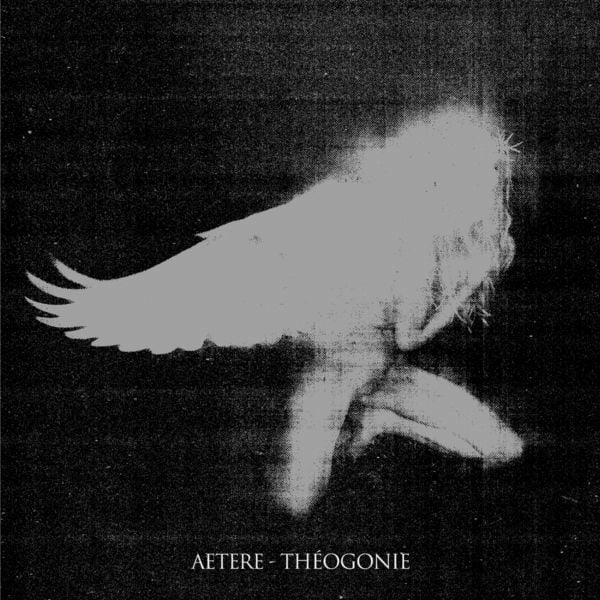
The visual aspect of the album aligns closely with its sonic identity. The figurative approach built on light-dark contrast on the cover supports the musical tension between illumination and dissolving form. Yet a critical question emerges here: does the visual symbolism truly reflect a structural transformation within the music, or does it merely function as an aesthetic shell orbiting it? Given that the album’s sonic world largely operates through dissolution of form and fog-like diffusion, the visual language occasionally risks feeling overly “matched”—producing a confirming accompaniment rather than an interpretive expansion.
“Théogonie” can be read as an attempt to redefine the mechanism of heaviness in doom metal through texture and low-frequency continuity rather than riff-based construction. However, this redefinition does not always become a compositional necessity; at times, aesthetic intent outweighs musical structure. What makes the album compelling lies precisely in this in-between state: it neither fully adheres to traditional doom writing nor fully dissolves into unrestricted drone abstraction. Suspended between these two poles, it occupies a position that is both immersive and, at times, internally constrained.
To be honest, at the beginning of the season I wasn’t particularly inclined to engage with doom metal or related material, hoping for warmer weather, and I should note that this was quite a prejudiced stance on my part. Yet, perhaps influenced by Germany’s constantly shifting weather—rainy, windy, and sunny within the same day—the album ends up being a listen that holds attention from the first riff to the final moment without fatigue.
OZAN
https://www.facebook.com/Aetere777/