
ALBUM REVIEW
AEVERIS - Imminence
Disciplined melodic aggression.
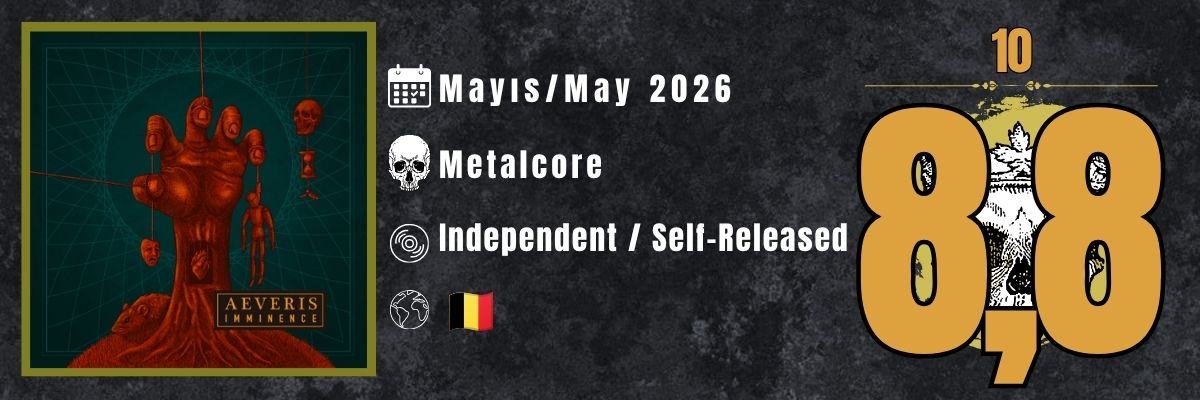
Established in Belgium in 2021, AEVERIS quickly emerged as one of the more promising names among the new generation of bands bridging melodic metalcore with a contemporary production approach. Following the momentum generated by their debut album, "White Elephant," the band underwent significant lineup changes, channeling the renewed energy of that transition into their sophomore full-length, "Imminence." Originally released in two separate chapters before being assembled into a single album, the record reflects AEVERIS' effort to redefine both its musical direction and creative priorities.
Bringing together material that was originally released as two separate EPs throughout 2026, "Imminence" becomes far more than a practical compilation, instead taking shape as a cohesive album-length statement. AEVERIS fuses the melodic core of modern metalcore with the riff-driven sensibilities of the early 2000s, favoring a continuously building flow over treating individual tracks as isolated highlights. That decision proves to be the album's greatest structural strength, as the transitions between songs never interrupt the listening experience but steadily reinforce its underlying momentum.
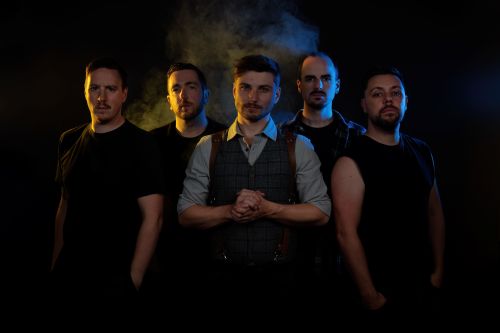
The dual-guitar interplay between Jeffrey Behiels and Dempsey Derous applies a melodic riffing style rooted in KILLSWITCH ENGAGE, TRIVIUM, and, to a lesser extent, LAMB OF GOD with technical precision that never slips into unnecessary complexity. The riffs move fluidly between tightly muted palm-muted passages and melodic expansions, while the album's aggression stems as much from its constantly shifting rhythmic framework as from its heavy guitar tones. By prioritizing fluid songwriting over technical exhibitionism, AEVERIS enhances the record's accessibility without straying too far from the genre's established conventions.
Within the rhythm section, Pieter Nyckees and Louis van der Linden do far more than reinforce the density created by the guitars. The dynamic drum work, in particular, and its relentless forward drive become the key factor preventing the material from losing momentum. Although the bass never seeks the spotlight within the mix, it reinforces the guitars' low-end foundation, preserving the physical weight of the riffs. While this approach aligns with contemporary metalcore production standards, there are moments when the bass leaves the impression that it could have assumed a more independent role.
New vocalist Wouter van Kerschaever's performance stands as one of the album's defining developments. His balanced use of fry screams, false cord vocals, gutturals, and melodic clean singing prevents the songs from relying solely on sheer heaviness. Rather than depending on excessive vocal layering for dramatic effect, the arrangements serve a functional purpose by strengthening both the memorability of the choruses and the melodic backbone of the songs. In that sense, the vocal performance successfully balances the album's technical intensity with its ambition to reach a broader audience.
Divided into two acts, "Imminence" presents a thematic framework that moves from the struggle to preserve one's identity under external pressure to the alienation of modern society. The album's greatest accomplishment, however, lies in supporting that narrative through musical continuity rather than relying exclusively on its lyrics. While the first half delivers a more direct and confrontational energy, the second broadens the melodic scope. Even so, this shift feels less like a radical reinvention of the band's identity than a measured expansion of an already established formula.
The production choices further reinforce that philosophy. The guitar tones are tightly compressed and articulate in keeping with modern metalcore standards, the drums hit with considerable impact, and the vocals occupy a central position in the mix without overwhelming the instrumentation. That clarity allows the album's technical details to come through with ease, although it occasionally sacrifices some of the organic roughness associated with earlier metalcore recordings. Ultimately, the production strikes a conscious balance between embracing contemporary studio aesthetics and preserving the nostalgic character of its riffing.
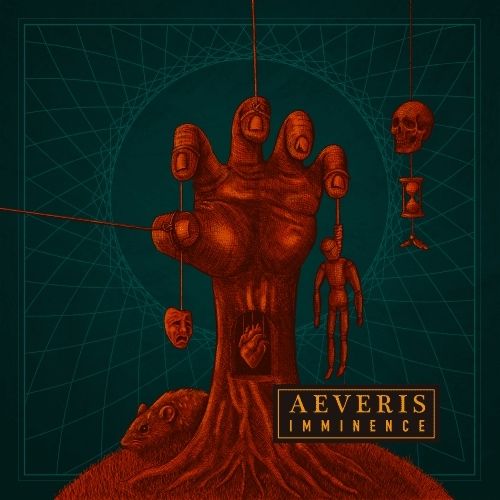
The album artwork and overall visual identity also complement the music's serious and introspective themes. Rather than leaning on the genre's more extravagant visual clichés, AEVERIS opts for a restrained, contemporary aesthetic that supports the record's two-part narrative. The visual presentation never overshadows the music; instead, it functions as a purposeful extension of the album's cohesive artistic identity.
With "Imminence," AEVERIS is not attempting to redraw the boundaries of metalcore. Instead, the band delivers a focused and consistent record built on strong songwriting, refining the genre's melodic and aggressive foundations through a modern production framework. Experienced as the uninterrupted whole it was clearly intended to be, the album demonstrates why its two EPs were conceived as chapters of a single narrative. Rather than redefining metalcore's established formulas, "Imminence" serves as a reminder that disciplined songwriting and confident execution remain more than capable of making those conventions resonate within today's metalcore landscape.
OZAN
Instagram
YouTube
Spotify
Amazon Music
Apple Music
Linktree
Webshop