
ALBUM REVIEW
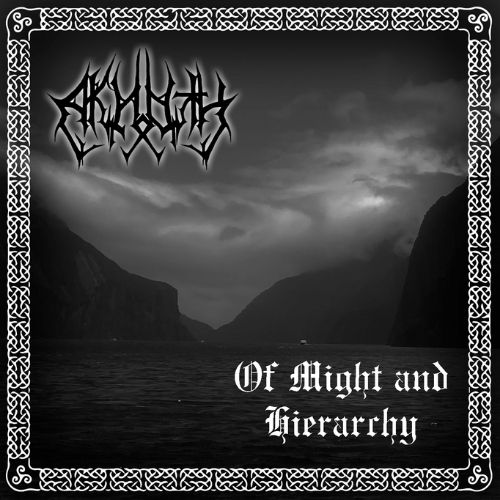
AKHOTH - Of Might and Hierarchy
Raw Black Metal Analysis
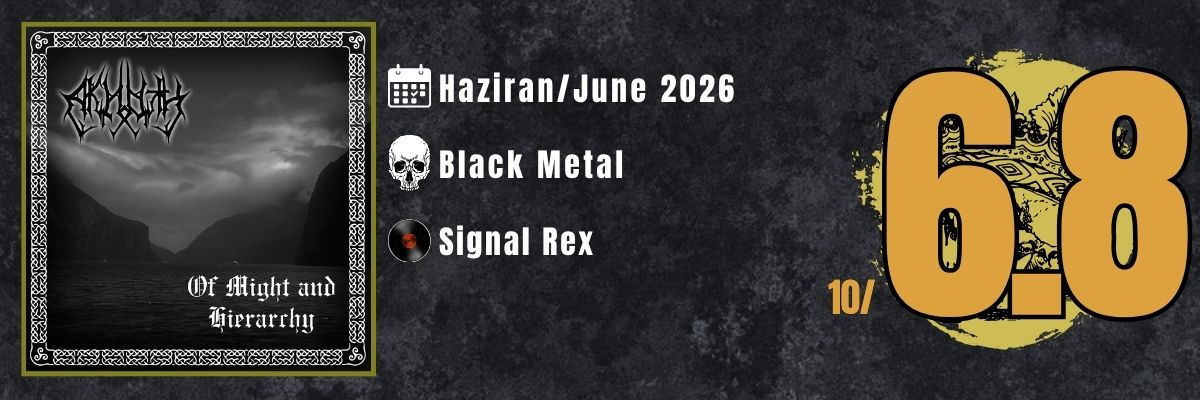
Australia’s Akhoth stand out among the rapidly forming wave of new-generation black metal projects as a trio defined by a raw production aesthetic. Despite a short period of activity beginning in 2024, the band has already established an intense release trajectory stretching from early rehearsal demos to their first full-length record. Of Might and Hierarchy emerges as the first large-scale outcome of this accelerated process, attempting to bring together 90s genre reference points and a contemporary raw black metal approach within the same framework.
From the opening seconds, the album establishes a riff flow driven by sharp tremolo guitar lines framed through a low-budget recording aesthetic; however, the defining trait of this flow is less melodic contour than a continuous, forward-driving rhythmic impulse. Short-form compositions such as the opening track “Fractured Divinity” lock the piece into a linear energy trajectory by layering blast and semi-blast drumming with successive tremolo riffs. Rather than expanding into structurally broad sections, this approach focuses on generating a sense of “constant motion,” with riffs often chaining into one another instead of resolving cadences.
At this point, the sharp, occasionally piercing high-frequency character of the guitar tone becomes a key determinant. Certain melodic motifs hint at the 90s melancholic black metal tradition; however, these ideas are rarely sustained long enough to transform the overall riff architecture. As a result, melodic content remains more of a surface-level energy layer than a central structural element. The claim that tracks like “Veil of the Cosmic Night” offer memorable, looping riff structures is therefore only partially valid: the loops are present, but their depth of variation remains limited.
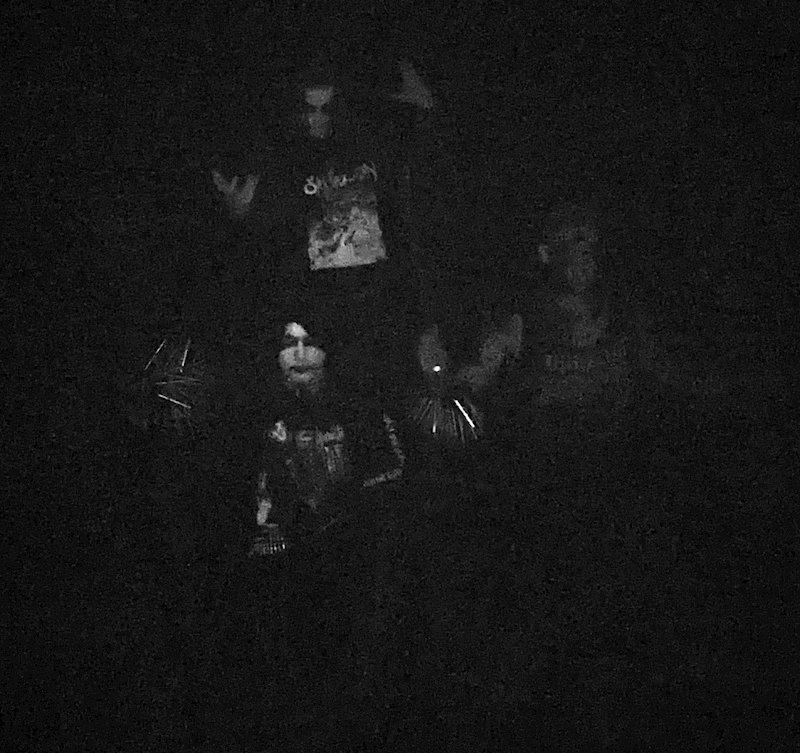
The drum performance stands as one of the album’s most “active” components. Constantly shifting accent placements and frequent blast transitions function less as structural disruption and more as an accelerant supporting the linear guitar framework. LCF’s approach occasionally produces a jam-like feel, yet this improvisational energy manifests more as a continuous intensity engine than as a clearly defined layer of formal development. This reinforces the album-wide impression of “rhythmic variation without formal variation.”
The vocal line, delivered in a traditional harsh growl/scream style, is not pushed to the foreground but instead embedded within the guitar wall. This choice creates a withdrawal that aligns with the thematically suggested “feudal, hierarchical, ritualistic” atmosphere; however, due to limited articulatory clarity in the performance, the vocals function less as a compositional driver and more as a textural noise layer.
The mid-album interlude featuring acoustic guitar and field recordings of fire represents the only true structural “pause” point. By interrupting the rhythmic flow through environmental sound usage, it creates a temporary contrast against the album’s aggressive continuity. However, this contrast does not translate into a compositional shift affecting the subsequent tracks’ structural logic; instead, it remains an atmospheric insert that leaves the underlying riff framework unchanged.
In the second half, tracks such as “Emperor’s Demise” continue the guitar–drum interplay with a momentum that could be described as “rock’n’roll-inflected black metal,” yet the core issue persists: the pieces do not sufficiently differentiate themselves from one another. Even when riff language shifts, the structural template—fast entry, dense tremolo passage, brief transition, abrupt ending—remains consistent. This reinforces the album’s jam-like energy while simultaneously preventing individual tracks from acquiring distinct identities.
On the production side, two readings coexist in tension: on one hand, the raw, minimally refined mix aesthetic reinforces an “unpolished” character consistent with early black metal references; on the other hand, limited instrument separation generates tonal blur in the guitar layers, pushing internal riff detail into the background. This simultaneously supports Signal Rex’s framing of an archaic, ritualistic atmosphere while narrowing the perceptibility of musical variation.
The label’s narrative framework—medievalism, hierarchy, ritual warfare, and an aesthetic of authority—does not fully translate into the musical reality. The album’s structural language is instead built around sustained speed and repetition, producing a sense of controlled chaos rather than ritualistic slow progression. As a result, there is no complete overlap between concept and composition, but rather an appended thematic layer.
Ultimately, Of Might and Hierarchy presents a compositional approach oscillating between melodic ideas and raw energy, yet struggles to synthesize these elements structurally. While the album can generate moments of immediate, vivid performance intensity, the capacity of these moments to transform one another remains limited. This results in a listening experience that unfolds as a continuous flow rather than a developing narrative, lacking clear segmentation despite its internal motion.
OZAN